Skip to main content

 01274 442076


Reducing Medication-Related Hospital Admissions: A PCN Toolkit
|
Getting your Trinity Audio player ready...
|
- What causes medication-related hospital admissions?
- Which high-risk medicines contribute most to medication-related hospital admissions?
- Why is transfer of care a high-risk point for medication safety?
- How can pharmacists reduce hospital admissions?
- Who should PCNs prioritise first?
- PCN toolkit: reducing medication-related hospital admissions
A significant proportion of medication-related hospital admissions may be preventable through safer prescribing, effective monitoring, and robust medicines reconciliation. For Primary Care Networks (PCNs), this means identifying high-risk patients early. Using proven tools such as PINCER allows teams to act before harm occurs. Research suggests adverse drug reactions account for approximately 6.5% of hospital admissions, with older adults and those with problematic polypharmacy at greatest risk.
Key Takeaways
- Proactive surveillance: Using tools like PINCER identifies patients at risk from hazardous prescribing before an admission happens.
- High-risk focus: Prioritising interventions around high-risk medicines such as NSAIDs, anticoagulants, and diuretics yields the greatest reduction in preventable harm.
- Multidisciplinary approach: Clinical Pharmacists and Pharmacy Technicians working collaboratively provide the necessary capacity for robust medicines reconciliation and safer transfers of care.
What causes medication-related hospital admissions?

Medication-related hospital admissions primarily stem from prescribing errors, inadequate monitoring, and problematic polypharmacy. Older adults with frailty or multimorbidity face the greatest risk. A prescribing cascade can develop. New medications are added to treat side effects of existing ones, compounding the medication burden. Risk stratification tools help PCNs focus limited capacity where it will have the greatest impact.
Expert insight from Adeem Azhar, qualified Clinical Pharmacist and CEO
Reducing medication-related hospital admissions isn’t achieved through one medication review. It comes from consistently identifying patients at greatest risk, acting on prescribing issues early, and ensuring medicines are reviewed at every care transition. Embedded pharmacy teams make a measurable difference to patient safety.
Adeem Azhar, MPharm, IPres
Co-Founder and Chief Executive Officer – Core Prescribing Solutions
Qualified Clinical Pharmacist
Which high-risk medicines contribute most to medication-related hospital admissions?
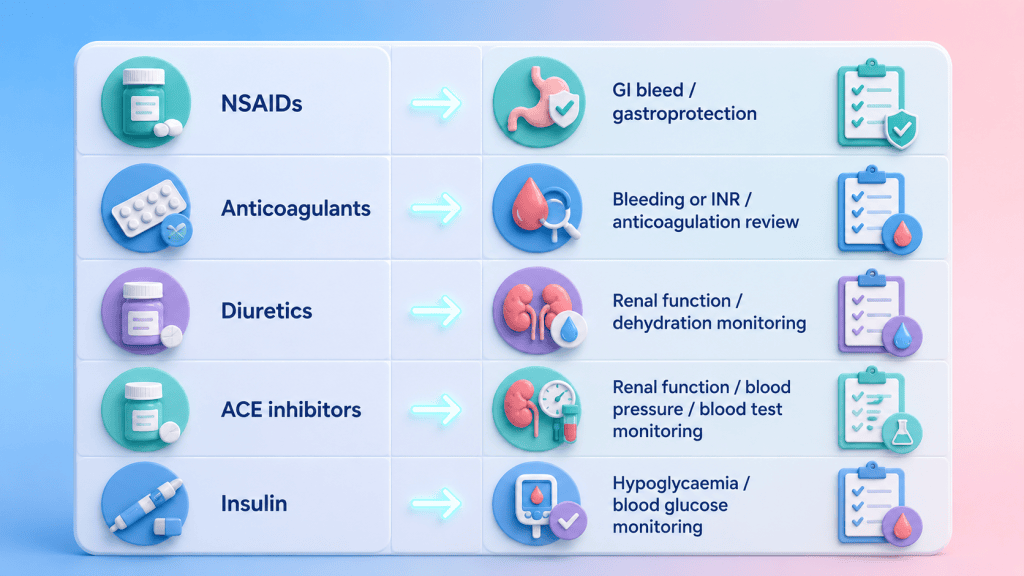
Certain medicines are consistently associated with a higher risk of medication-related hospital admissions, particularly where monitoring or follow-up is inadequate.
| Medicine | Common risk | PCN action |
| NSAIDs | GI bleed | Review need and gastroprotection |
| Anticoagulants | Bleeding | Monitor and review regularly |
| Diuretics | Acute kidney injury | Monitor renal function |
| ACE inhibitors | Renal impairment | Review bloods |
| Insulin | Hypoglycaemia | Structured medication review |
Need clinical pharmacy capacity to strengthen medicines safety?
Discuss medicines safety supportWhy is transfer of care a high-risk point for medication safety?
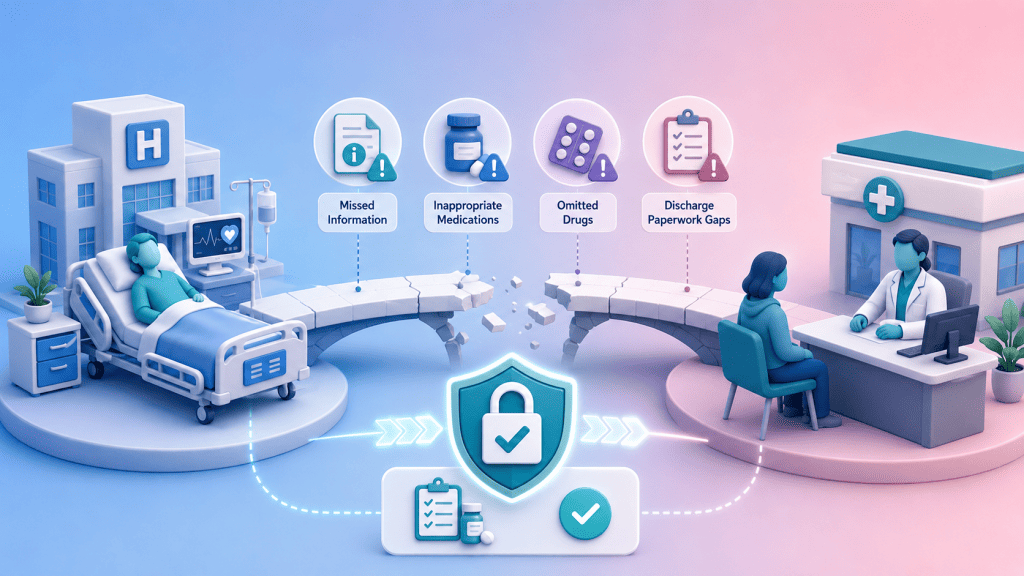
Transfer of care is one of the most frequently overlooked causes of preventable medication harm. When patients move between care settings, crucial prescribing information is often missed. Inappropriate medications can continue, or omitted drugs go undetected. Robust medicines reconciliation at every transition point is essential. It ensures changes made in secondary care are reflected in the patient’s primary care record.
How can pharmacists reduce hospital admissions?
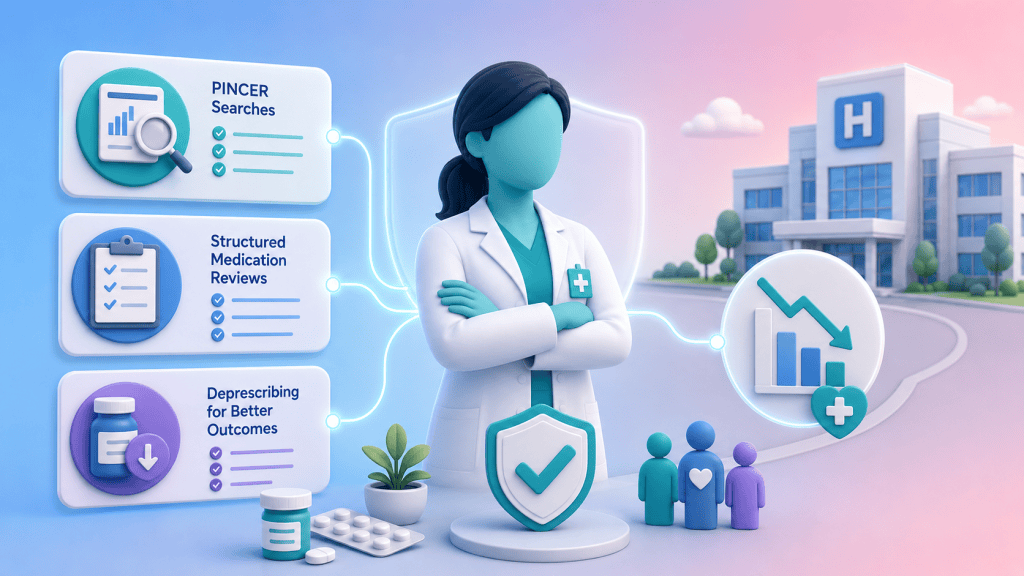
Clinical Pharmacists play a pivotal role in reducing medication-related hospital admissions. Pharmacist-led interventions, such as PINCER, have been shown to significantly decrease hazardous prescribing in primary care. PCNs can also utilise their clinical pharmacy teams to deliver Structured Medication Reviews. These target patients with problematic polypharmacy, actively deprescribing where appropriate.
Who should PCNs prioritise first?
Not every patient carries the same level of risk. PCNs should focus initial efforts on patients who are:
- Taking 10 or more medicines
- Recently discharged from hospital
- Prescribed anticoagulants or insulin
- Experiencing recurrent falls
- Living in a care home
- Identified as having frailty
PCN toolkit: reducing medication-related hospital admissions

| Action | Why it matters |
| Run PINCER searches | Identifies hazardous prescribing |
| Prioritise patients with problematic polypharmacy | Focuses resources where risk is highest |
| Complete medicines reconciliation after discharge | Prevents discrepancies between care settings |
| Review high-risk medicines | Reduces preventable adverse drug events |
| Monitor overdue blood tests | Identifies medicines requiring intervention |
| Audit prescribing safety indicators | Supports continuous quality improvement |
FAQs
Strengthen medicines safety across your PCN
Core Prescribing Solutions can support PCNs with Clinical Pharmacist and Pharmacy Technician capacity for prescribing-safety work, Structured Medication Reviews, medicines reconciliation and high-risk patient review. Our teams can help you identify medicines-related risk, strengthen follow-up and build a more coordinated approach to medicines safety across care transitions.
Discuss medicines safety for your PCN