Skip to main content


 01274 442076



Building a Resilient PCN Multidisciplinary Team: A Practical Guide
|
Getting your Trinity Audio player ready...
|
Primary Care Networks (PCNs) are under increasing pressure to deliver more care with limited workforce capacity while improving patient outcomes. Effective PCN multidisciplinary team design distributes demand across the right mix of professionals. This improves access, reduces GP workload and builds a more resilient workforce.
Successful teams are designed around local population need, ensuring every professional works within their full scope of practice.
- Why does multidisciplinary team design matter for PCNs?
- How should PCNs design teams around population needs?
- What is the right skill mix for a resilient team?
- Common mistakes when designing a multidisciplinary team
- How does clinical supervision support team resilience?
- How do you measure whether your multidisciplinary team is working?
- How can PCNs prepare for Integrated Neighbourhood Teams?
Key Takeaways
- Demand-led planning: Design your team around population health data and demand for services, not available funding streams.
- Targeted skill mix: Match clinical roles – such as Clinical Pharmacists and Pharmacy Technicians – to identified patient needs.
- Structured governance: Embed clinical supervision and collaborative decision-making to ensure patient safety and staff retention.
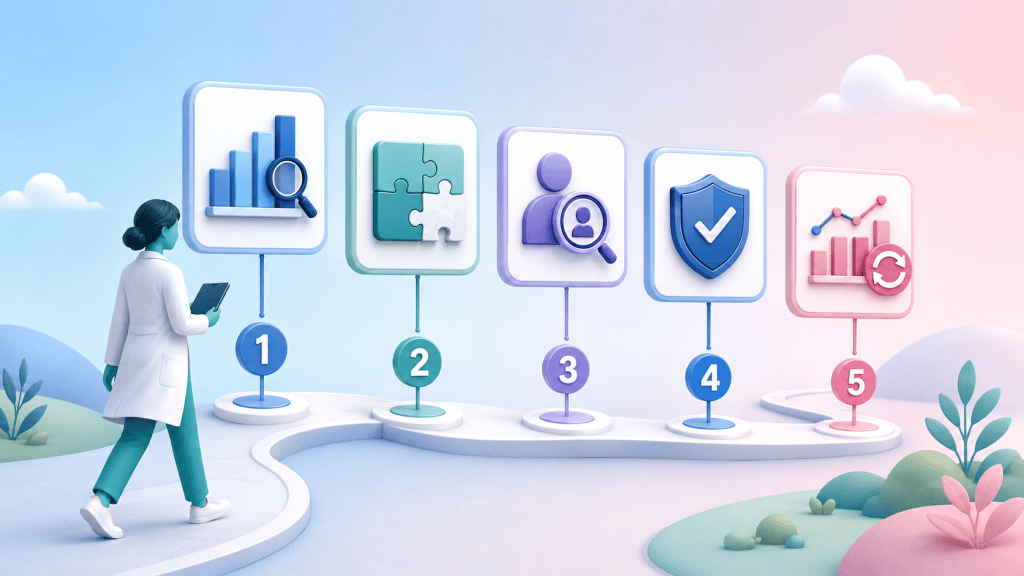
Five steps to designing a resilient multidisciplinary team
- Analyse your local population health needs.
- Identify workforce gaps and required skills.
- Recruit professionals who address identified population needs.
- Build strong governance and clinical supervision.
- Monitor outcomes and adapt the team over time.
Why does multidisciplinary team design matter for PCNs?
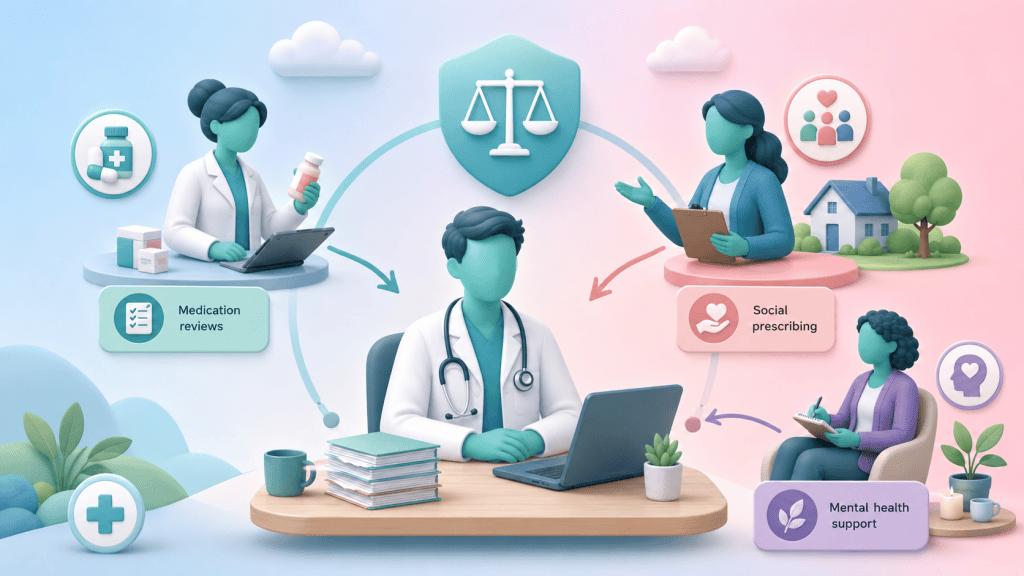
General practice is facing unprecedented demand, increasing clinical complexity and growing workforce pressures. Effective PCN multidisciplinary team design distributes workload across a broader skill mix, preventing GP burnout and reducing silo working. NHS England notes PCNs work best coordinating wider professionals around populations. This enables patients to access the most appropriate healthcare professional first. It improves outcomes while making better use of limited workforce capacity.
Need the right clinical pharmacy skill mix for your PCN?
Discuss your workforce requirementsHow should PCNs design teams around population needs?
Effective multidisciplinary team design starts with your population. Population health management should underpin every multidisciplinary workforce design, helping networks identify which conditions create the most appointments and where communities struggle with access.
High diabetes prevalence may indicate the need for additional Clinical Pharmacist support alongside wider multidisciplinary services. Successful PCN multidisciplinary team design should evolve as population health needs change.
What is the right skill mix for a resilient team?

Networks must consider how the combination of professionals drives continuity of care.
| Population Need | Suggested Professional | Primary Benefit |
| Medication optimisation | Clinical Pharmacist | Safer prescribing and reduced GP workload |
| Long-term conditions | Pharmacy Technician | Improved medicines management |
| Mental wellbeing | Mental Health Practitioner | Earlier intervention |
| Social isolation | Social Prescriber | Reduced unnecessary appointments |
| Care coordination | Care Coordinator | Improved continuity |
| Complex frailty | Advanced Clinical Practitioner | Improved continuity |
Getting the skill mix right is the most important step in building a resilient, proactive care model.
Common mistakes when designing a multidisciplinary team
Even well-intentioned PCNs can undermine their own workforce design. The most frequent pitfalls are:
- Recruiting based on funding availability rather than patient need.
- Allowing professionals to work in silos without shared governance.
- Providing insufficient clinical supervision and oversight.
- Failing to review workforce effectiveness against patient outcomes.
Avoiding these mistakes from the outset protects both patient safety and long-term team resilience.
Need the right clinical pharmacy skill mix for your PCN?
Discuss your workforce requirementsHow does clinical supervision support team resilience?

Clinical supervision should be built into every multidisciplinary model. It is fundamental to patient safety, professional development and clinical leadership. NHS England highlights supervision as essential for workforce retention and clinical governance. Strong clinical leadership drives collaborative decision-making, helping teams stay aligned and work towards shared goals.
Expert insight from Adeem Azhar, qualified Clinical Pharmacist and CEO
A resilient multidisciplinary team isn’t built by filling vacancies. It’s built by understanding local population needs and supporting clinicians through strong governance. It means enabling every professional to work at the top of their competence. When those elements come together, practices become more resilient and patients receive better care.
Adeem Azhar, MPharm, IPres
Co-Founder and Chief Executive Officer – Core Prescribing Solutions
Qualified Clinical Pharmacist
How do you measure whether your multidisciplinary team is working?
Measuring success goes beyond headcount. Integrated workforce design should be evaluated against real-world outcomes.
| Metric | Why It Matters |
| GP appointments released | Capacity freed for complex cases |
| Patient satisfaction | Access and care experience |
| Medicines optimisation | Safer prescribing and reduced harm |
| Workforce retention | Staff are supported and valued |
| Reduced hospital admissions | Evidence of proactive, preventative care |
| Continuity of care | Coordinated, relationship-based care |
How can PCNs prepare for Integrated Neighbourhood Teams?

Neighbourhood working is central to NHS planning. An integrated neighbourhood team brings together health, social care, and voluntary sector partners. Strong clinical leadership and shared objectives prepare the workforce for these broader models.
Designing multidisciplinary teams around shared objectives, population health management data and collaborative working today makes the transition to Integrated Neighbourhood Teams significantly easier tomorrow.
FAQs
Build a more resilient multidisciplinary PCN team
Core Prescribing Solutions can support PCNs reviewing their workforce design, skill mix and clinical pharmacy capacity. We can help integrate experienced Clinical Pharmacists and Pharmacy Technicians into your multidisciplinary model with clear role definition, structured supervision and governance aligned to local population need.
Discuss your PCN workforce design