Skip to main content


 01274 442076


What Is a Primary Care Technician?
|
Getting your Trinity Audio player ready...
|
A primary care technician in the UK NHS almost always refers to a Pharmacy Technician working within a GP practice or Primary Care Network (PCN). While the term is sometimes confused with US-based “patient care technicians” who handle physical bedside care, the UK role is entirely focused on medicines management. They act as the operational backbone of the pharmacy team, managing the technical processes that keep prescribing safe and efficient.
- What is a primary care technician and what do they do in the NHS?
- Pharmacy technician vs pharmacist: What is the difference?
- Why do PCNs need primary care technicians?
Key Takeaways
- Role distinction: In the UK, a primary care technician is a registered Pharmacy Technician, not a healthcare assistant or physical care provider.
- Core focus: They manage repeat prescriptions, medicines reconciliation, and safety audits, rather than making clinical prescribing decisions.
- Team integration: They work alongside Clinical Pharmacists, handling technical tasks so pharmacists can focus on complex clinical care.
- PCN value: As an ARRS pharmacy technician, they are fully funded under the Additional Roles Reimbursement Scheme, making them a highly cost-effective way to reduce GP workload.
What is a primary care technician and what do they do in the NHS?
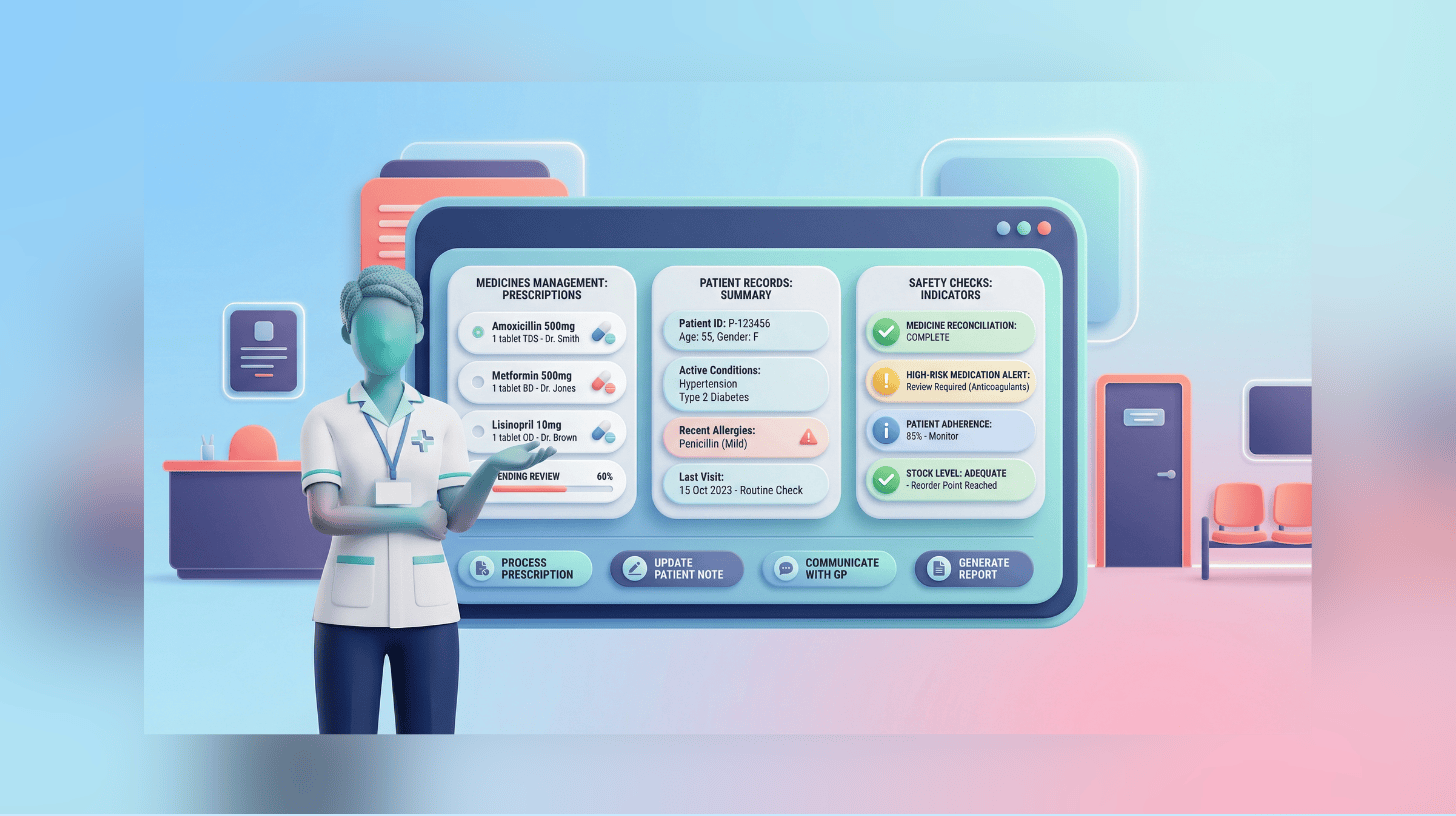
When asked “what is a primary care technician?”, the simplest answer is that they handle the essential, process-driven side of medicines management. The primary care technician role ensures that patient records are accurate, prescriptions are processed safely, and potential risks are flagged early.
Core responsibilities typically include:
| Area | Key Responsibilities |
| Medicines reconciliation | A pharmacy technician medicines reconciliation involves updating patient records accurately following hospital discharge or changes in care settings. |
| Repeat prescriptions | Processing routine requests, resolving queries, and managing electronic repeat dispensing (eRD). |
| Safety audits | Identifying patients who need monitoring, such as those on high-risk drugs or missing blood tests. |
| Data quality | Ensuring clinical coding is accurate to support QOF targets and safe patient care. |
By managing these workflows, a pharmacy technician primary care network professional creates a safer, more efficient system that benefits both patients and clinicians. This is why pharmacy technicians in GP practices are now considered essential.
Pharmacy technician vs pharmacist: What is the difference?
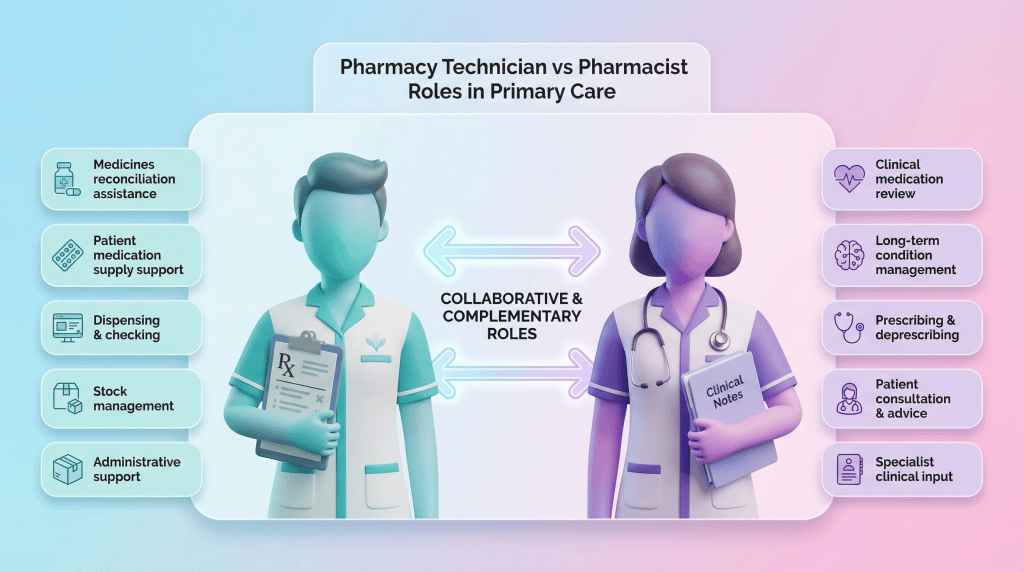
When looking at a pharmacy technician vs pharmacist, the most common point of confusion is clinical responsibility and decision-making.
A primary care technician focuses on the technical and operational aspects of medicines. They ask, “Is this prescription accurate, and are the safety checks complete?” In contrast, a Clinical Pharmacist focuses on clinical appropriateness. They ask, “Is this the right treatment for this patient’s condition?”
For example, a technician might gather the data and arrange the blood tests required for a review, while the clinical pharmacist conducts the review and adjusts the medication. This layered approach is why integrating technicians alongside clinical pharmacist services is the most effective model for PCNs.
Need the right pharmacy skill mix for your PCN?
Discuss your pharmacy team needsWhy do PCNs need primary care technicians?
Primary care is under immense pressure, and medicines-related administration is one of the largest drains on GP time. Primary care technicians directly address this bottleneck.
By taking ownership of prescription queries, discharge follow-ups, and medication administration, they significantly reduce avoidable GP workload. Furthermore, they play a critical role in improving medication safety. By actively identifying missing monitoring and coding errors, their work aligns directly with NHS England medicines optimisation guidance.
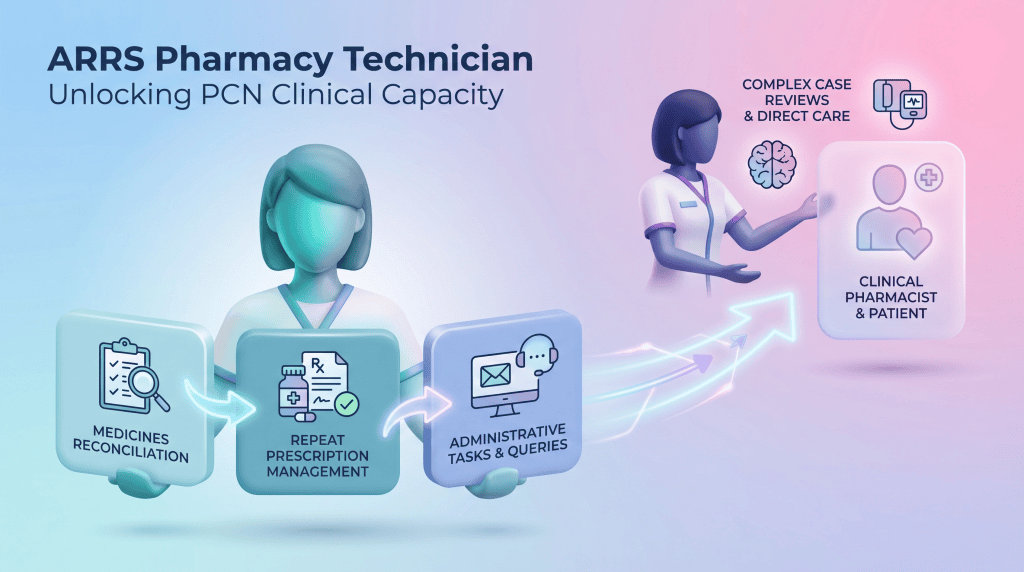
Crucially, they unlock clinical capacity. Understanding the primary care technician role is important here: without technician support, Clinical Pharmacists often get pulled into administrative tasks. With the right technical support in place, pharmacists can focus on delivering structured medication reviews and proactive care. PCNs that invest in a pharmacy technician primary care network model consistently report better efficiency and safer medicines management.
Expert insight from Adeem Azhar, qualified Clinical Pharmacist and CEO
“The most effective PCNs don’t see pharmacy technicians as admin support-they see them as system enablers. When used properly, they create the capacity that makes clinical pharmacy services work.”
Adeem Azhar, MPharm, IPres
Co-Founder and Chief Executive Officer – Core Prescribing Solutions
Qualified Clinical Pharmacist
FAQs
Looking for support with your PCN clinical pharmacy workforce?
If your PCN needs help building an effective, balanced pharmacy team, we can help. Our pharmacy technician support services integrate seamlessly with your practice to handle technical workflows, improve safety, and free up your clinical staff.