Skip to main content


 01274 442076


Clinical Pharmacist vs Pharmacy Technician: What Does Your PCN Need?
|
Getting your Trinity Audio player ready...
|
The question of clinical pharmacist vs pharmacy technician is one of the most common workforce decisions facing PCN managers today. A clinical pharmacist drives clinical outcomes through complex medication reviews and prescribing, while a pharmacy technician enables scale by managing the operational systems that keep medicines use safe. Understanding the difference between pharmacy technician and clinical pharmacist roles is not just an academic exercise – it is a practical workforce design question that directly affects patient safety and practice capacity. Getting the clinical pharmacist vs pharmacy technician balance right is central to how NHS England expects PCNs to structure their teams.
- What is the difference between a clinical pharmacist and a pharmacy technician?
- What does a pharmacy technician do in a GP practice?
- What does a clinical pharmacist do in primary care?
- Should a PCN hire a pharmacy technician or clinical pharmacist?
- How do pharmacy roles work together in a PCN?
Key Takeaways
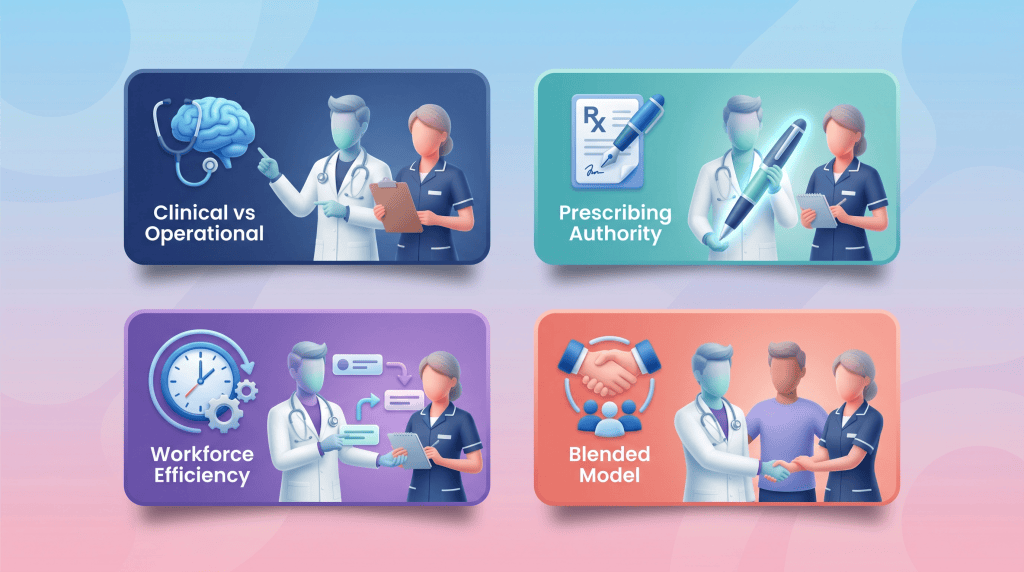
- Clinical vs operational: Clinical pharmacists make complex prescribing decisions, whereas pharmacy technicians manage the systems that keep prescribing safe.
- Prescribing authority: Clinical pharmacists can qualify as independent prescribers, but pharmacy technicians cannot legally prescribe.
- Workforce efficiency: Pharmacy technicians can safely replace up to 50% of a clinical pharmacist’s administrative workload when deployed correctly.
- Blended model: PCNs achieve the highest return on investment by combining both roles. The pharmacy technician vs clinical pharmacist pairing is the model NHS England recommends for primary care.
What is the difference between a clinical pharmacist and a pharmacy technician?
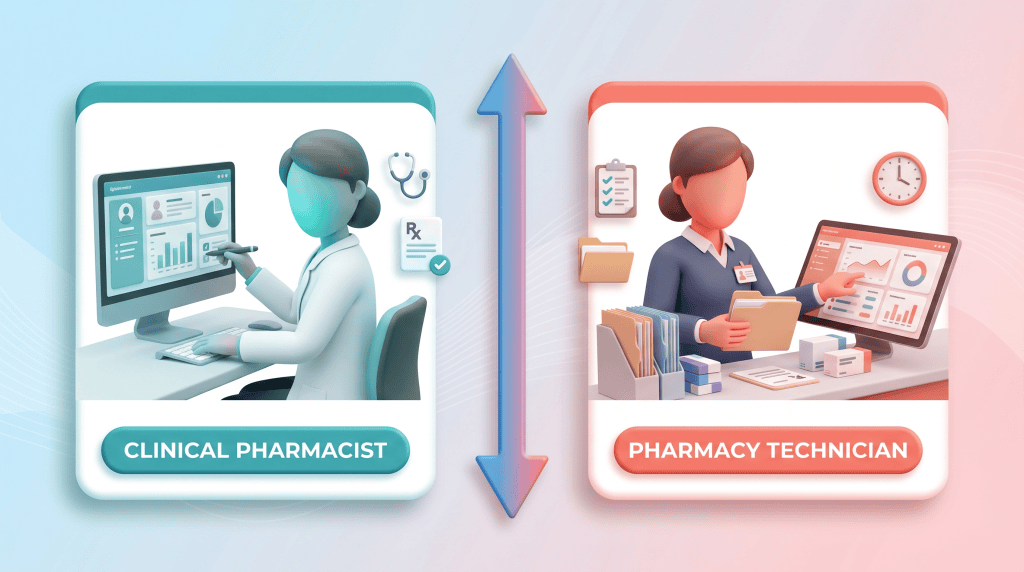
The difference between pharmacy technician and clinical pharmacist roles lies in clinical responsibility versus operational delivery. A clinical pharmacist is a highly trained medicines specialist who manages patient treatment, often with independent prescribing responsibilities. They lead on Structured Medication Reviews (SMRs), long-term condition management, and complex deprescribing strategies. Understanding the clinical pharmacist vs pharmacy technician distinction is essential for any PCN manager planning their ARRS pharmacy roles.
In contrast, a pharmacy technician is a registered healthcare professional focused on the safe supply and administration of medicines. They do not make clinical prescribing decisions. Instead, they handle medicines reconciliation post-discharge, process prescription queries, and manage patient recall systems. When reviewing PCN pharmacy team roles, it is important to recognise that pharmacy technician vs clinical pharmacist responsibilities sit in entirely different domains: clinical decision-making versus operational delivery. This distinction shapes how pharmacy roles in primary care network should be planned and funded.
What does a pharmacy technician do in a GP practice?
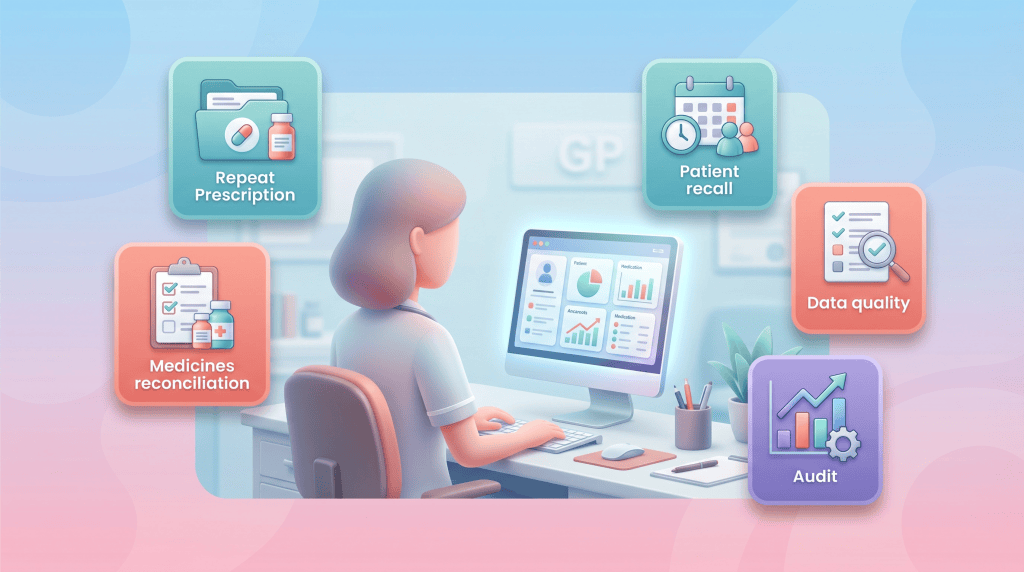
A pharmacy technician in a GP practice focuses on keeping prescribing systems running safely and efficiently. They identify patients on high-risk medications, complete data checks, and prepare cases for clinical review. The pharmacy technician role in GP surgery also covers repeat prescription management, supporting audits, and improving data quality. By managing this operational workload, they significantly reduce the administrative burden on GPs and clinical pharmacists, increasing the throughput of patients reviewed. This is a key consideration when mapping pharmacy roles in primary care network.
What does a clinical pharmacist do in primary care?
A clinical pharmacist in primary care provides direct, patient-facing care for individuals with complex medication needs. They conduct detailed clinical reviews, adjust medications, and prescribe treatments where necessary. Their work directly reduces inappropriate prescribing and improves outcomes in long-term conditions such as diabetes and COPD. For more details on their impact, see our guide on the role of clinical pharmacists in primary care networks.
Should a PCN hire a pharmacy technician or clinical pharmacist?
The answer to whether a PCN should hire a pharmacy technician or clinical pharmacist depends on its specific operational bottlenecks. If the primary issue is a backlog of complex SMRs and high clinical risk, a clinical pharmacist is required. However, if clinical pharmacists or GPs are spending hours on prescription queries and data reconciliation, the pharmacy technician role in GP surgery settings is the most cost-effective solution. The highest-performing PCNs use a blended model where technicians handle the operational workload, freeing pharmacists to focus on clinical outcomes. Reviewing the clinical pharmacist vs pharmacy technician split is therefore a strategic, not just a clinical, decision.
Expert insight from Adeem Azhar, qualified Clinical Pharmacist and CEO
The biggest gains in primary care don’t come from choosing between roles – they come from structuring them properly. When Clinical Pharmacists are freed to focus on clinical work, and Pharmacy Technicians run the systems around them, practices see both safer care and better capacity.
Adeem Azhar, MPharm, IPres
Co-Founder and Chief Executive Officer – Core Prescribing Solutions
Qualified Clinical Pharmacist

Not sure which pharmacy skill mix your PCN needs?
Discuss your pharmacy workforce mixHow do pharmacy roles work together in a PCN?
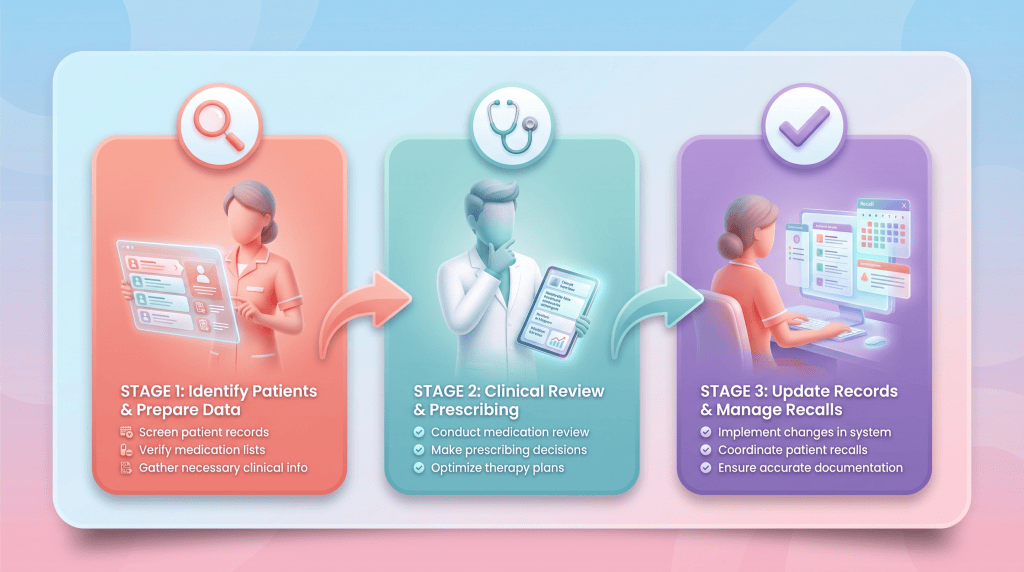
Pharmacy roles in a primary care network work best as an integrated workflow. A typical process begins with the pharmacy technician identifying patients and completing necessary data checks. The clinical pharmacist then conducts the clinical review and makes prescribing decisions. Finally, the technician follows up by updating records and managing recalls. When structuring ARRS pharmacy roles, this division of labour is what allows PCNs to scale services like medicines optimisation safely and effectively.
PCN pharmacy team roles are most effective when each professional works at the top of their scope. Pharmacy roles in a primary care network should therefore be designed around clinical need and operational capacity together, not in isolation. The pharmacy technician vs clinical pharmacist dynamic is not a hierarchy – it is a division of expertise that makes the whole team more effective. For further context on role distinctions within the pharmacy profession, you can also review our comparison of clinical pharmacist vs pharmacist.
FAQ
Looking for clinical pharmacist support?
If your practice or PCN is struggling to keep up with SMRs, polypharmacy risk, or medicines optimisation, we can help with additional clinical pharmacist support.
Our experienced clinical pharmacists integrate into your team and deliver outcomes that matter.