Skip to main content


 01274 442076



The New Era of HIV Prevention: What the Twice-Yearly Injection Means for UK Prescribers
|
Getting your Trinity Audio player ready...
|
A twice-yearly HIV prevention injection has been approved across global markets, marking a breakthrough in HIV PrEP (pre-exposure prophylaxis).
The medication – lenacapavir, a long-acting injection – reduces the need for daily tablets and offers up to 99 per cent protection against HIV when used correctly.
Key Take-Aways
- Twice-yearly protection: Lenacapavir offers protection with just two injections per year.
- New mechanism: First capsid inhibitor for HIV prevention.
- High efficacy: ≈99% effective when administered correctly.
- Reduced adherence burden: Ideal for patients struggling with daily HIV PrEP.
- Prescribing readiness: Clinicians should update protocols and educate patients on HIV prevention options UK-wide.
This article outlines:
- What the new long-acting HIV prevention injection is and how it works
- Why it matters for UK prescribers and NHS rollout plans
- Key HIV prescribing guidance and patient-eligibility considerations
- Practical next steps for Primary Care Networks (PCNs) and Integrated Care Boards (ICBs)
Why This Matters to Core Prescribing Solutions
Core Prescribing Solutions supports healthcare organisations in implementing innovative medicines management models.
As new options like injectable HIV PrEP enter NHS pathways, prescribers need practical support to manage eligibility, adherence, and monitoring safely.
This article demonstrates our commitment to helping clinical teams navigate change and improve patient outcomes.
Understanding the Breakthrough
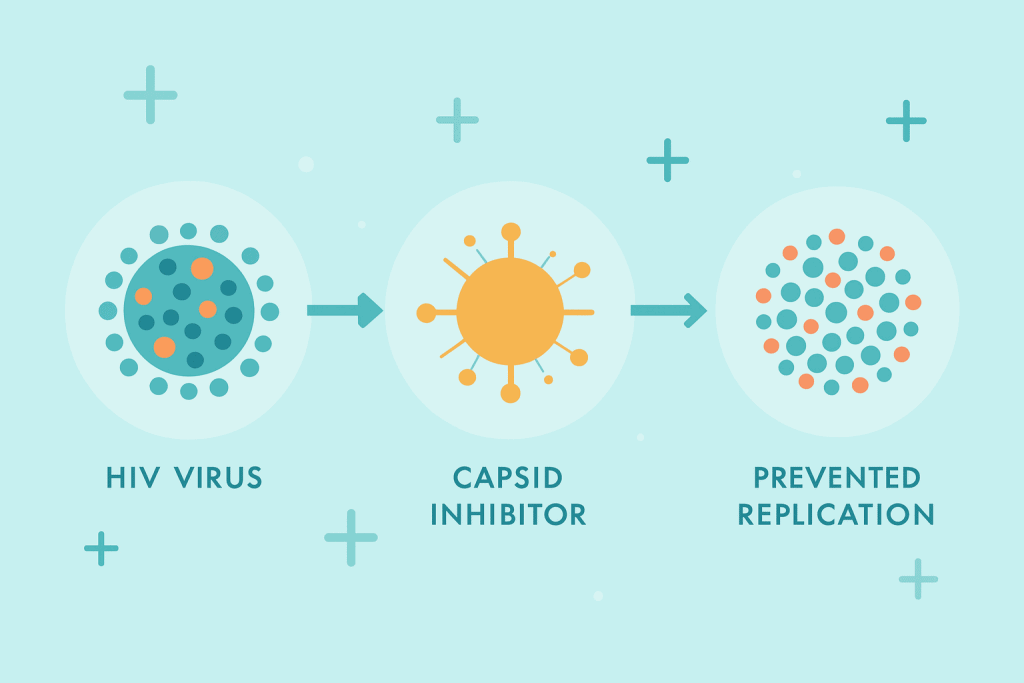
Lenacapavir is the first approved capsid inhibitor for HIV prevention – a class of drug that targets the virus’s protective shell and interrupts multiple stages of its replication cycle.
Unlike daily oral PrEP, lenacapavir is delivered as a subcutaneous injection every 26 weeks.
Trials (PURPOSE 1 & 2) reported near-complete protection, with adherence and safety both superior to oral alternatives. This makes lenacapavir PrEP one of the most effective and promising long-acting options currently available.
Need a clear governance plan for future long-acting PrEP pathways?
Discuss prescribing readiness supportThe NHS Context: Expanding HIV PrEP Access in the UK
The UK’s goal to end new HIV transmissions by 2030 depends on expanding access to proven prevention options.
The NHS has already integrated oral HIV PrEP into routine sexual-health services, but uptake remains uneven – particularly among people who find daily medication difficult or face stigma.
In 2025, NHS England confirmed plans to roll out injectable PrEP UK programmes for eligible patients who cannot take or tolerate oral PrEP, beginning with phased regional pilots.
Availability and Prescribing Outlook
Although the introduction of lenacapavir marks a major step forward, it’s not yet widely available on the NHS.
Early rollout is limited to selected regional and specialist services, with GP practices unlikely to prescribe it in the short term.
Broader NHS access will depend on national guidance, funding, and local commissioning decisions over the next 12-24 months.
For now, the key priority for prescribers is awareness – understanding how this fits within the broader HIV preventionlandscape and preparing governance frameworks for future adoption.

Key Differences: Oral PrEP vs Long-Acting HIV Prevention Injection
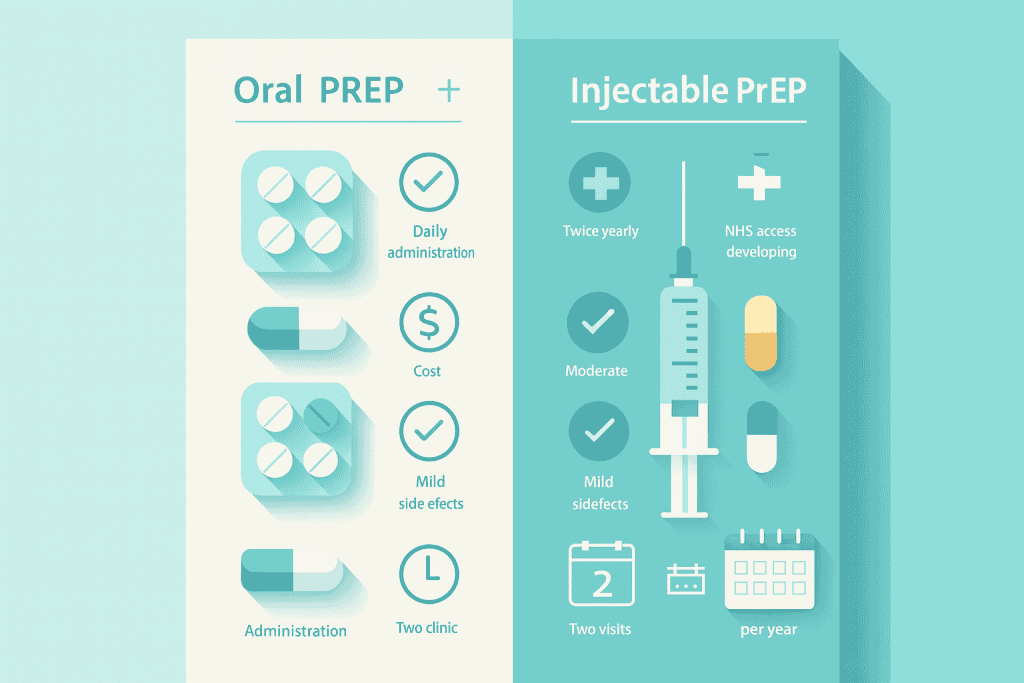
| Feature | Oral PrEP (Tablet) | Long-Acting Injectable PrEP (Lenacapavir) |
| Administration | Daily tablet | Injection every 6 months |
| Adherence requirement | Daily routine | 2 visits per year |
| Mechanism | Reverse transcriptase inhibitor | Capsid inhibitor |
| Common users | Most patients | Those with adherence challenges |
| Availability (UK) | Established NHS service | Rolling out 2025-26 |
Comparison of oral PrEP and long-acting HIV prevention injection (UK 2025)
Prescriber Checklist
| Step | Key Action |
| 1 – Confirm HIV-negative status | HIV test before every injection to avoid resistance risk. |
| 2 – Assess suitability | Consider patients with poor adherence, intolerance to oral PrEP, or social barriers. |
| 3 – Administer correctly | Subcutaneous injection every 26 weeks; record and schedule follow-ups. |
| 4 – Monitor for side-effects | Mostly mild injection-site reactions; report and review adverse events. |
| 5 – Provide ongoing support | Reinforce safe-sex advice and STI screening at each visit. |
What This Means for Your Practice
- Operational planning: Identify capacity for bi-annual injections and follow-up.
- Data capture: Record uptake and outcomes to inform ICB commissioning decisions.
- Training: Ensure clinicians understand administration, contraindications, and patient education.
- Communication: Prepare clear patient messaging on how the injection works and why testing before each dose is essential.
- Collaboration: Liaise with local sexual-health services to streamline referrals and monitoring.
Patient FAQs (for Clinical Use)
Strategic Perspective: Innovation in HIV Prevention
The arrival of long-acting injectable PrEP represents a major advancement in HIV prevention options across the UK.
Expert insight from Adeem Azhar, qualified Clinical Pharmacist and CEO
“While this new long-acting injection represents real progress in HIV prevention, it’s important to remember that it’s not yet widely available on the NHS and GP practices won’t be prescribing it in the immediate future.
Our focus at Core Prescribing Solutions is to help healthcare organisations prepare for innovations like this – ensuring safe, evidence-based adoption when they do become available through NHS channels. It’s about being ready, informed, and clinically confident.”
Adeem Azhar, MPharm, IPres
Co-Founder and Chief Executive Officer – Core Prescribing Solutions
Qualified Clinical Pharmacist

How Core Prescribing Solutions Can Help
Prepare your organisation for the next generation of HIV prevention
Core Prescribing Solutions can support PCNs and ICBs with prescribing governance, pathway design, medicines optimisation and clinical workforce planning as new prevention therapies enter NHS pathways. We can help teams prepare safe, scalable processes for eligibility, monitoring, data capture and collaborative care when locally commissioned services are introduced.
Discuss your prescribing readinessDisclaimer
This content is for informational purposes only and is not a substitute for clinical judgment or official NHS guidance. Always refer to local prescribing protocols and governance requirements before initiating treatment.