Skip to main content


 01274 442076


NHS Advice on Omeprazole: What Patients Should Know
|
Getting your Trinity Audio player ready...
|
Omeprazole is one of the most commonly prescribed medicines in the UK. Many patients search online to understand what omeprazole is used for, how long you can take omeprazole, and whether omeprazole is safe long term. While it is an effective treatment for acid reflux and stomach ulcers, NHS guidance recommends reviewing long-term use to ensure it is still the right medicine for you.
- What Is Omeprazole Used For?
- How Long Can You Take Omeprazole?
- Is Omeprazole Safe Long Term?
- What Are the Possible Long-Term Side Effects of Omeprazole?
- Can You Stop Omeprazole Suddenly?
- When Should You Speak to Your GP About Omeprazole?
Key Takeaways
- Omeprazole is a safe and effective medicine for most people when used correctly.
- Your doctor will regularly review your treatment to make sure it’s still the right option for you.
- Don’t stop taking omeprazole suddenly; always talk to your GP or clinical pharmacist before making changes.
What Is Omeprazole Used For?
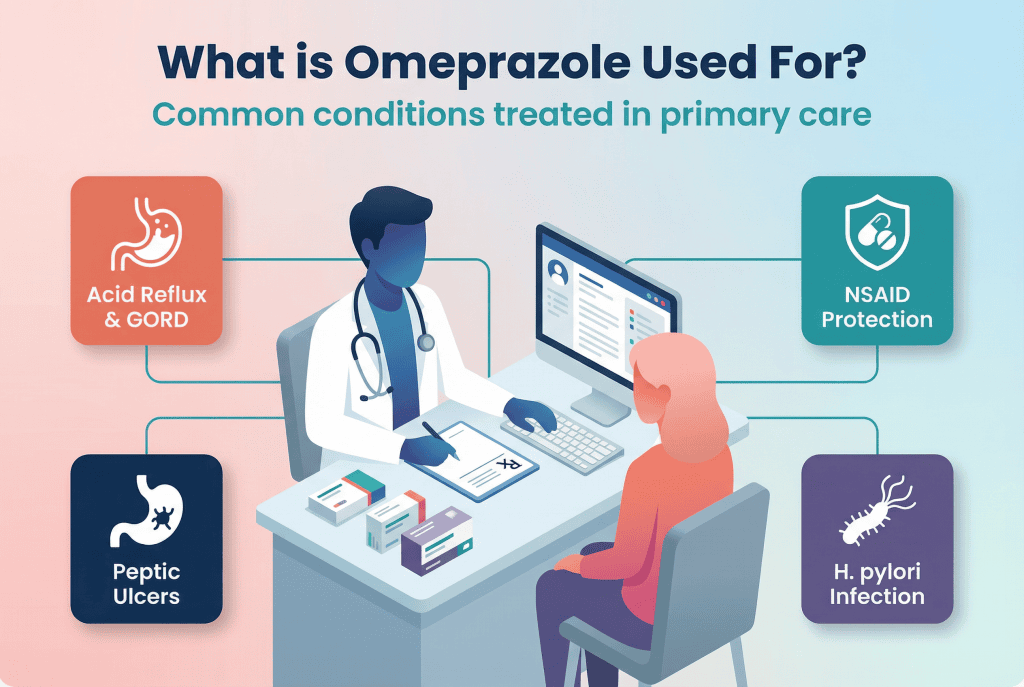
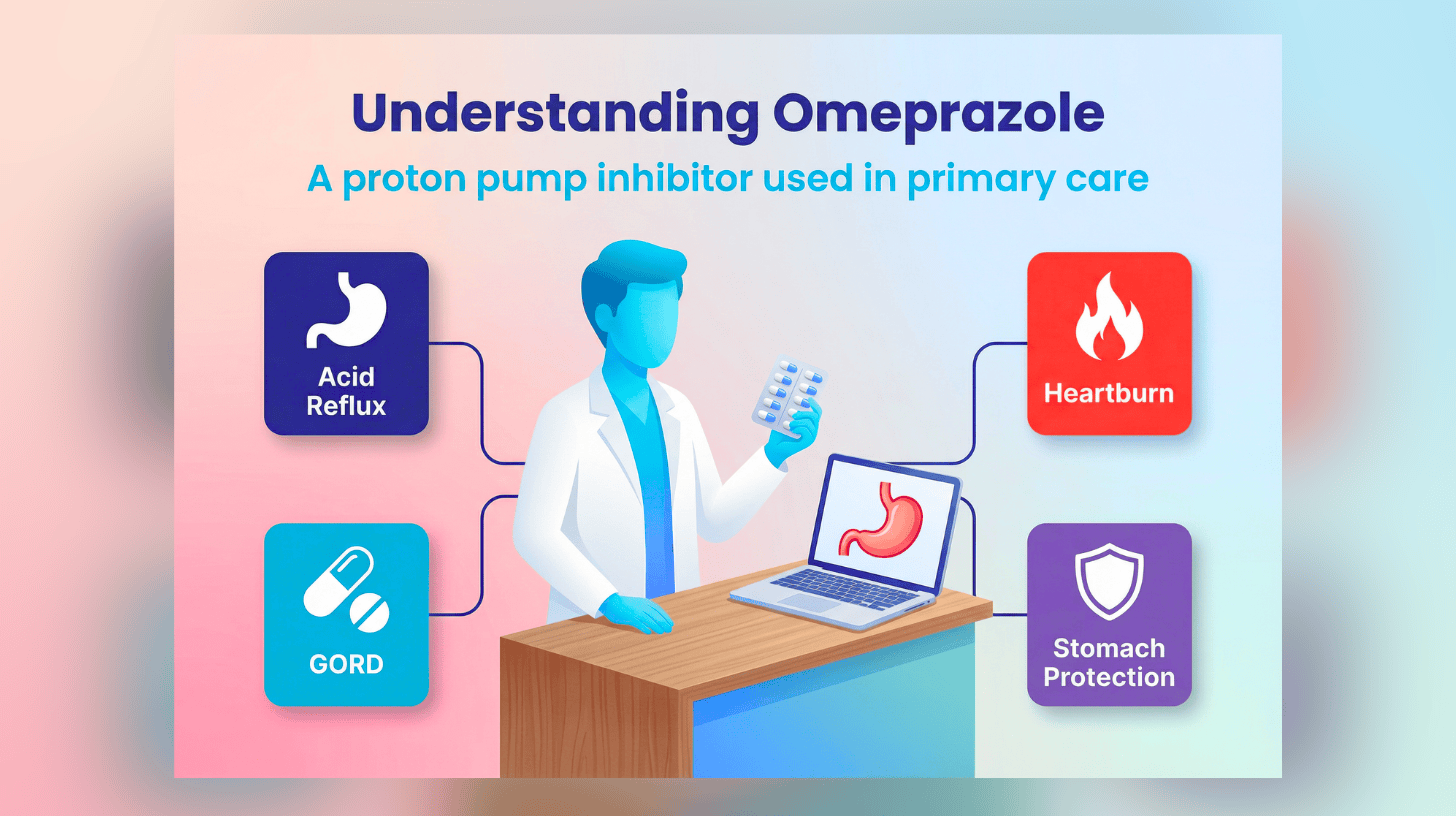
Omeprazole belongs to a group of medicines called ‘proton pump inhibitors’ or PPIs. You can find out more about it from the official NHS information on omeprazole. It works by reducing the amount of acid your stomach makes. Omeprazole is commonly prescribed for acid reflux, persistent heartburn and stomach ulcers.
This is helpful for several conditions, including:
- Gastro-oesophageal Reflux Disease (GORD): This is when acid reflux happens often. The National Institute for Health and Care Excellence (NICE) has patient information on GORD that explains it in more detail.
- Stomach Ulcers: Sores on the lining of your stomach or small intestine.
Typical Reasons Omeprazole Is Prescribed and How Long Treatment Lasts
| Common Reason for Omeprazole | Typical Treatment Duration |
| Heartburn or Acid Reflux | 2 to 4 weeks |
| Stomach Ulcers | 2 to 8 weeks |
| GORD | 4 to 8 weeks, sometimes longer |
How Long Can You Take Omeprazole?

How long you take omeprazole depends on your condition. For short-term problems, you might only need it for a few weeks. For some long-term conditions, your doctor may recommend you stay on it for longer to prevent symptoms.
Because it works well for controlling symptoms, some patients remain on omeprazole for longer than originally planned. During routine NHS medicines optimisation checks, doctors and clinical pharmacists often review whether patients still need medicines like omeprazole.
Need support reviewing long-term PPI prescribing?
Discuss medicines optimisation supportIs Omeprazole Safe Long Term?
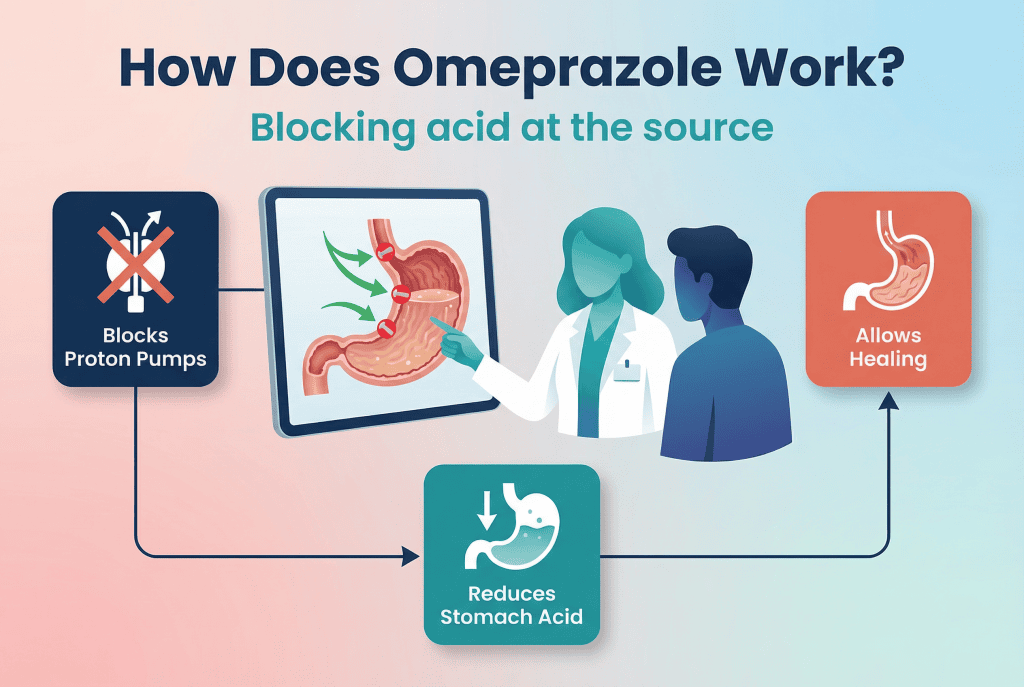
Yes generally, for most people, omeprazole is safe for long-term use when a doctor has decided the benefits outweigh the risks. However, like all medicines, taking it for a very long time can increase the chance of certain side effects.
This is why your doctor will want to make sure you are on the lowest effective dose for the shortest time possible.
What Are the Possible Long-Term Side Effects of Omeprazole?
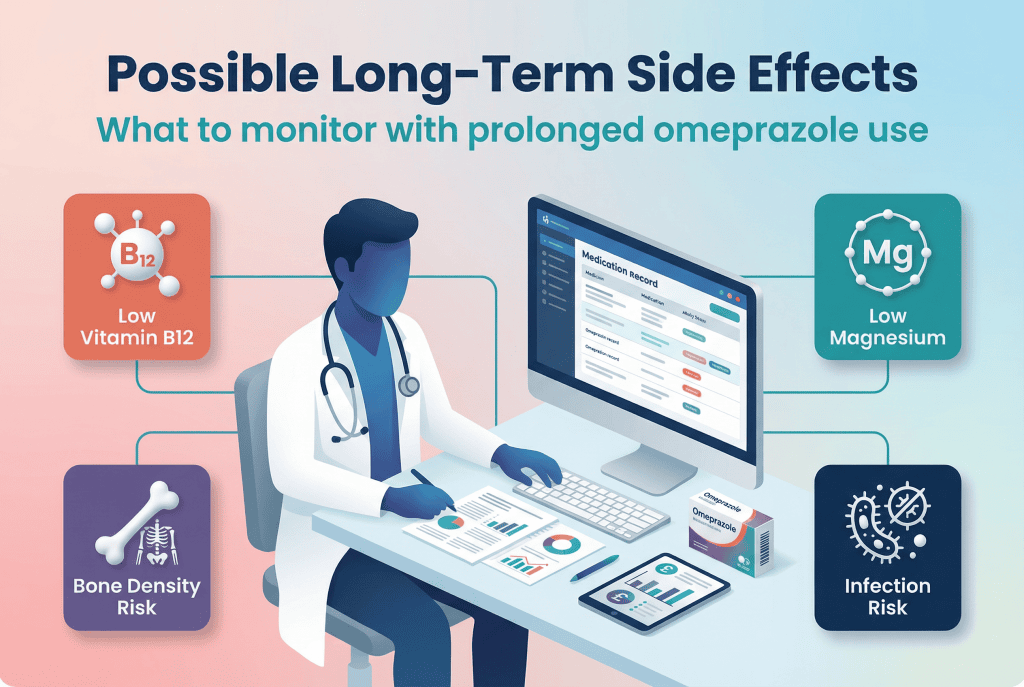
The main long term omeprazole risks that doctors consider are rare, but can include:
- Vitamin B12 Deficiency: Making it harder for your body to absorb vitamin B12.
- Low Magnesium Levels: Which might cause muscle twitches or cramps.
- Bone Health: A small increased risk of bone fractures, especially in older people.
- Stomach Infections: A slightly higher chance of getting a stomach bug.
These omeprazole side effects long term are uncommon, and most people who take omeprazole do not experience any serious problems.
Can You Stop Omeprazole Suddenly?
It is usually best not to stop omeprazole suddenly. If you do, your stomach can produce extra acid and your symptoms might come back for a short while. To avoid this, your doctor will likely recommend reducing your dose slowly.
When Should You Speak to Your GP About Omeprazole?
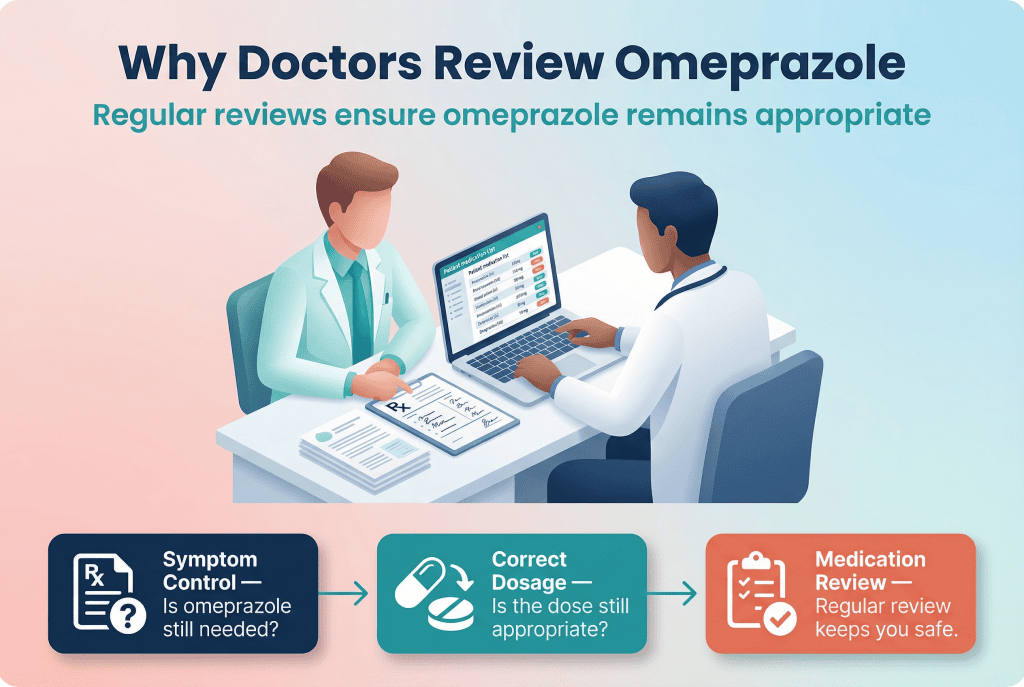
You should always speak to your GP or clinical pharmacist before making any changes to your medication. It is a good idea to book a Structured Medication Review if:
- Your symptoms are not improving or are getting worse.
- You are concerned about taking omeprazole long-term.
- You think you might be experiencing a new side effect.
Expert insight from Adeem Azhar, qualified Clinical Pharmacist and CEO
“Medicines like omeprazole can be important to help manage symptoms like heartburn and reflux. It’s a normal part of good care for your GP or clinical pharmacist to review your treatment from time to time, just to check it’s still the best option for you. If you have any questions about your medicine, they are always there to help.”
Adeem Azhar, MPharm, IPres
Co-Founder and Chief Executive Officer – Core Prescribing Solutions
Qualified Clinical Pharmacist
Frequently Asked Questions
This article is for informational purposes only and does not constitute medical advice. If you have any questions, please get in touch or speak to your GP or clinical pharmacist before making any decisions about your medication.
Strengthen long-term medicines review across your practice or PCN
Core Prescribing Solutions can support practices and PCNs with Structured Medication Reviews, medicines optimisation and Clinical Pharmacist capacity for patients taking long-term medicines. Our teams can help identify ongoing need, medicines-related risk and appropriate monitoring while supporting safer, patient-centred prescribing.
Discuss medicines review support