Skip to main content


 01274 442076


Medicines Optimisation vs Medicines Management in the UK
|
Getting your Trinity Audio player ready...
|
- What is Medicines Management?
- What is Medicines Optimisation UK?
- Medicines Optimisation vs Medicines Management: A Comparison
Medicines management focuses on the systems and governance of prescribing, while medicines optimisation is a person-centred approach aimed at improving patient outcomes and clinical value in primary care. In UK primary care, optimisation builds on management processes to ensure medicines deliver measurable clinical value. Understanding the difference between medicines management and optimisation is essential for PCNs, ICBs and practice leaders.
Medicines optimisation is a core part of delivering safe and effective care in primary care. For a deeper look at how medicines optimisation services support GP practices and PCNs, explore our medicines optimisation services.
Key Takeaways
- Focus on Outcomes: The core of medicines optimisation vs medicines management is the shift from process to patient outcomes and value.
- Patient-Centred: Optimisation is a person-centred approach involving shared decision-making, unlike the system-focused nature of management.
- Broader Scope: The clinical pharmacist role in medicines optimisation includes activities like deprescribing and adherence support, which go beyond traditional management.

What is Medicines Management?
Medicines management refers to the traditional systems that govern how medicines are prescribed and monitored. As cited in the NICE guideline on medicines optimisation, it was originally defined as “a system of processes and behaviours that determines how medicines are used by the NHS and patients.” This is the essential foundation for safe medicine use. In UK primary care, particularly within PCNs and ICBs, the distinction affects workforce planning, ARRS utilisation, and service delivery.

What is Medicines Optimisation UK?
So, what is medicines optimisation UK? It is a broader concept that puts the patient at the centre of their care. NICE defines it as a “person-centred approach to safe and effective medicines use, to ensure people obtain the best possible outcomes from their medicines.”
The Royal Pharmaceutical Society (RPS) outlines four core medicines optimisation principles: understanding the patient’s experience, using evidence-based choices, ensuring safe use, and making optimisation part of routine practice. Answering ‘what is medicines optimisation UK?’ requires acknowledging these principles.
The clinical pharmacist role in medicines optimisation is pivotal. When PCNs invest properly in their clinical pharmacy workforce, patient outcomes improve. That is where optimisation moves beyond management.
Adeem Azhar, Co-Founder and Chief Executive Officer – Core Prescribing Solutions
This is where structured medicines optimisation services deliver measurable improvements in patient outcomes and prescribing efficiency.

Medicines Optimisation vs Medicines Management: A Comparison
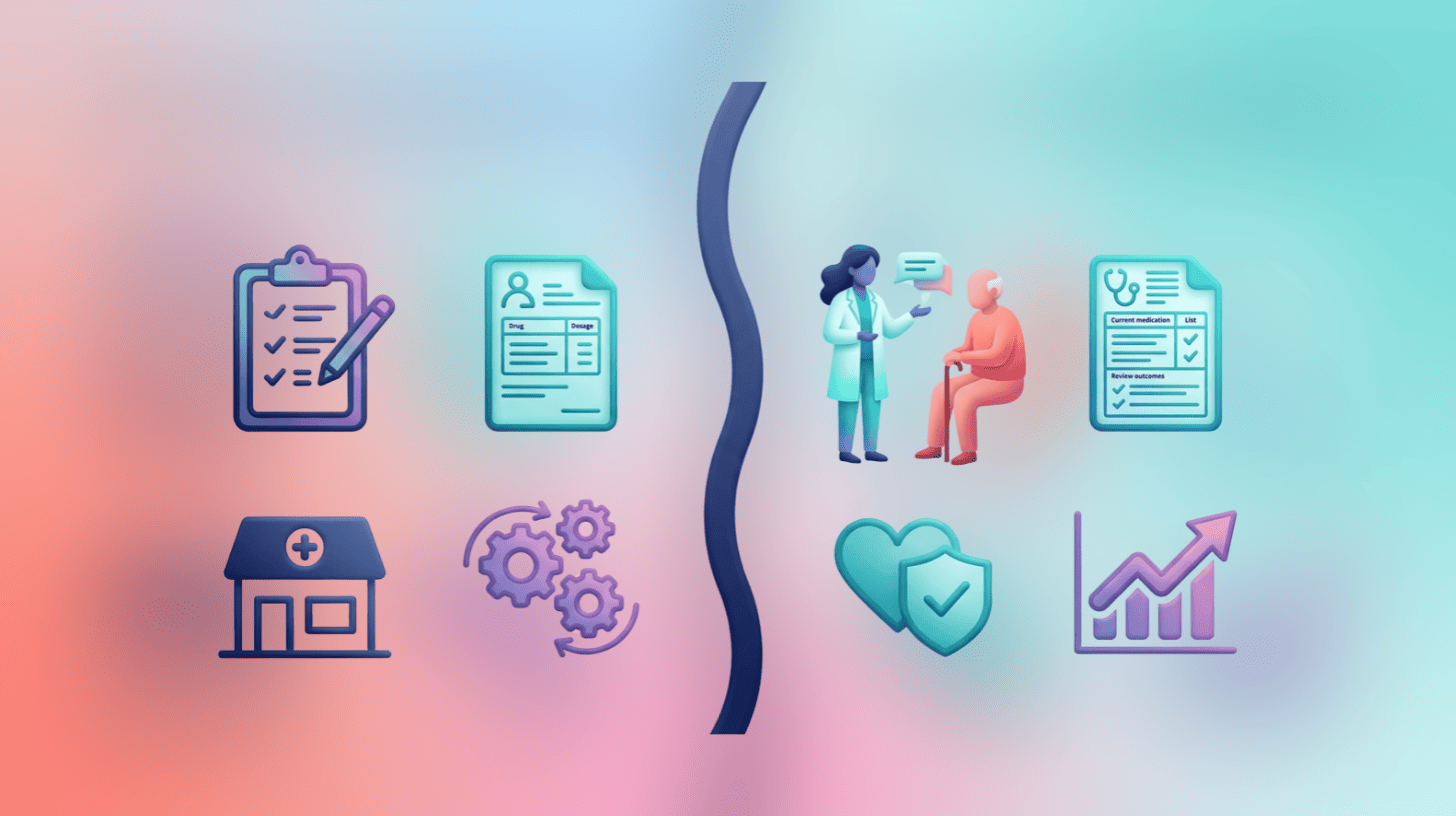
The simplest way to understand the difference between medicines management and optimisation is to think of management as how the machine runs and optimisation as whether the machine is improving lives. This is clear when comparing a structured medication review vs medicines management.
| Medicines Management | Medicines Optimisation |
| Focuses on systems and governance | Focuses on patient outcomes |
| Prescribing audits | Structured Medication Reviews |
| Compliance and process | Shared decision-making |
| Operational efficiency | Clinical value and safety |
This practical distinction is central to the medicines optimisation vs medicines management debate.

FAQs

Moving from Medicines Management to True Medicines Optimisation
If your PCN is focused on moving from medicines management to true medicines optimisation in primary care, our Clinical Pharmacist team can help you implement structured medication reviews, improve safety, and unlock capacity. Understanding the nuances of medicines optimisation vs medicines management is the first step. Our medicines optimisation services support PCNs and GP practices in making this transition effectively and sustainably.