Skip to main content


 01274 442076



Medication review over the phone: Communication Support and Accessible Alternatives
|
Getting your Trinity Audio player ready...
|
- A practical appointment-planning checklist
- What if a patient cannot use the telephone?
- How should teams use the Accessible information standard?
- Can an interpreter support a remote clinical pharmacy appointment?
- How can PCNs address digital exclusion?
- How should teams follow up and check understanding?
A medication review over the phone is accessible only if the patient can communicate, understand and act. Others may need interpreting, a different format or an in-person route. After the consultation format is agreed, teams need to ensure the patient can access it and participate.
Key Takeaways
- The Accessible information standard has six steps: identify, record, flag, share, meet and review.
- Digital exclusion includes skills, confidence, trust and accessibility.
- Professional interpreting supports conversation; translation supports written information.
- An agreed alternative must be genuinely accessible.
A practical appointment-planning checklist
Coordinate communication support from booking through to follow-up.
- Identify and record needs. Ask about preferred contact, support and language or dialect where relevant.
- Assign responsibility. Name who arranges support, briefs the clinical pharmacist and responds if contact fails.
- Agree the format. Before a medication review over the phone is booked, confirm the route, time and support required.
- Plan participation and privacy. If a carer joins, agree the patient’s wishes, the carer’s role and what may be discussed.
- Follow up and review. Send an agreed-format summary and record what worked.

This reduces communication barriers in healthcare and supports medicines optimisation.
Expert insight from Adeem Azhar, qualified Clinical Pharmacist and CEO
Remote clinical pharmacy only delivers value when it is treated as a governed clinical service, not a staffing workaround.
Adeem Azhar, MPharm, IPres
Co-Founder and Chief Executive Officer – Core Prescribing Solutions
Qualified Clinical Pharmacist
What if a patient cannot use the telephone?

Offer a patient-agreed alternative, not a default online form.
| Patient preference or barrier | Arrangement to discuss and confirm |
|---|---|
| Uses BSL | Arrange a qualified BSL interpreter through the local process. |
| Cannot access or understand standard written information | Agree a suitable format, such as large print, audio, Easy Read or accessible digital text. |
| Cannot use the usual route | Agree alternative communication methods, including supported face-to-face contact where appropriate. |
Not every deaf person needs a BSL interpreter. Easy Read is a specific format. Agree support with the patient.
Choosing a format that helps the patient access and understand information can support health literacy before the appointment.
Need remote clinical pharmacy support built around patients’ communication needs?
Discuss accessible pharmacy supportHow should teams use the Accessible information standard?
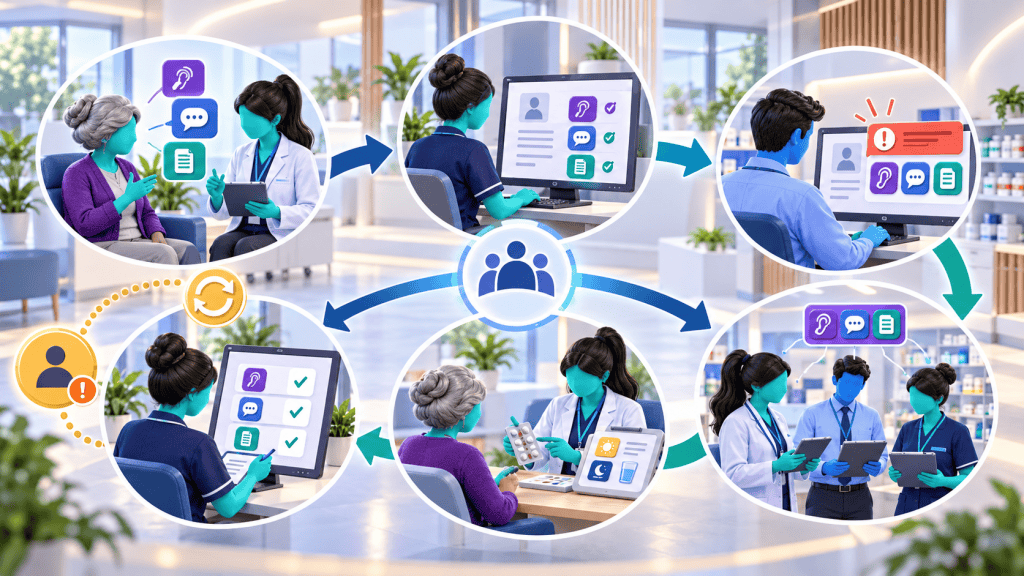
The Accessible information standard provides the framework. NHS England guidance says providers should:
“Identify, record, flag, share, meet and review.”
– NHS England
The standard covers needs associated with disability, impairment or sensory loss. Spoken-language interpreting needs separate planning.
Clinical pharmacists need the recorded requirements. Name an owner for outstanding arrangements. Where pharmacy technicians are involved, agree their role in checking requirements and co-ordinating arrangements.
Can an interpreter support a remote clinical pharmacy appointment?
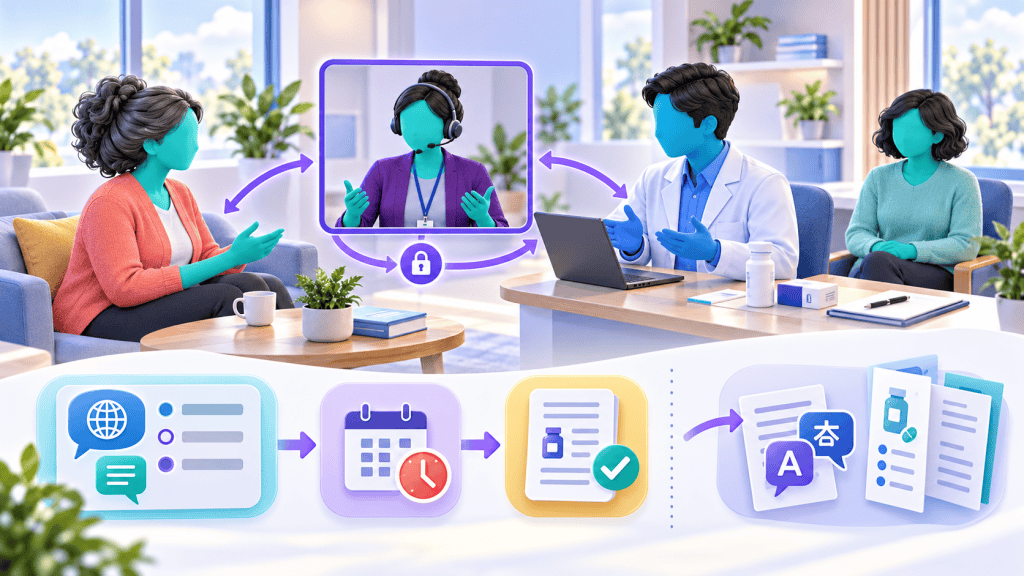
Yes. Record the preferred language and dialect. Arrange telephone interpreting or another suitable service in advance. Staff should know how to access local NHS interpreter services, allow enough time and speak directly to the patient.
Interpreting differs from translating invitations or summaries. NHS England’s interpreting framework recommends early recording and referrals.
Where language is a barrier, offer a professional interpreter rather than routine family interpretation. Children should not interpret. Family members can still offer support, as GOV.UK guidance explains.
How can PCNs address digital exclusion?
Digital exclusion can prevent patients from using apps, text-based services or video calls. Separately, some patients may not have a private place to discuss their medicines. NHS England’s inclusive digital framework covers access, accessibility, skills and trust. If the route fails, investigate the barrier and arrange the next option.
How should teams follow up and check understanding?

Send an agreed-format summary. An Easy Read summary may help some people revisit actions. Explain in short sections, then invite the patient to describe agreed actions in their own words. This checks explanation clarity, not the patient’s health literacy.
FAQ
Build remote medication reviews that patients can actually access
Core Prescribing Solutions can support GP practices and PCNs with remote Clinical Pharmacist capacity delivered within agreed accessibility, communication and governance arrangements. We can work within local processes for interpreting, alternative formats and appropriate consultation routes so remote medication reviews remain patient-centred, clinically governed and supported by clear follow-up.
Discuss remote clinical pharmacy support