Skip to main content


 01274 442076


Inhaler Technique in Primary Care: A PCN Pharmacist’s Guide
|
Getting your Trinity Audio player ready...
|
- Why is inhaler technique in primary care so important?
- Why should inhaler adherence and technique be assessed together?
- Which patients should be prioritised for an inhaler review?
- How should PCN pharmacists assess inhaler technique in primary care?
- What role do Pharmacy Technicians play in inhaler technique assessment?
Inhaler technique in primary care is an essential part of respiratory medicines optimisation. NICE guidance recommends checking inhaler technique in Primary Care and adherence before escalating treatment for patients whose asthma is not well controlled. Yet poor device use remains one of the most common and under addressed causes of uncontrolled asthma and COPD. A structured inhaler technique assessment helps Clinical Pharmacists and Pharmacy Technicians identify poor device use, address inhaler adherence, and improve asthma and COPD reviews across PCNs. Using EMIS searches to identify high-risk patients allows pharmacy teams to prioritise respiratory reviews where they will have the greatest impact.
Key Takeaways
- Targeted intervention: Structured reviews address the main causes of respiratory exacerbations-poor device technique and suboptimal inhaler adherence.
- Multidisciplinary roles: Pharmacy Technicians drive initial screenings and data quality, freeing Clinical Pharmacists to lead therapy optimisation.
- Data-driven care: EMIS searches identify high-risk cohorts, such as frequent reliever users, for prioritised respiratory medicines optimisation.
Why is inhaler technique in primary care so important?
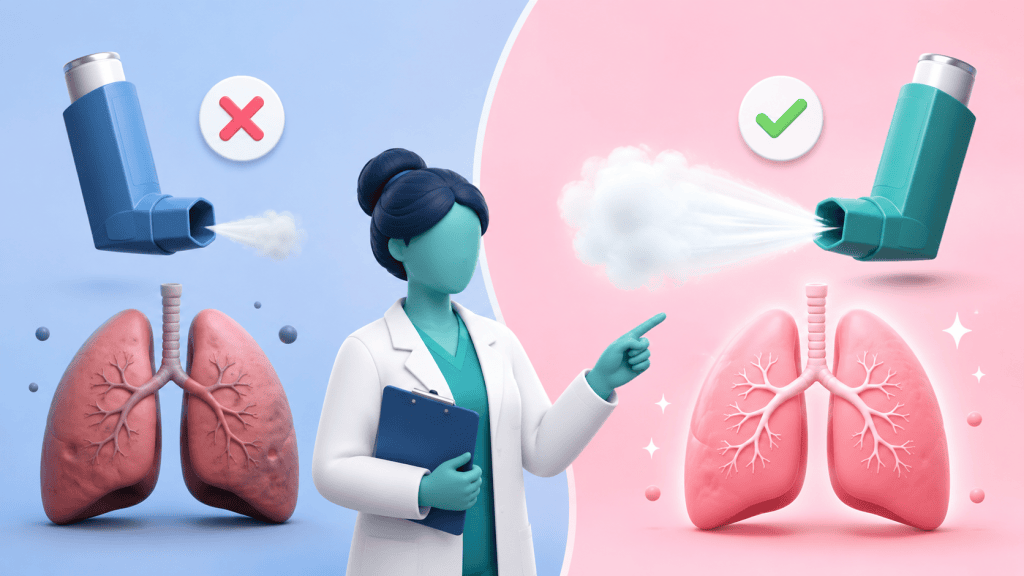
Many patients with asthma or COPD receive a fraction of their intended dose due to incorrect device use. This is often mistaken for disease progression, leading to unnecessary treatment escalation. A robust inhaler technique in primary care review ensures patients benefit from their prescribed therapy before any step-up is considered. Getting this right can improve disease control, reduce unnecessary treatment escalation, and support better respiratory outcomes. According to Asthma + Lung UK, correcting technique is one of the most impactful interventions a healthcare professional can make.
Why should inhaler adherence and technique be assessed together?

Poor device technique and poor adherence are closely linked. A patient may have good technique but still under-use their preventer inhaler, or they may over-rely on their reliever because the preventer is not working effectively. Assessing both during a medication review allows a PCN pharmacist to build a complete picture of a patient’s respiratory management. This supports shared decision making and helps patients understand the link between consistent adherence and asthma control or COPD management.
During every inhaler review, consider:
- Is the device appropriate for this patient?
- Can the patient demonstrate correct device use?
- Are preventer inhalers being collected regularly?
- Is there evidence of reliever overuse?
- Does the patient understand the purpose of each inhaler?
- Does the patient need a follow-up review?
Which patients should be prioritised for an inhaler review?

Not every patient needs an urgent review, but some cohorts carry a disproportionate risk. A PCN pharmacist should use EMIS searches to proactively identify and recall high-risk patients. Priority cohorts include:
- Patients requiring frequent SABA inhalers or showing evidence of reliever overuse
- Patients with repeated exacerbations or hospital admissions
- Those overdue for their annual respiratory review
- Patients with poor preventer inhaler collection rates
- Recent hospital discharges following a respiratory admission
- Patients managing multiple inhaler devices
- Those recorded with poor asthma control or uncontrolled COPD
This targeted approach to respiratory medicines optimisation ensures clinical time is directed where it will have the greatest impact.
How should PCN pharmacists assess inhaler technique in primary care?
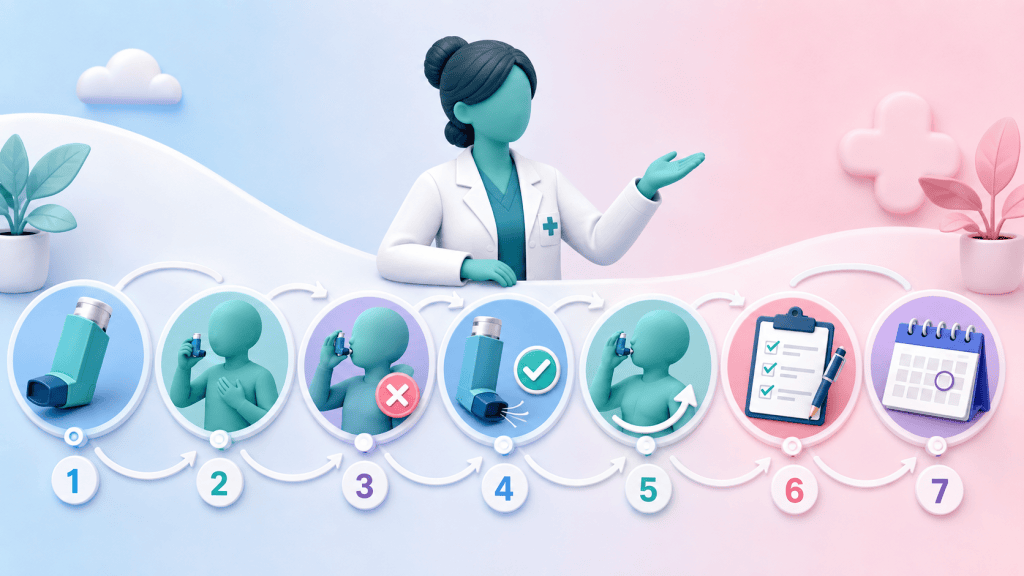
A systematic approach to inhaler technique in primary care ensures consistency across the PCN, aligning with NICE guidance on respiratory care. Implementing a structured workflow is best practice, with Pharmacy Technicians supporting initial screenings and Clinical Pharmacists leading clinical decision-making.
Common inhaler review workflow
- Confirm device: Ensure the prescribed device matches the patient’s inspiratory capacity.
- Ask the patient to demonstrate: Observe their current technique without prompting.
- Observe errors: Look for common mistakes, such as failing to exhale fully or poor coordination with metered-dose inhalers.
- Correct technique: Use the teach-back method to guide the correct steps.
- Repeat demonstration: Confirm they can now perform correct device use independently.
- Record findings: Document the assessment and any interventions in the clinical system.
- Arrange follow-up: Schedule a respiratory review to ensure improved technique is maintained.
Different devices require different assessment points. Familiarity with both dry powder and metered-dose inhalers is essential for any pharmacist delivering inhaler optimisation.
Expert insight from Adeem Azhar, qualified Clinical Pharmacist and CEO
Before increasing inhaled treatment, practices should be confident the patient is receiving the medicine as intended. Reviewing inhaler technique alongside adherence helps Clinical Pharmacists identify the real cause of poor control and target support where it will make the greatest difference.
Adeem Azhar, MPharm, IPres
Co-Founder and Chief Executive Officer – Core Prescribing Solutions
Qualified Clinical Pharmacist
What role do Pharmacy Technicians play in inhaler technique assessment?

Pharmacy Technicians are integral to multidisciplinary respiratory care. They manage data queries, conduct patient outreach, and perform initial inhaler reviews. This frees Clinical Pharmacists to handle complex Structured Medication Reviews and therapy changes for patients with uncontrolled asthma or COPD. This model is a core component of effective Clinical Pharmacist services. It reflects how pharmacists in primary care can work at the top of their licence.
FAQs
Looking to strengthen respiratory care across your PCN?
If your PCN wants to reduce avoidable exacerbations through structured respiratory reviews, we can help. Our Clinical Pharmacists and Pharmacy Technicians integrate with your team to deliver proactive respiratory care pathways.