Skip to main content


 01274 442076



GP Federations and Integrated Neighbourhood Teams: Strategic Risk or Real Opportunity?
|
Getting your Trinity Audio player ready...
|
- Why GP Federations and Integrated Neighbourhood Teams Are Reshaping Local Leadership
- The Strategic Risk: Becoming a Subcontractor
- What Does This Mean in Practice?
- The Opportunity: Leading Through Scaled Delivery
The relationship between GP federations and Integrated Neighbourhood Teams is becoming one of the most significant strategic issues in primary care today. As the NHS moves to a neighbourhood model, local federation leaders face a critical choice. They can adapt their models to lead at scale. Or, they can risk becoming marginalised subcontractors. The impact of Integrated Neighbourhood Teams on GP federations ultimately depends on their response to new commissioning realities.
For a full overview of the Integrated Neighbourhood Team model, you can read our detailed guide here.
Key Takeaways
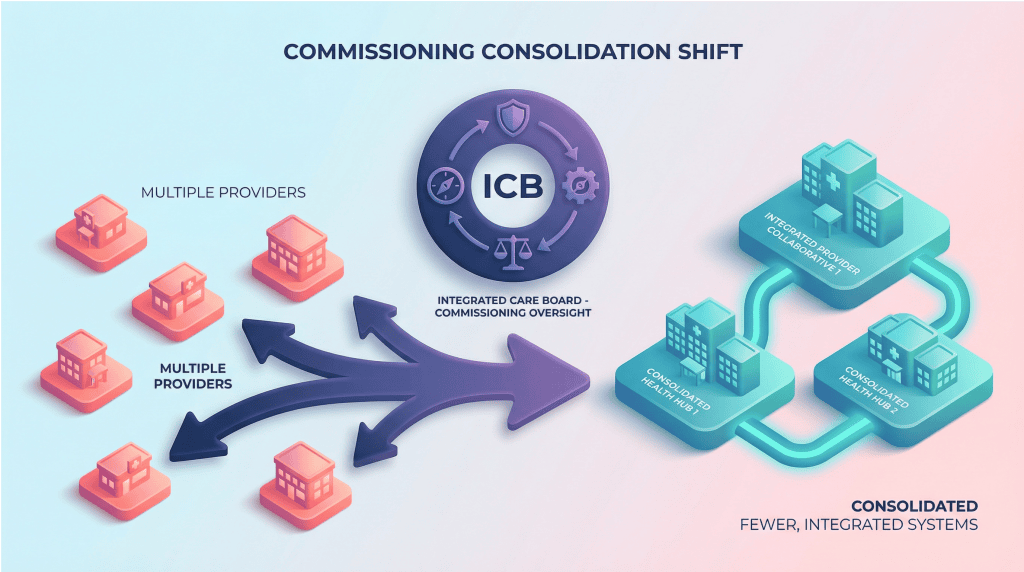
- Centralised Commissioning: ICBs now favour fewer, larger contracts. This puts pressure on smaller providers.
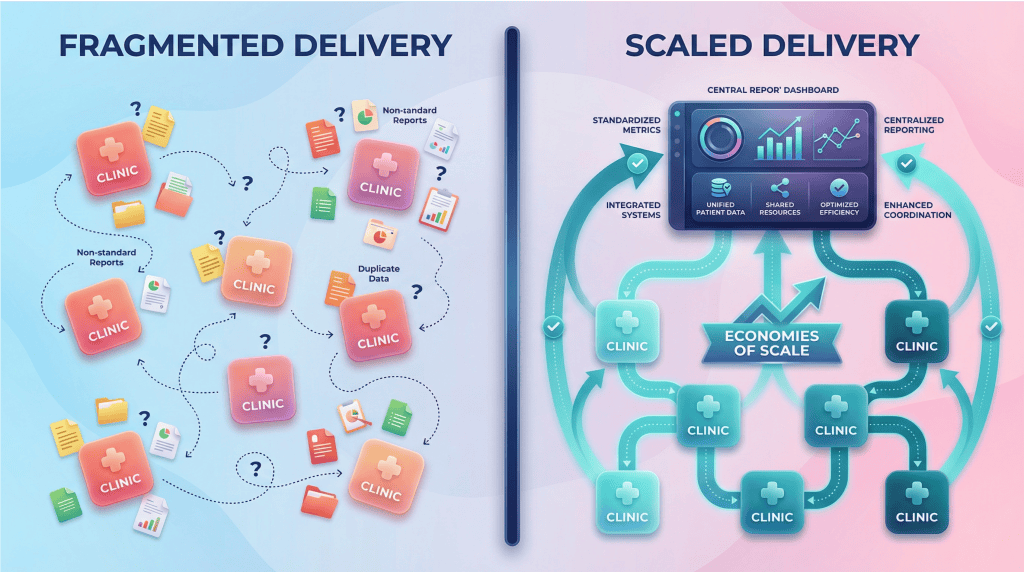
- Scale is Essential: Federations must prove they can deliver consistent services across large areas to compete.
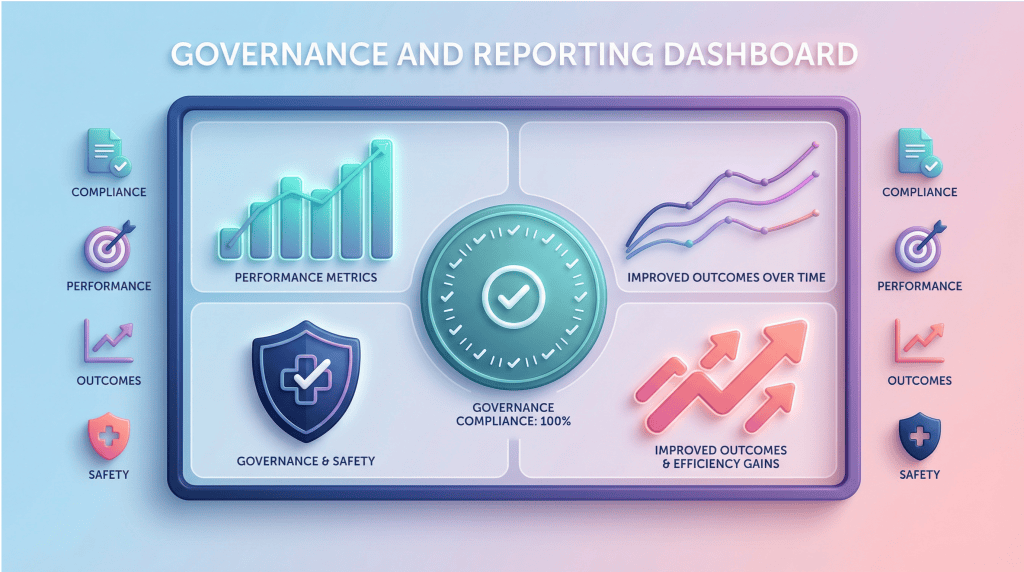
- Governance is Key: Robust clinical and data governance is now a core requirement for winning contracts.
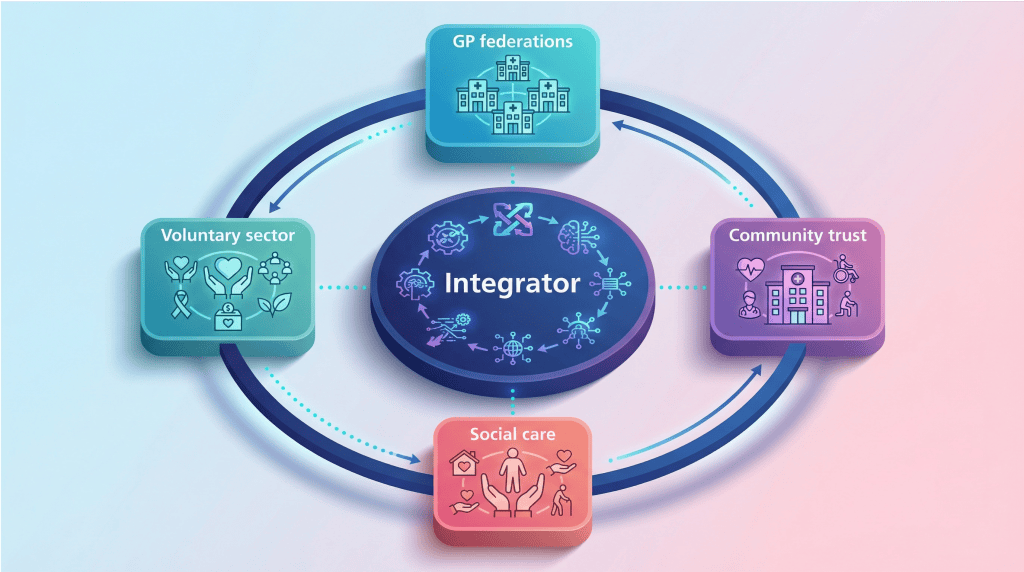
- The Integrator Threat: The integrator model NHS could force these organisations to work under larger trusts, reducing their autonomy.
Why GP Federations and Integrated Neighbourhood Teams Are Reshaping Local Leadership
Centralised commissioning NHS models are driving change for primary care organisations. ICBs want to simplify the provider landscape. They also need to ensure consistent quality. The latest Neighbourhood health guidelines 2025/26 support this shift. Integrated Care Boards commissioning decisions are increasingly based on scale and governance maturity. This new environment favours organisations offering economies of scale in primary care. However, many GP federations are still developing this capability.
This landscape demands more than just clinical service delivery. It requires a mature operational infrastructure. For instance, local federation leaders must now have robust systems. These systems should cover data analytics, quality assurance, and performance reporting. This is how they prove their value to commissioners.
Ultimately, the impact of Integrated Neighbourhood Teams on GP federations will be measured by their ability to demonstrate scale, governance maturity, and consistent delivery across neighbourhood footprints.
The Strategic Risk: Becoming a Subcontractor
The most significant risk for GP federations is losing influence and autonomy. In many areas, large trusts are positioned to take the lead. They will coordinate all care within a neighbourhood under an integrator model NHS. In this scenario, federations may be relegated to subcontractor status. This is a risk highlighted by legal experts. It means delivering a narrow range of services with limited strategic input. The future relationship between GP federations and Integrated Neighbourhood Teams will define how primary care retains influence within neighbourhood systems.
What Does This Mean in Practice?
| Strategic Area | If Federations Do Not Adapt | If Federations Scale Effectively |
| Commissioning | Risk being subcontracted under larger trusts | Secure larger footprint contracts directly |
| Integrated Care Boards commissioning | Limited influence in centralised decision making | Strong negotiating position with ICBs |
| Integrator model NHS | Reduced autonomy within neighbourhood structures | Potential to lead or co-lead delivery |
| Economies of scale in primary care | Fragmented services, duplication of cost | Standardised delivery across multiple PCNs |
| Governance & reporting | Struggle to meet scrutiny requirements | Demonstrate measurable, outcome-driven impact |
| Long-term position | Gradual narrowing of strategic influence | Recognised as essential neighbourhood partner |
In simple terms, GP federations that scale strategically retain influence. Those that do not risk becoming delivery arms of larger organisations.
The Opportunity: Leading Through Scaled Delivery
Despite the risks, the move to GP federations Integrated Neighbourhood Teams presents a clear opportunity. Federations are uniquely positioned. They understand their local populations and have existing relationships with practices. The question is not whether neighbourhood models will continue. It is whether federations will shape them, or operate within them.
Integrated Neighbourhood Teams represent a real opportunity for primary care to lead at scale. The federations that combine strong local relationships with structured delivery and governance will shape the future of neighbourhood care.
Adeem Azhar, Co-Founder and Chief Executive Officer – Core Prescribing Solutions
Partnering with a managed service provider can help. It provides the infrastructure needed to thrive. Core Prescribing Solutions offers Clinical Pharmacist Services and Medicines Optimisation support. Our model is designed for neighbourhood scale. It includes governance, supervision, and reporting frameworks. This enables GP federations to demonstrate scale, governance maturity, and measurable outcomes – the three factors increasingly driving Integrated Care Boards commissioning decisions.
Frequently Asked Questions

Looking for support with neighbourhood delivery?
If your federation is preparing for closer alignment between GP federations and Integrated Neighbourhood Teams, or reviewing its commissioning strategy, we can help you strengthen your position.