 Skip to main content


 01274 442076



Clinical Pharmacist vs Doctor: What’s the Difference?
|
Getting your Trinity Audio player ready...
|
When comparing a clinical pharmacist vs doctor, the main difference lies in their scope of responsibility. A Clinical Pharmacist focuses on medicines optimisation, safety, and long-term condition management. A doctor (GP) diagnoses conditions, manages overall care, and takes full clinical responsibility for patients. In UK primary care, they work together, not interchangeably.
For PCNs and practices, understanding this difference is key to using the workforce effectively and reducing GP pressure.
- What is the difference between a pharmacist and doctor?
- Can a clinical pharmacist diagnose?
- Can pharmacists prescribe in the UK?
- What is the clinical pharmacist role UK?
- Is a clinical pharmacist as qualified as a doctor?
Key Takeaways
- Different expertise: Doctors diagnose and lead care; Clinical Pharmacists optimise medicines and reduce risk.
- Prescribing overlap: Both can prescribe, but Clinical Pharmacists usually work within defined clinical areas.
- Training depth: Doctors train longer and manage uncertainty; Clinical Pharmacists specialise in pharmacology.
- Best outcomes: Integrated teams improve safety, access, and workload balance.
What is the difference between a pharmacist and doctor?
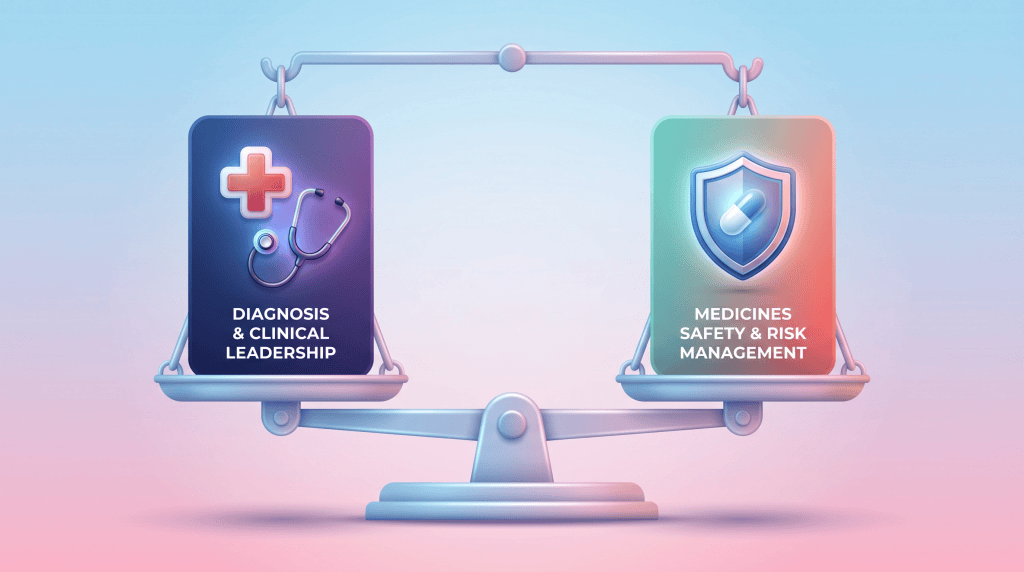
The difference between a pharmacist and doctor comes down to scope, responsibility, and focus.
| Area | Clinical Pharmacist | Doctor (GP) |
| Core role | Medicines expert | Clinical lead |
| Diagnosis | Limited / structured | Full diagnostic responsibility |
| Prescribing | Yes (if Independent Prescriber) | Yes (full scope) |
| Risk ownership | Medication-related | Whole patient |
| Focus | Safety, optimisation | Diagnosis, treatment planning |
In simple terms, doctors answer: “What is the diagnosis?” Clinical Pharmacists answer: “Is the treatment right, safe, and effective?”
Can a clinical pharmacist diagnose?
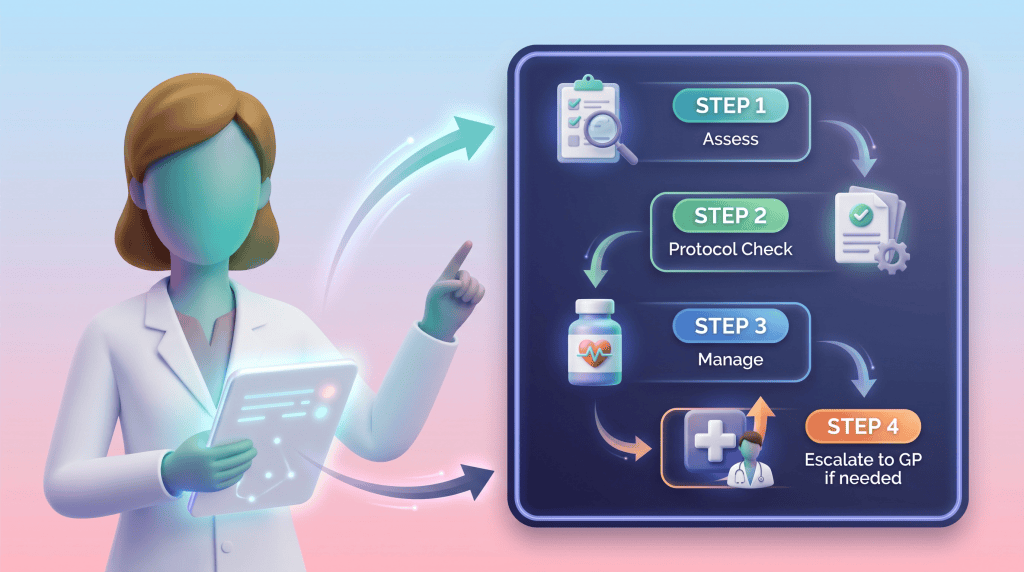
A Clinical Pharmacist can assess and manage conditions, but they do not diagnose in the same way as a doctor. They can manage stable long-term conditions (e.g., hypertension, asthma) and work within structured pathways and protocols. They identify medication-related issues or risks.
They do not take full responsibility for diagnosing complex or unclear conditions. They do not manage undifferentiated symptoms independently. This is why governance frameworks in NHS primary care still place diagnostic responsibility with GPs.
Can pharmacists prescribe in the UK?
Yes, Clinical Pharmacists can prescribe in the UK if they are qualified as Independent Prescribers. In practice, this means they run clinics (e.g., blood pressure, diabetes reviews), adjust and optimise medication, and prescribe within their area of competence.
However, prescribing is often condition-specific. Complex cases are escalated to a GP. This aligns with NHS England guidance on expanding prescribing capacity safely.

What is the clinical pharmacist role UK?
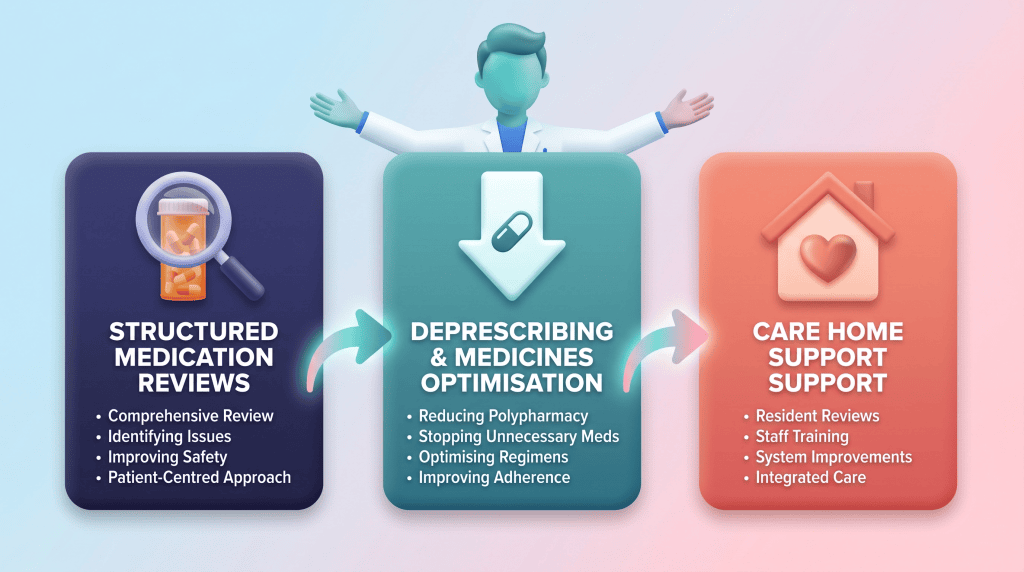
The clinical pharmacist role UK has expanded significantly under the ARRS model. Typical responsibilities include structured medication reviews, medicines optimisation, and deprescribing. They also manage long-term conditions, handle prescription queries, and support care homes.
These are high-impact areas where Clinical Pharmacists add immediate value. They reduce prescribing errors, improve medication adherence, and free up GP time for complex care.
Need clinical pharmacy capacity to free up GP time?
Discuss Clinical Pharmacist supportIs a clinical pharmacist as qualified as a doctor?
No, but they are highly specialised in a different area. Clinical Pharmacists complete an MPharm degree (4 years), a foundation training year, and an optional prescribing qualification. Doctors complete a medical degree (5-6 years), foundation training (2 years), and GP specialty training (3 years).
Doctors are trained to diagnose across all systems and manage clinical uncertainty. Clinical Pharmacists are trained to understand medicines deeply, manage risk and interactions, and optimise treatment outcomes.

Expert insight from Adeem Azhar, qualified Clinical Pharmacist and CEO
The real value of clinical pharmacists in primary care is not replacing GPs, but removing the medication burden that slows practices down. When used properly, they improve safety and give GPs back time for complex care.
Adeem Azhar, MPharm, IPres
Co-Founder and Chief Executive Officer – Core Prescribing Solutions
Qualified Clinical Pharmacist
FAQs
Looking for support with your pharmacy workforce?
If your PCN or practice needs support with medicines optimisation or structured medication reviews, we can help. Our Clinical Pharmacists and Pharmacy Technicians integrate with your team to deliver proactive care.


