Skip to main content


 01274 442076



Asthma Best Practice: What Has Changed in the UK BTS/NICE/SIGN Guideline and What PCNs Should Do
|
Getting your Trinity Audio player ready...
|
The 2024 joint BTS, NICE and SIGN asthma guideline introduces the first unified UK-wide approach to asthma care, moving away from SABA-only treatment. Anti-inflammatory reliever therapy is now recommended from diagnosis for patients aged 12 and over, requiring PCNs and Practices to act on prescribing, diagnostics, and proactive respiratory care pathways.
- What are the key changes in the 2024 BTS/NICE/SIGN asthma guideline?
- Is SABA-only treatment still recommended for asthma in the UK?
- What objective tests are required to diagnose asthma?
- How should PCNs implement the new asthma guideline?
- What does this mean for respiratory LTC management?
Key Takeaways
- SABA-only treatment is no longer recommended for most patients aged 12 and over
- Low-dose ICS/formoterol should be used as the reliever from diagnosis
- Objective testing is required before confirming asthma
- PCNs should prioritise high-risk patients and proactive reviews

What are the key changes in the 2024 BTS/NICE/SIGN asthma guideline?
| Guideline change | What’s different now | What PCNs should do |
| First-line treatment | SABA-only treatment is no longer recommended for most patients aged 12+ | Review SABA prescribing and transition appropriate patients to ICS/formoterol |
| Reliever strategy | Anti-inflammatory reliever (AIR) therapy recommended from diagnosis | Update local asthma pathways and templates |
| Diagnosis | Objective testing required before confirming asthma | Ensure access to FeNO, spirometry, or PEF monitoring |
| SABA overuse | High reliever use linked to exacerbations and harm | Identify patients using >3 SABA inhalers per year |
| Ongoing management | Proactive, risk-based review emphasised | Embed regular asthma reviews and recall processes |
The 2024 guideline replaces SABA-only treatment with anti-inflammatory reliever therapy and strengthens requirements for objective diagnosis.
Previously, many patients were started on a short-acting beta-agonist (SABA) alone. The new guidance recommends low-dose ICS/formoterol as an as-needed reliever from diagnosis for adults and young people aged 12 and over, reflecting strong evidence linking SABA overuse with poorer outcomes.
For full guidance, see NICE NG245 and the joint guidance from the British Thoracic Society and SIGN.

Is SABA-only treatment still recommended for asthma in the UK?
No, SABA-only treatment is no longer recommended for most patients aged 12 and over due to its association with increased exacerbations and mortality.
Around half of UK asthma patients may be overusing SABAs, with each additional canister per year linked to increased exacerbation risk. The guideline explicitly supports SABA-free pathways using AIR therapy or MART regimens.
What is anti-inflammatory reliever (AIR) therapy?
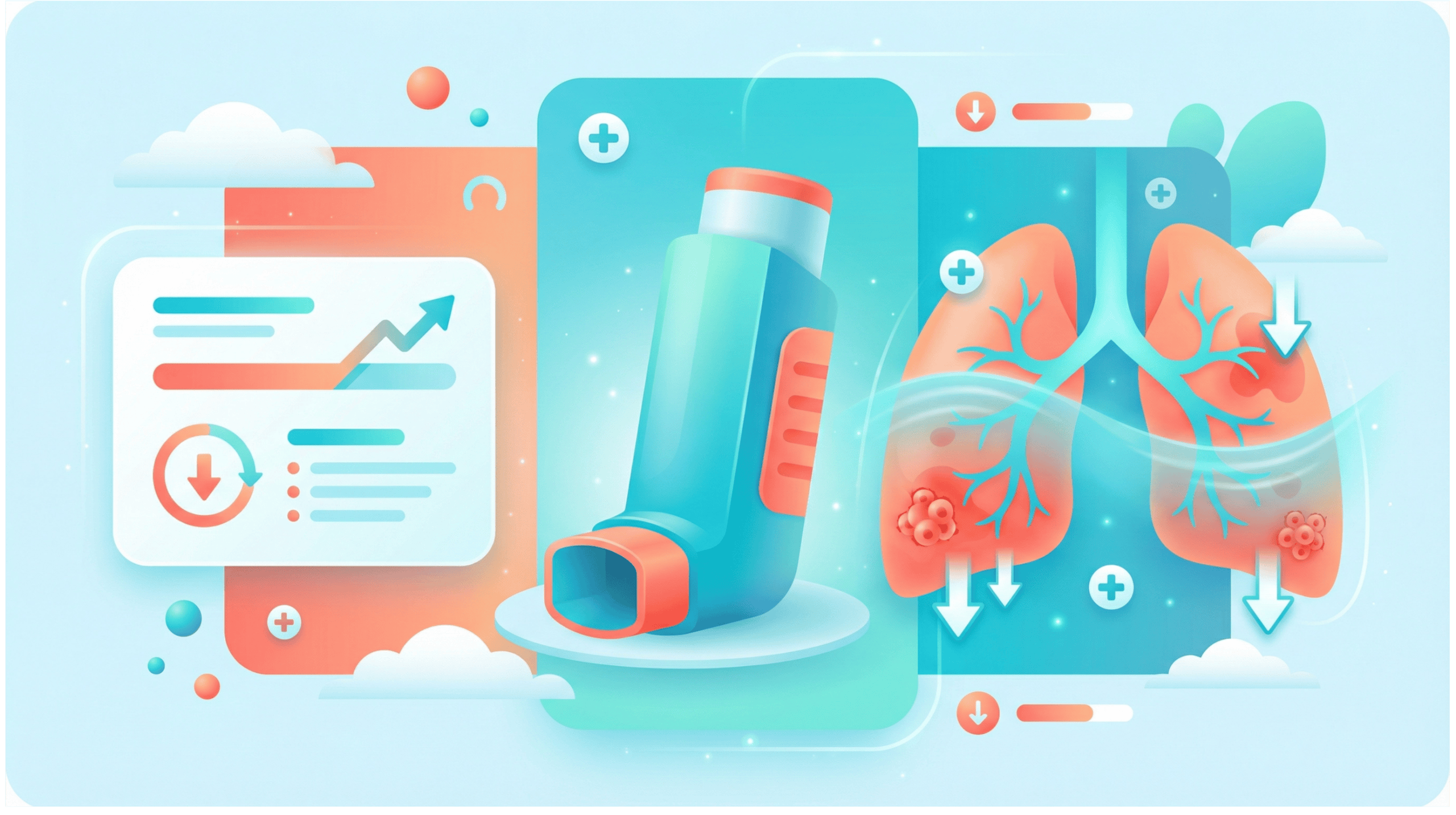
AIR therapy uses low-dose ICS/formoterol as needed to treat both symptoms and underlying airway inflammation, recommended from diagnosis for patients aged 12 and over.
Unlike SABA-only treatment, AIR therapy addresses inflammation even when symptoms are intermittent, reducing exacerbations and improving overall control.

What objective tests are required to diagnose asthma?
Asthma should only be diagnosed when a suggestive clinical history is supported by objective evidence from at least one of:
- Fractional exhaled nitric oxide (FeNO) testing
- Spirometry with bronchodilator reversibility
- Peak expiratory flow (PEF) variability monitoring
Where spirometry or FeNO is unavailable, PEF monitoring can be used as an interim step.

How should PCNs implement the new asthma guideline?
PCNs should review SABA prescribing, strengthen diagnostic pathways, and embed proactive respiratory reviews. Delivery can be shared across the team, with Pharmacy Technicians supporting structured medication reviews, inhaler technique checks, and medicines optimisation under clinical supervision.
- Review prescribing patterns – Identify patients on SABA-only regimens or using more than three inhalers per year and prioritise them for medication review.
- Strengthen diagnostic pathways – Ensure access to FeNO testing and spirometry, or establish clear referral routes.
- Embed Inhaler technique support – Regular checks should be delivered by Pharmacy Technicians, clinical pharmacists, or trained team members.
- Implement Personalised asthma action plans – Every patient should have a written plan with clear guidance on reliever use and escalation.
- Adopt risk-stratified care – Proactively identify and review patients with frequent exacerbations, admissions, or high reliever use.
Expert insight from Adeem Azhar, qualified Clinical Pharmacist and CEO
The move away from SABA-only treatment is a significant step forward for asthma care. PCNs that act now to review their prescribing and strengthen their respiratory pathways will see real improvements in patient outcomes.
Adeem Azhar, MPharm, IPres
Co-Founder and Chief Executive Officer – Core Prescribing Solutions
Qualified Clinical Pharmacist

What does this mean for respiratory LTC management?
The guideline reinforces proactive respiratory long-term condition management focused on prevention and regular review. Reducing SABA reliance improves asthma control and reduces avoidable admissions.
SABA overuse also contributes around 250,000 tonnes of CO₂ equivalent annually in the UK, so reducing unnecessary use supports both patient outcomes and NHS environmental commitments.
FAQs
Need support implementing the new asthma guidelines?
If your PCN needs additional capacity to respond to the updated guidance, we can help. Our clinical pharmacists and Pharmacy Technicians support asthma medication reviews, Lung function testing, inhaler technique checks, and proactive Respiratory LTC management.