Skip to main content


 01274 442076


Semaglutide vs Tirzepatide: Comparing Weight-Loss Injections
|
Getting your Trinity Audio player ready...
|
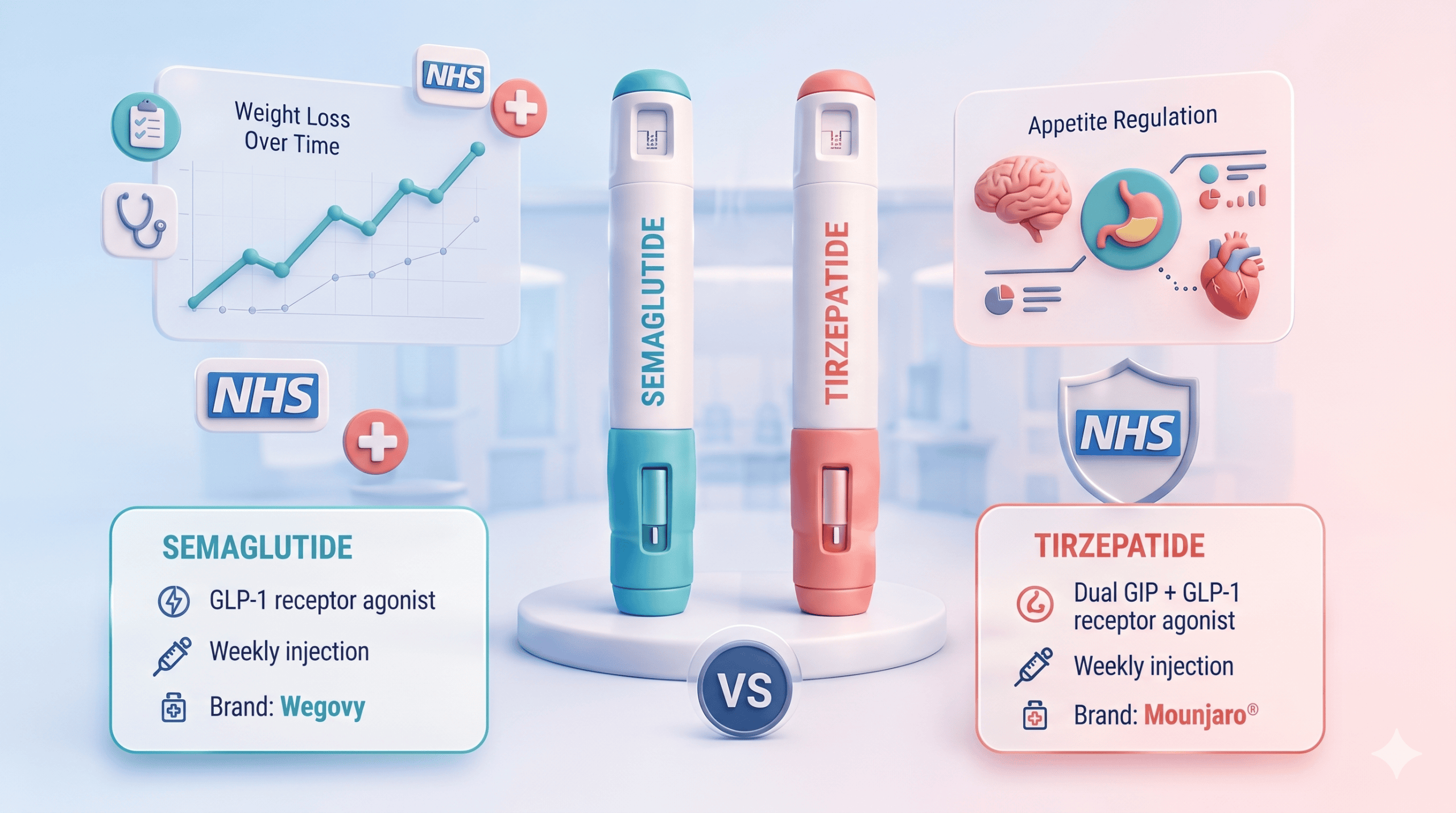
Semaglutide vs tirzepatide is a common comparison because both are weekly injectable medicines used to support weight loss alongside diet and lifestyle changes. Head-to-head evidence suggests tirzepatide may produce greater average weight loss in eligible trial populations. However, NHS access, safety and monitoring remain central.
Both medicines are prescribed within structured pathways and are not suitable for everyone. Demand for NHS weight loss injections creates practical workload for GP practices and PCNs.
- What is the difference between semaglutide and tirzepatide?
- Which works better for weight loss, semaglutide or tirzepatide?
- Who can access semaglutide or tirzepatide on the NHS?
- What are the side effects of semaglutide and tirzepatide?
- What does this mean for GP practices and PCNs?
Key Takeaways
- Effectiveness: Tirzepatide may lead to greater average weight loss in trial populations.
- Mechanism: Semaglutide acts on GLP-1 receptors. Tirzepatide acts on GIP and GLP-1 receptors.
- NHS access: Access to weight loss injections UK-wide follows NICE criteria and local pathways.
- Safety: Both medicines can cause gastrointestinal side effects and need clinical review.
What is the difference between semaglutide and tirzepatide?
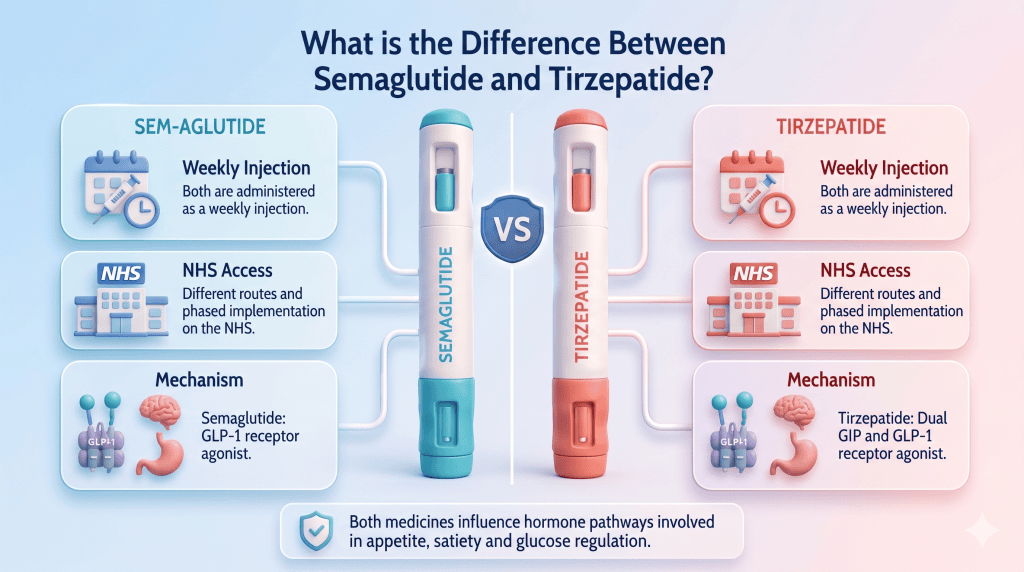
The main difference between semaglutide and tirzepatide is mechanism. Semaglutide is a GLP-1 receptor agonist. Tirzepatide is a dual GIP and GLP-1 receptor agonist.
| Area | Semaglutide | Tirzepatide |
| Weight-loss brand | Wegovy | Mounjaro |
| Dosing | Weekly injection | Weekly injection |
| Mechanism | GLP-1 receptor agonist | Dual GIP and GLP-1 receptor agonist |
| NHS route | Specialist weight management services | Phased NHS rollout, including primary care pathways |
| Monitoring | Side effects, response and suitability | Side effects, response, titration and wraparound care |
Semaglutide is used in Wegovy and Ozempic. Our Ozempic and Wegovy comparison explains those brands and their approved uses in more detail.
Which works better for weight loss, semaglutide or tirzepatide?
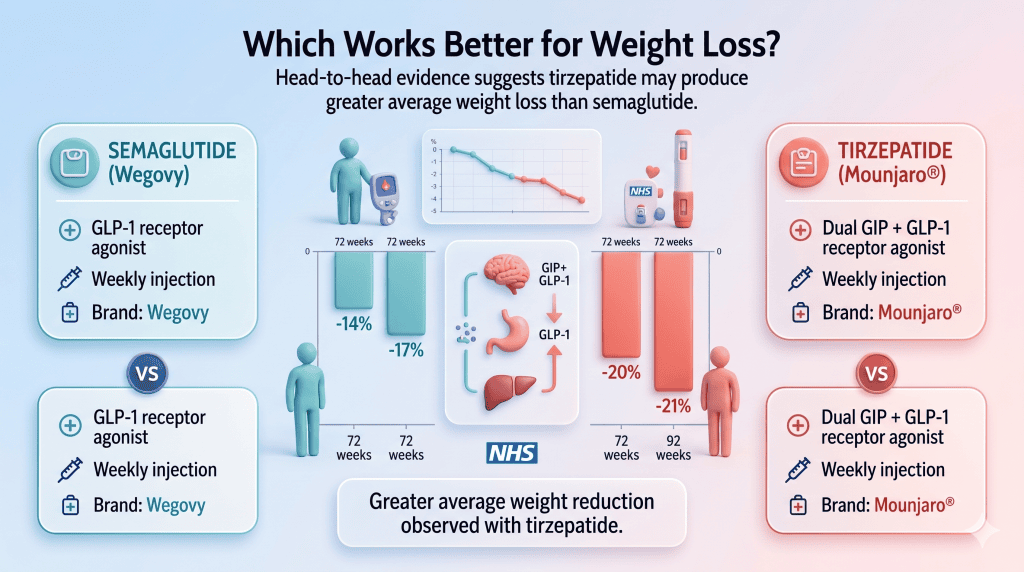
Current head-to-head evidence suggests tirzepatide may produce greater average weight loss than semaglutide. In the SURMOUNT-5 trial, mean weight change at 72 weeks was greater with tirzepatide. For practices and PCNs, the “tirzepatide vs semaglutide” question is best answered through eligibility, safety and pathway suitability rather than weight loss data alone.
That does not make tirzepatide vs semaglutide a simple “best medicine” decision. A safe prescribing decision also considers:
- eligibility and NHS pathway availability
- comorbidities and concurrent medicines
- tolerability and dose escalation
- patient preference and expectations
- capacity for follow-up and monitoring
The difference between semaglutide and tirzepatide should therefore be framed as a clinical comparison, not a direct consumer recommendation.
How do semaglutide and tirzepatide work?
Both medicines influence hormone pathways involved in appetite, satiety and glucose regulation. Semaglutide mimics GLP-1 activity. Tirzepatide combines GLP-1 and GIP receptor activity.
These medicines sit within a wider group of injectable therapies sometimes described as biologic injections in chronic disease pathways. As demand for GLP-1 weight loss injections grows, primary care teams may need stronger counselling, safety-netting and review processes.
Who can access semaglutide or tirzepatide on the NHS?
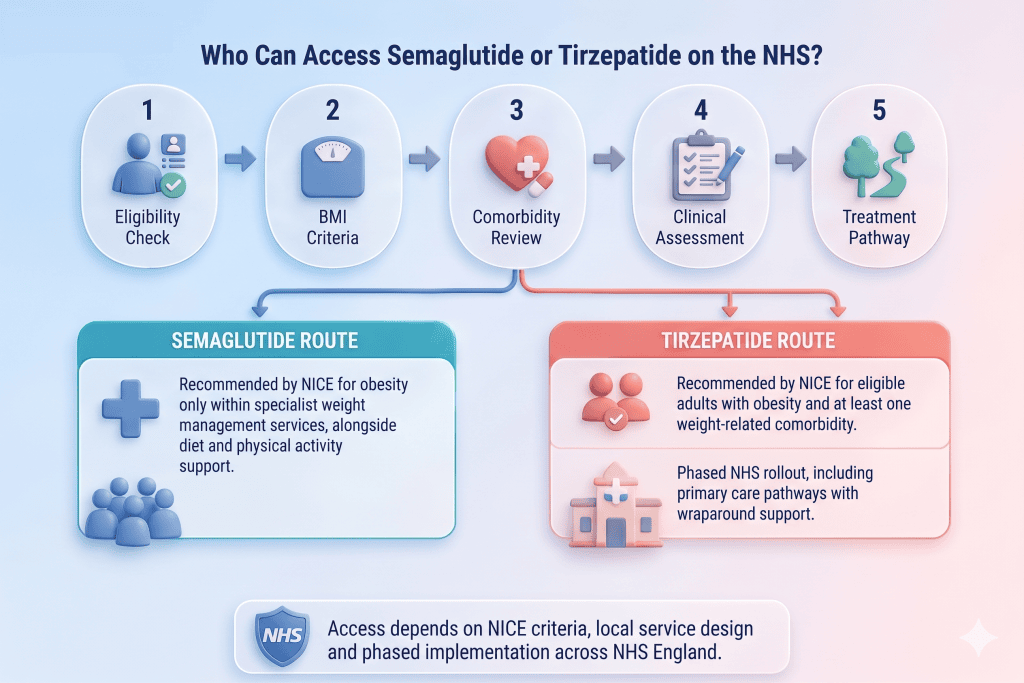
Access to NHS weight loss injections depends on NICE criteria, local service design and phased implementation. NICE guidance recommends tirzepatide for eligible adults with obesity and at least one weight-related comorbidity.
NICE also recommends semaglutide for obesity only within specialist weight management services, alongside diet and physical activity support. NHS England states that tirzepatide prescribing in primary care requires wraparound clinical and behavioural support.
What are the side effects of semaglutide and tirzepatide?
The most common semaglutide side effects and tirzepatide side effects are gastrointestinal symptoms. These can include nausea, vomiting, diarrhoea, constipation and abdominal discomfort.
The MHRA has reminded clinicians and patients about the small risk of severe acute pancreatitis with GLP-1 and dual GLP-1/GIP medicines. Severe, persistent stomach pain needs urgent clinical advice.
Expert insight from Adeem Azhar, qualified Clinical Pharmacist and CEO
Weight management medicines are creating increasing demand across primary care, particularly around eligibility, monitoring and patient expectations. Practices need safe, structured support to manage these pathways effectively.
Adeem Azhar, MPharm, IPres
Co-Founder and Chief Executive Officer – Core Prescribing Solutions
Qualified Clinical Pharmacist
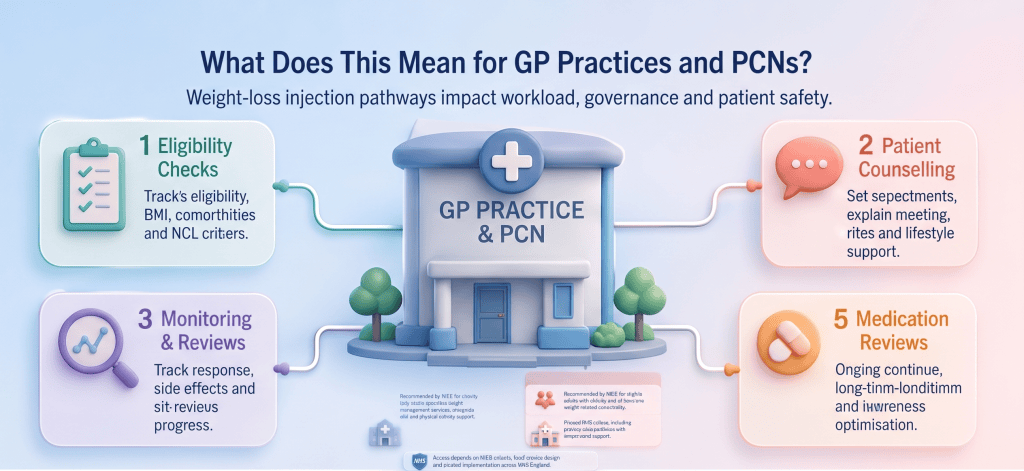
What does this mean for GP practices and PCNs?
Semaglutide vs tirzepatide is not just a patient-facing comparison. It also affects prescribing governance, workload and pathway safety in primary care.
Practices may need support with eligibility checks, counselling, monitoring, side effect management and long-term condition reviews. CPS can help through medicines optimisation support, structured medication reviews and wider Clinical Pharmacist support.
FAQs
Looking for support with medicines optimisation?
If your PCN or practice needs support with obesity medicine workload, medication reviews or prescribing safety, we can help.