Skip to main content


 01274 442076


Probiotics vs Prebiotics: Which Is Right for You?
|
Getting your Trinity Audio player ready...
|
- Probiotics vs prebiotics: Quick Answer
- What are probiotics?
- What are prebiotics?
- Probiotics vs prebiotics: key differences
- Probiotics Benefits
- Prebiotics Benefits
- Can you get enough probiotics and prebiotics from food?
- Should you take supplements?
- Which one should you choose?
- Are probiotics or prebiotics safe?
Understanding the difference between probiotics and prebiotics can help you make informed decisions about your gut health. Although both support a healthy gut microbiome (the community of bacteria and other microorganisms living in your digestive system), probiotics are live microorganisms, while prebiotics are fibres that feed beneficial gut bacteria. This guide explains the differences, potential benefits, and when each may be appropriate.
Key Takeaways
- Probiotics add, prebiotics feed: Probiotics introduce live beneficial microbes; prebiotics act as fertiliser for existing gut bacteria.
- Food first: A varied, fibre-rich diet provides excellent prebiotic support without the need for supplements.
- Targeted use: Probiotics may help specific issues, such as antibiotic-associated diarrhoea, but strong evidence for general health claims remains limited.
Probiotics vs prebiotics: Quick Answer
Probiotics are live bacteria or yeasts supporting gut balance. Prebiotics are fibres nourishing the beneficial bacteria naturally present in your digestive tract. The simplest distinction is they function differently but complement each other.
What are probiotics?
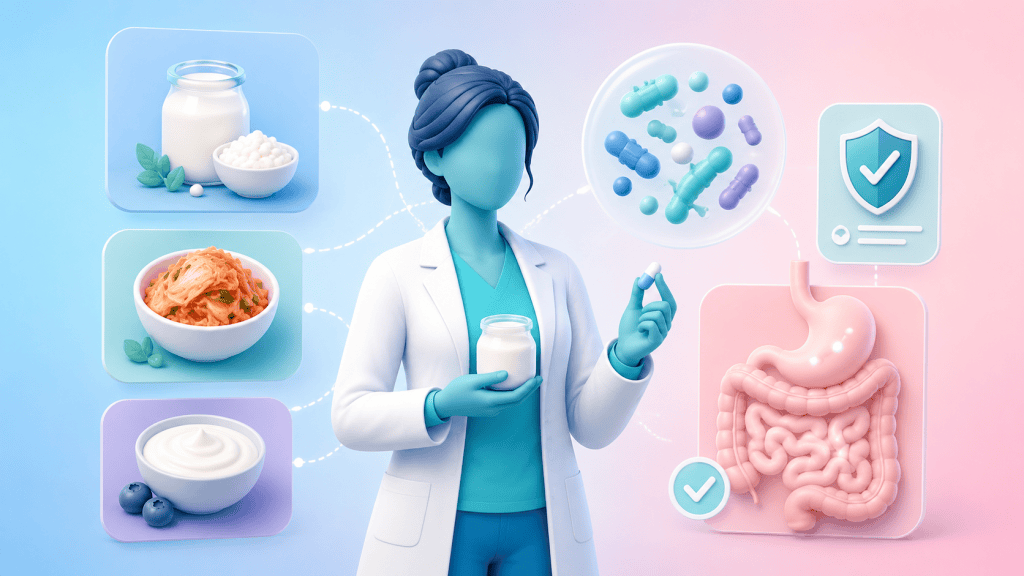
Probiotics are live microorganisms, often called “friendly” bacteria. They occur naturally in fermented foods like live yoghurt, kefir, and kimchi, and in dietary supplements. Common groups include Lactobacillus and Bifidobacterium. Their effects are highly strain-specific and dose-specific.
What are prebiotics?
Prebiotics are non-digestible fibres travelling to the large bowel. Here, gut bacteria ferment them, releasing beneficial short-chain fatty acids. Abundant in everyday foods like garlic, onions, oats, and bananas, they feed beneficial gut bacteria and support bowel regularity.
Probiotics vs prebiotics: key differences
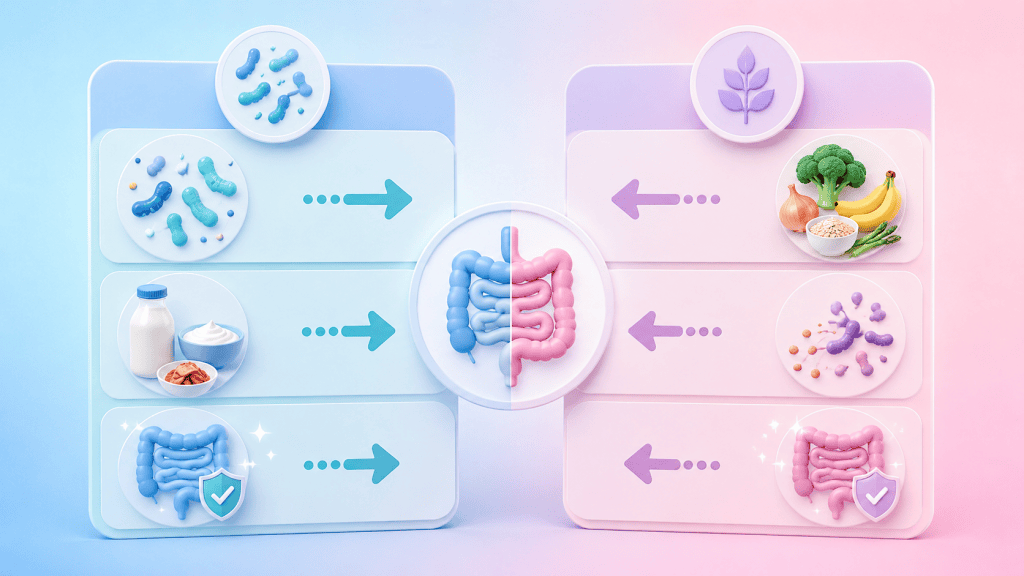
| Feature | Probiotics | Prebiotics |
| What are they? | Live microorganisms | Food for beneficial gut bacteria |
| Main role | Add or support beneficial microbes | Feed existing beneficial microbes |
| Found in | Yoghurt, kefir, fermented foods, supplements | Fibre-rich plant foods |
| Best for | Specific digestive needs | Everyday gut support |
| Supplement needed? | Sometimes, for specific conditions | Usually food-first |
Probiotics Benefits
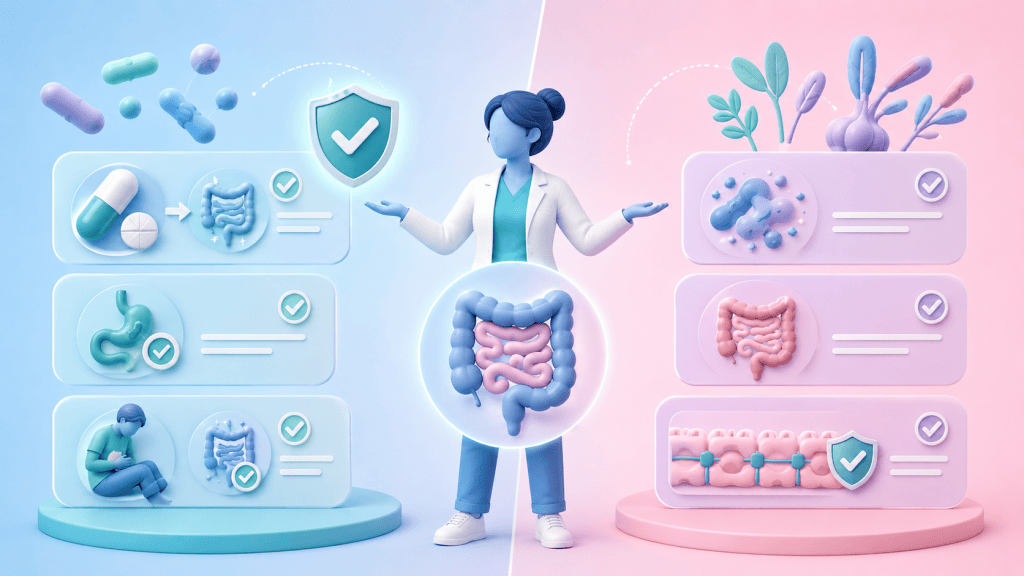
Evidence surrounding probiotics benefits is nuanced. According to the NHS, probiotics may restore the natural balance of gut bacteria after disruption. They show promise in managing antibiotic-associated diarrhoea, but evidence depends heavily on the specific strain and dose.
Some research suggests that certain probiotic strains may help maintain gut health during or after a course of antibiotics and may benefit some digestive conditions. However, results vary depending on the strain, dose, and individual, so one probiotic cannot be expected to work for every situation.
Prebiotics Benefits
Prebiotics provide several benefits for gut health by feeding healthy gut bacteria. They support bowel regularity and aid short-chain fatty acid production, crucial for a healthy gut barrier. Most prebiotic foods are naturally high in dietary fibre, meaning increasing your intake can support both digestive health and beneficial gut bacteria.
Key point: Most people can support their gut microbiome through a varied diet rich in plant foods, without needing probiotic supplements.
Can you get enough probiotics and prebiotics from food?
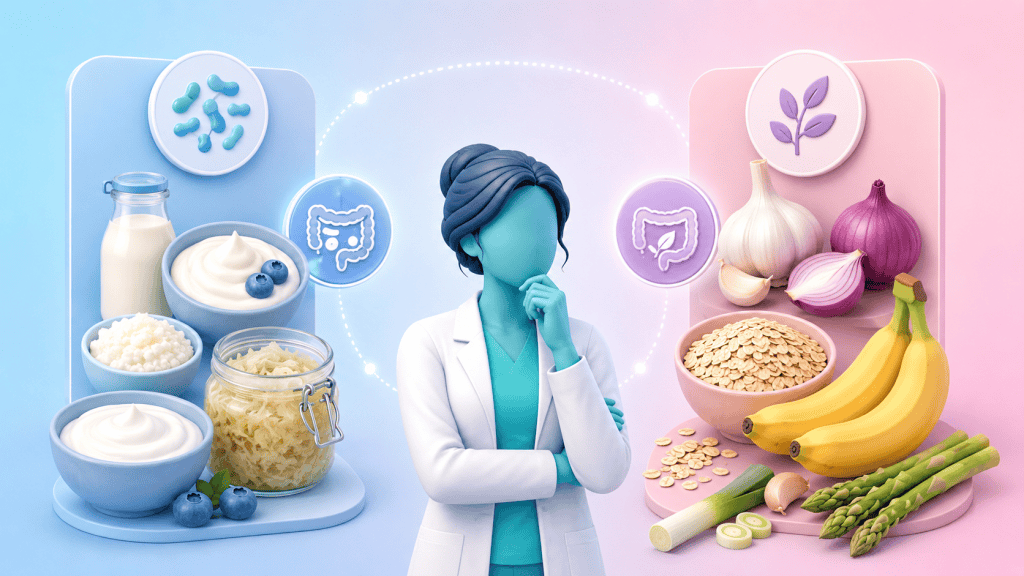
Yes. For most people, a food-first approach is best to support natural gut health.
Probiotic foods
- Live yoghurt
- Kefir
- Sauerkraut
- Kimchi
- Miso
Prebiotic foods
- Garlic
- Onions
- Leeks
- Oats
- Beans
- Lentils
- Bananas
- Chicory root
Expert insight from Adeem Azhar, qualified Clinical Pharmacist and CEO
Understanding the difference between probiotics and prebiotics empowers people to make more informed decisions about their gut health. While supplements may have a role in certain situations, a balanced, fibre-rich diet and evidence-based clinical advice remain the foundation of good digestive health.
Adeem Azhar, MPharm, IPres
Co-Founder and Chief Executive Officer – Core Prescribing Solutions
Qualified Clinical Pharmacist
Should you take supplements?
Most healthy adults can obtain prebiotics through a varied, fibre-rich diet. Probiotic supplements may be appropriate in certain situations, such as after antibiotics or when recommended by a healthcare professional, but they are not routinely needed for everyone.
Which one should you choose?
Deciding between probiotics vs prebiotics depends on your situation. For general gut health, starting with prebiotic-rich foods is best. If recovering from antibiotics or managing IBS-type symptoms, discussing probiotics benefits with a healthcare professional like a GP, Nurse or Clinical Pharmacist is advisable. They can guide you on appropriate strains and ensure safe use.
Are probiotics or prebiotics safe?
For healthy adults, increasing prebiotic and probiotic foods is safe. However, probiotic supplements are not suitable for everyone. People who are immunocompromised, severely ill, or elderly should seek clinical advice first. If you have concerns about medication and gut health, structured medication reviews can optimise your care.
FAQs
Conclusion
Understanding probiotics vs prebiotics can help you make informed choices about supporting your gut health. For most people, eating a varied, fibre-rich diet is the best place to start, while probiotic supplements may be appropriate in specific circumstances. If you have ongoing digestive symptoms or questions about your medicines, speak to a healthcare professional for personalised advice.
Need expert medicines support?
Understanding probiotics vs prebiotics is one part of supporting good gut health. Digestive health is also an area where medicines optimisation can improve patient outcomes. Core Prescribing Solutions provides experienced Clinical Pharmacists and Pharmacy Technicians to support GP practices and Primary Care Networks with evidence-based prescribing, Structured Medication Reviews, and safer medicines use.