Skip to main content


 01274 442076


How PCNs Can Improve Cancer Screening Uptake in Deprived Populations
|
Getting your Trinity Audio player ready...
|
- What is cancer screening uptake?
- Why is screening participation lower in deprived areas?
- Why cancer screening inequalities exist
- Five practical ways PCNs can improve screening engagement
- Using population health management to identify non-responders
- How does a multidisciplinary team support cancer screening?
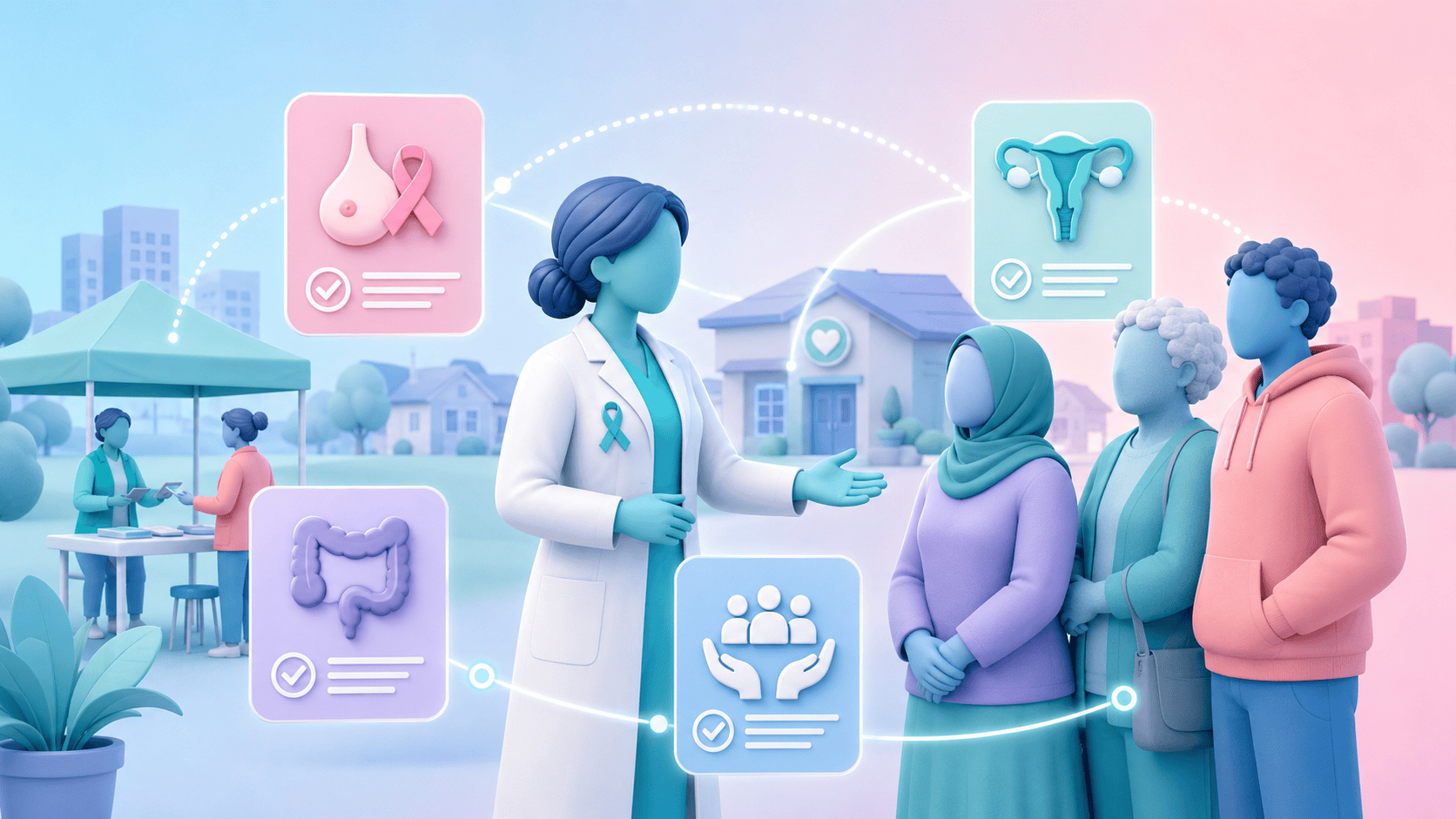
Cancer screening uptake remains significantly lower in deprived communities across England, contributing to later diagnoses and poorer outcomes. Primary Care Networks (PCNs) are well placed to address these inequalities by using population health management, targeted outreach, and multidisciplinary teams to improve participation in national screening programmes. This includes bowel, breast, and cervical screening programmes, where attendance continues to vary significantly according to deprivation.
What is cancer screening uptake?
Cancer screening uptake refers to the percentage of eligible people who participate in an NHS screening programme after receiving an invitation. Improving this rate increases the likelihood of detecting cancer earlier, leading to better outcomes and reduced inequalities.
Key Takeaways
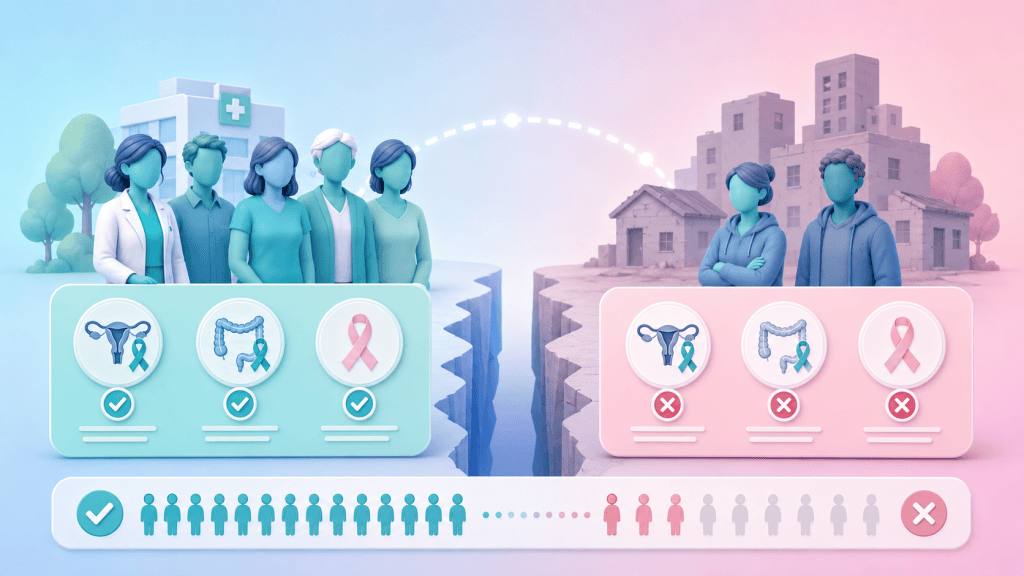
- The deprivation gap: Cervical screening uptake is up to 11% lower in the most deprived communities compared to the least deprived (NHS Digital, 2021/22).
- Bowel screening disparities: Participation consistently decreases with increasing deprivation, contributing to inequalities in late-stage diagnosis.
- Complex barriers: Low screening participation is rarely due to unwillingness; barriers include health literacy, language, trust, and digital exclusion.
- Targeted solutions: PCNs can improve screening participation by using population health management to identify non-responders and deploy multidisciplinary teams for personalised outreach.
Why is screening participation lower in deprived areas?

People living in deprived communities face multiple structural and social barriers that reduce participation in NHS screening programmes. These challenges mean the patients who would benefit most from early detection are often the least likely to attend.
Understanding these local barriers is the first step toward reducing health inequalities primary care teams encounter. It is crucial when addressing the needs of cancer screening deprived populations.
| Barrier | Potential PCN intervention |
| Low health literacy | Simplified patient information |
| Language barriers | Translated communications |
| Digital exclusion | Telephone outreach |
| Poor engagement | Community partnerships |
| Missed invitations | Targeted recalls |

Why cancer screening inequalities exist
The relationship between deprivation and cancer outcomes is well documented. This aligns with the NHS Core20PLUS5 approach, which identifies early cancer diagnosis as one of its national priorities for reducing healthcare inequalities. The evidence shows:
- Cervical screening uptake is significantly lower in the most deprived areas.
- Bowel screening participation decreases as deprivation increases.
- Lower screening engagement leads to later-stage presentations.
- Earlier diagnosis directly improves survival rates and treatment options.
Improving screening participation benefits patients and primary care. Earlier diagnosis reduces complex treatments, improves outcomes, and supports NHS ambitions to reduce inequalities. For PCNs, targeted initiatives demonstrate proactive population health management and strengthen preventative care.
Five practical ways PCNs can improve screening engagement
PCNs are uniquely positioned to take a proactive approach. Rather than relying solely on national invitation letters, practices can implement targeted interventions to boost screening attendance:
- Identify non-responders using clinical data: Use clinical systems to find eligible patients who have missed screening invitations.
- Segment patients by deprivation, ethnicity, and language: Understand the specific demographics of your non-responder cohorts.
- Deliver personalised reminders: Use phone calls or targeted text messages rather than generic letters.
- Partner with community organisations: Build trust and address cultural concerns through local community leaders.
- Monitor uptake and refine interventions: Track the success of outreach efforts and adjust strategies based on what works locally.
While this article focuses on reducing inequalities and improving participation, practices looking for detailed guidance on meeting the latest Network Contract DES requirements can read our guide to PCN Cancer Screening: How to Meet DES Expectations.
Using population health management to identify non-responders
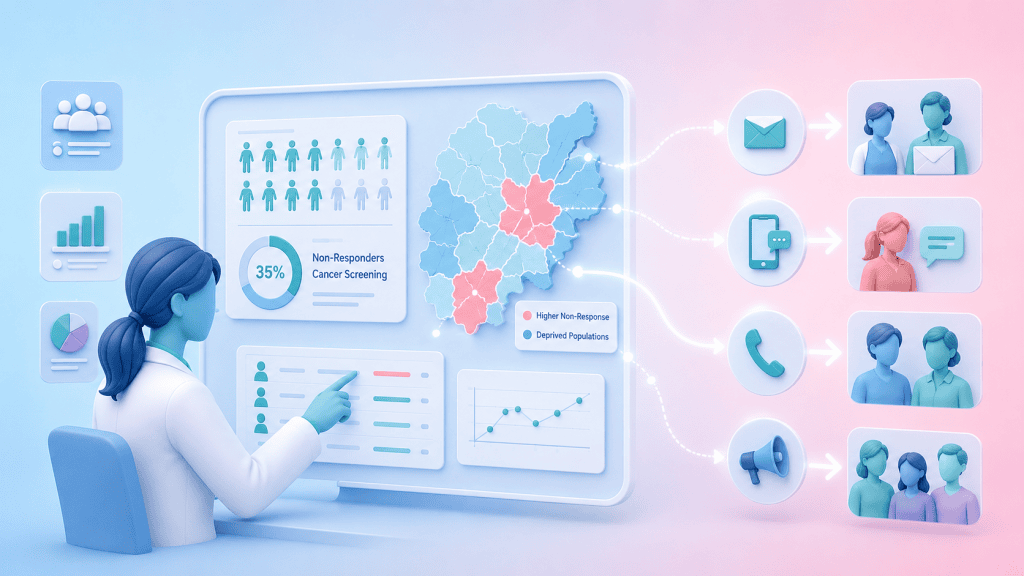
Population health management is the process of using clinical, demographic, and operational data to identify groups of patients who would benefit from targeted interventions. It enables PCNs to move from reactive care to proactive prevention.
Rather than applying a blanket strategy, teams can design targeted campaigns by:
- Searching clinical systems for eligible patients who have not responded to previous invitations.
- Stratifying these cohorts by deprivation index, ethnicity, or language.
- Prioritising outreach for the most vulnerable or hard-to-reach groups.
This method supports NHS goals to reduce health inequalities while delivering measurable improvements in early diagnosis.
How does a multidisciplinary team support cancer screening?

Improving PCN cancer screening requires a collaborative effort beyond GP appointments. A well-integrated multidisciplinary team can significantly increase patient attendance.
- Clinical Pharmacists: Can discuss screening importance during routine long-term condition management reviews.
- Pharmacy Technicians: Support data quality, identify eligible non-responders, and assist with targeted recall campaigns.
- Care Coordinators: Help patients navigate the booking process and overcome practical barriers.
Leveraging the role of Clinical Pharmacists in PCNs spreads the workload and creates multiple touchpoints for patient education.
Expert insight from Adeem Azhar, qualified Clinical Pharmacist and CEO
Reducing inequalities in cancer screening is not simply about increasing attendance. It is about using population health data to identify patients who may otherwise be missed and ensuring every community has equitable access to early diagnosis.
Adeem Azhar, MPharm, IPres
Co-Founder and Chief Executive Officer – Core Prescribing Solutions
Qualified Clinical Pharmacist
FAQs
Related resources
- PCN Cancer Screening: How to Meet DES Expectations
- Long-Term Condition Management
- The Role of Clinical Pharmacists in PCNs
- Clinical Pharmacist Support
Get in touch to discuss your workforce needs →