Skip to main content


 01274 442076



Safeguarding and Medicines: What GP Practices Should Expect From Their Pharmacy Service
|
Getting your Trinity Audio player ready...
|
- When does a medicines problem become a safeguarding concern?
- What safeguarding responsibilities should the pharmacy service hold?
- How should safeguarding concerns be escalated and followed up?
- What about refusal of medication and covert medication?
- What should your service agreement cover?
This article covers England; arrangements differ across the UK.
A pharmacy service should recognise medicines-related abuse or neglect, act within its competence, escalate promptly and record what happened. Commissioning clinical pharmacy support does not move safeguarding responsibility away from the practice. It should give you a team that spots when a medicines problem becomes a welfare concern.
Key takeaways
- Misuse of medication is recognised as a form of physical abuse, and withholding prescribed treatment as a form of neglect
- Not every medication error is a safeguarding concern, but repeated omissions and unexplained patterns can be
- Safeguarding referral, patient safety reporting, CQC notification and the MHRA Yellow Card scheme are not interchangeable
- Refusal of medication is not evidence of incapacity, and it is not a reason for covert medication
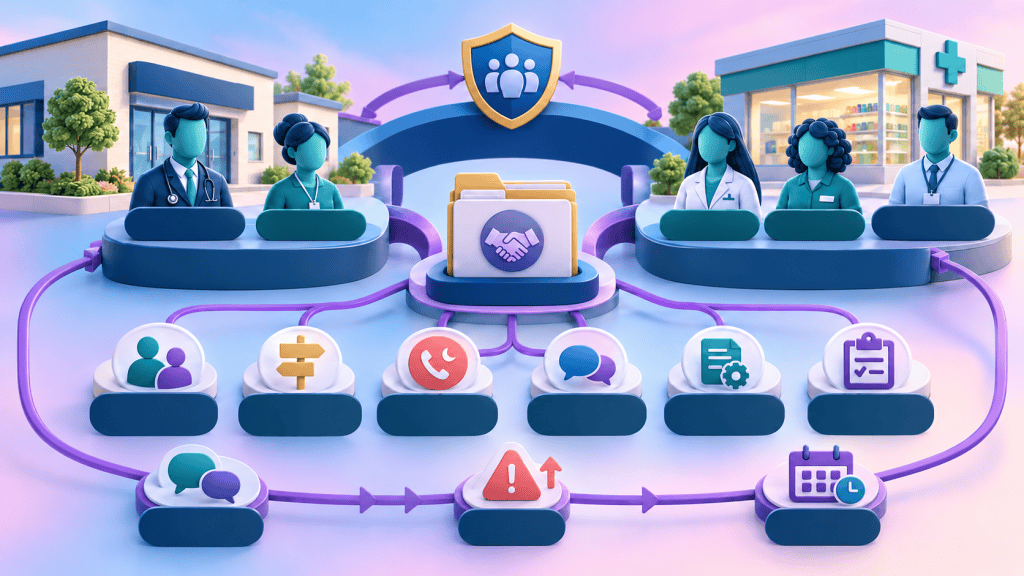
A consistent sequence helps, though local arrangements set the detail:
- Address immediate safety, including urgent clinical help
- Record the concern, the medicines involved and the person’s account
- Use the local safeguarding pathway through the practice or provider lead
- Confirm who owns the next action and the follow-up
- Review the outcome and update the care arrangements
When does a medicines problem become a safeguarding concern?

A medicines problem becomes a safeguarding concern when there is reason to suspect abuse, neglect or exploitation, whether or not there is also a clinical or patient safety issue. The two often coexist.
For safeguarding adults, the Care and Support Statutory Guidance sets out three elements: care and support needs, actual or potential abuse or neglect, and an inability to protect oneself because of those needs. Safeguarding children follows a different framework, because a child’s needs take precedence and a missed prescribed treatment can amount to medical neglect.
Situations worth attention:
- A carer withholding prescribed treatment without a valid clinical reason, suggesting neglect
- Medicines used to sedate or control someone
- Repeated omissions for someone needing medicines support
- A safeguarding children concern where a child misses essential treatment, which NICE guidance on child maltreatment treats as possible neglect
- A young carer managing a parent’s medicines, which may raise safeguarding children and safeguarding adults questions
Helping a parent manage medicines does not automatically raise safeguarding concerns. Concern may arise where the responsibility is inappropriate for the child’s age, affects their welfare, or leaves either person unsafe.
Medication errors need a patient safety response through your medicines optimisation and safety routes. Some also warrant safeguarding escalation: one serious incident may be enough, and repetition is not required.
What safeguarding responsibilities should the pharmacy service hold?
Practices should expect four practical safeguards from a commissioned pharmacy service. Safeguarding in pharmacy is part of everyday medicines work.
| Safeguard | What it means in practice |
|---|---|
| Allocated responsibility | Staff know who recognises safeguarding concerns, who refers and who follows up |
| Training and induction | Competence reflects patient contact, and staff know the practice leads, deputies and referral routes |
| Prompt communication | Urgent concerns reach an appropriate person through a channel that supports timely action |
| Follow-through | Confirms concerns reached the right person and escalates unresolved risk |

Under CQC Regulation 13, providers must protect service users from abuse and improper treatment. Medication safeguarding depends on training matched to roles and reporting routes staff can use.
Need a pharmacy service with safeguarding built into everyday medicines work?
Discuss governed pharmacy supportHow should safeguarding concerns be escalated and followed up?
Safeguarding escalation should reach a named person through a route that supports timely action. Agree it in advance, so it does not depend on one person. Safeguarding adults and safeguarding children referrals may need different routes.
| Route | Purpose |
|---|---|
| Safeguarding referral | Raise suspected abuse or neglect locally |
| Patient safety reporting | Record and learn from unsafe care |
| CQC notification | Meet statutory notification requirements |
| MHRA Yellow Card | Report adverse drug reactions |

Medication safeguarding and patient safety reporting share evidence but not purpose. Not every safeguarding referral requires a CQC notification, although allegations about the practice’s care are relevant.
Response times should reflect urgency and local safeguarding procedures.
What about refusal of medication and covert medication?
A person with capacity can refuse treatment, even when others consider it unwise. Refusal alone does not establish incapacity or justify hiding medicines.
Asking whether a tablet can be crushed into food is not, by itself, a covert medication request. It may relate to swallowing difficulties and be discussed openly with the patient. Covert medication is defined by administration without the person’s knowledge, and NHS guidance on covert administration sets out the legal requirements, including a decision-specific capacity assessment, documented best-interests decision-making, prescriber authorisation and review. The pharmacist confirms whether each medicine can be safely given in the proposed way, and flags when changes in medicines or capacity mean the covert medication arrangement needs review.
What should your service agreement cover?
Your service agreement should state how the team connects to your clinical governance framework and safeguarding arrangements. The practice retains its safeguarding responsibilities, alongside the provider’s and individual professionals’ responsibilities, for safeguarding adults and safeguarding children alike. It should name the safeguarding lead and deputy, cover induction into local referral routes and out-of-hours arrangements, and explain how safeguarding information is shared.
This is also where to judge a provider. Ask how the service contributes to medicines-related safeguarding responsibilities, not just which tasks it completes.
Expert insight from Adeem Azhar, qualified Clinical Pharmacist and CEO
Safeguarding in pharmacy is rarely one dramatic event. It is staff who know the patients well enough to notice when something has changed, and who feel confident enough to raise it.
Adeem Azhar, MPharm, IPres
Co-Founder and Chief Executive Officer – Core Prescribing Solutions
Qualified Clinical Pharmacist
FAQs
Need a pharmacy service with safeguarding built into everyday medicines work?
Discuss governed pharmacy support