 Skip to main content


 01274 442076






Clinical Pharmacist vs Hospital Pharmacist (UK): Key Differences Explained
18th May 2026
- What is the difference between clinical and hospital pharmacist roles?
- How do the roles compare?
- Salary Comparison: Clinical Pharmacist vs Hospital Pharmacist
- Why does this matter for PCNs?
When comparing a clinical pharmacist vs hospital pharmacist, the primary difference lies in their care setting and patient focus. A clinical pharmacist operates in primary care, managing long-term conditions and optimising medications within GP practices or Primary Care Networks (PCNs). A hospital pharmacist works in secondary care, ensuring safe prescribing and managing usually acute treatments for inpatients. For PCN decision-makers, understanding this clinical pharmacist vs hospital pharmacist distinction is vital for effective workforce planning and ongoing training and development.
Key Takeaways
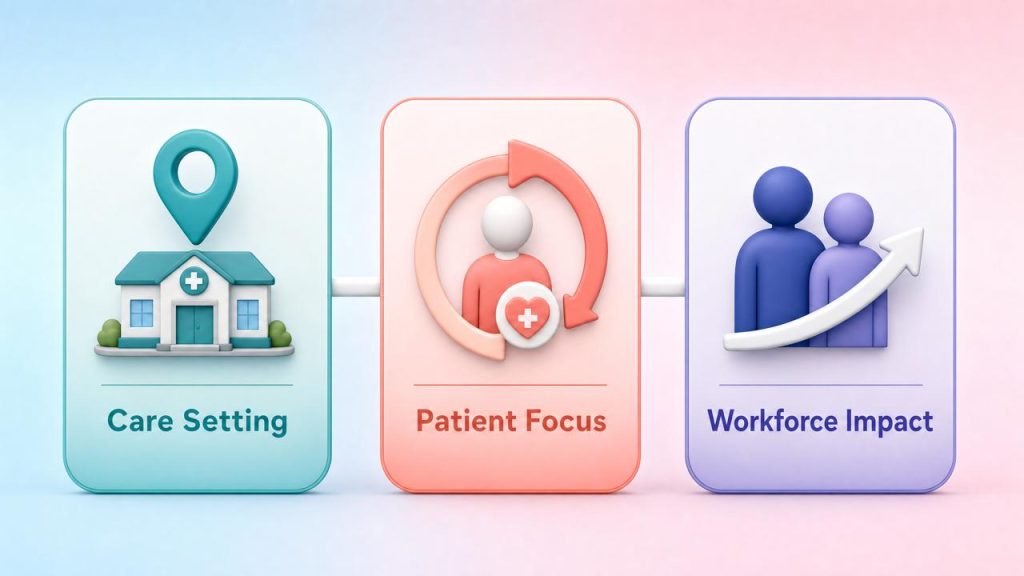
- Care setting: Clinical pharmacists work in primary care (GP practices, PCNs); hospital pharmacists are based in NHS hospitals
- Patient focus: Clinical pharmacists manage long-term, preventative care; hospital pharmacists usually handle acute, short-term inpatient needs. Hospital pharmacists can work in specialised areas focussed on ongoing medical conditions ie Oncology, respiratory for example.
- Workforce impact: Integrating clinical pharmacists reduces GP workload and improves community medication safety
What is the difference between clinical and hospital pharmacist roles?
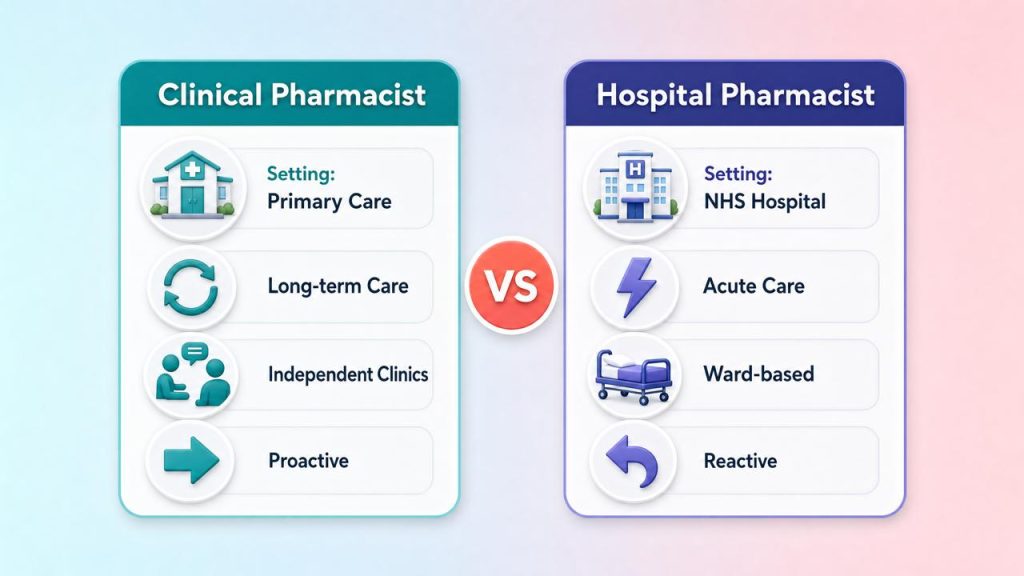
The core difference between clinical and hospital pharmacist roles is their position within the patient journey. A clinical pharmacist is a patient-facing professional embedded within primary care teams. They focus on medicines optimisation, safety, and the management of long-term conditions. Through the Additional Roles Reimbursement Scheme (ARRS), they have become integral to PCNs across England.
Their daily responsibilities often include running independent clinics and conducting Structured Medication Reviews. They manage chronic illnesses like diabetes and hypertension, actively deprescribing to reduce polypharmacy risks. By handling complex prescription queries, they directly alleviate pressure on GPs. This proactive approach is central to effective LTC Management in the community.
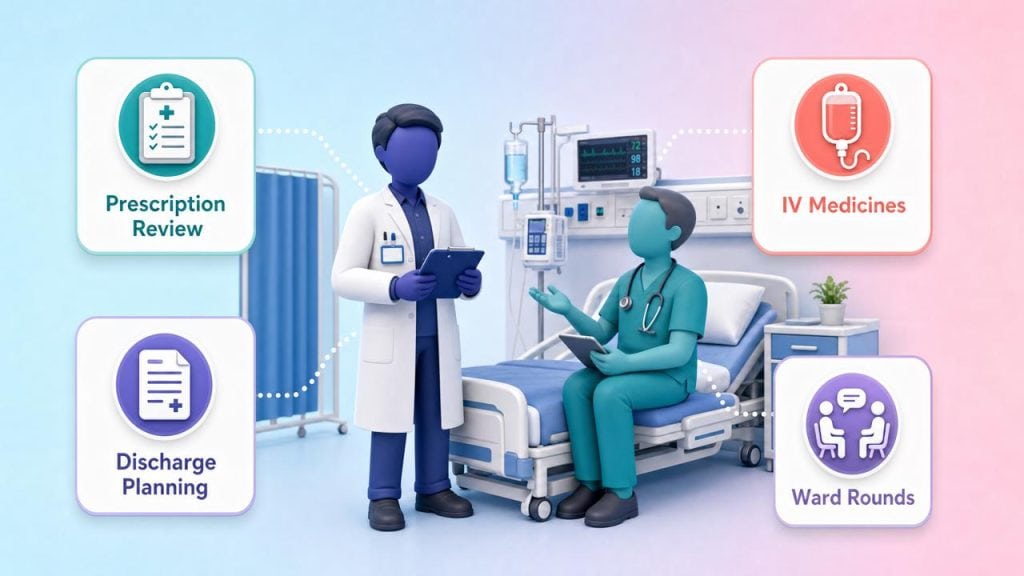
Conversely, a hospital pharmacist works within secondary care to ensure the safe and effective use of medicines for admitted patients. They are typically based in NHS hospital trusts, rotating across various medical specialties and often sometimes specialising in their respective areas where they have a strong clinical interest.
Typical hospital pharmacist duties UK involve reviewing inpatient drug charts, supporting consultant-led ward rounds, and advising on high-risk medications. They also manage discharge prescriptions to ensure a safe transition of care. While they interact with patients, their role is more focused on supporting the broader clinical team than on running independent clinics.
How do the roles compare?
Understanding the primary care vs hospital pharmacist dynamic helps clarify their distinct value to the NHS. When looking at a clinical vs hospital pharmacist UK comparison, the work styles differ significantly. This difference between clinical and hospital pharmacist environments means they attract professionals with different clinical interests.
| Feature | Clinical Pharmacist | Hospital Pharmacist |
| Setting | GP practices, PCNs | NHS or privare hospitals |
| Care Type | Long-term, preventative | Acute, short-term although can be specialised longer term care |
| Patient Contact | High (independent clinics) | Moderate (ward or clinicbased) |
| Focus | Medicines optimisation, long term condition management | Medicines safety in acute care |
Salary Comparison: Clinical Pharmacist vs Hospital Pharmacist
When evaluating a hospital pharmacist vs clinical pharmacist, pay is broadly similar as both roles align with the NHS Agenda for Change pay scales.
A typical hospital pharmacist salary UK starts at Band 6 for newly qualified professionals, which is £37,338 for the 2024/25 period. With experience, they can progress to Band 7 and Band 8a for highly specialised or management roles.
Clinical pharmacists in primary care follow a similar trajectory. They often enter PCN roles at Band 7 or 8a, reflecting the advanced clinical skills and independent prescribing qualifications required to manage complex community patients autonomously. Ultimately, whether you look at a hospital pharmacist salary UK or a primary care equivalent, the earning potential is comparable.

Why does this matter for PCNs?
For practice managers, Clinical Directors, PCN Managers and commissioners, the hospital pharmacist vs clinical pharmacist distinction directly impacts service delivery. Clinical pharmacists are specifically designed to deliver structured, scalable patient care in the community. They bring clinical expertise closer to the patient, improving outcomes and ensuring efficient use of GP time. This makes the clinical pharmacist vs hospital pharmacist choice clear when building a primary care team.
The shift towards clinical pharmacy in primary care is about moving expertise closer to the patient and care closer to home. When clinical pharmacists are properly integrated into GP teams, we see better patient outcomes, enhanced safety, and a more resilient primary care workforce.
Adeem Azhar, Co-Founder and Chief Executive Officer – Core Prescribing Solutions

FAQs
Looking for support with your PCN pharmacy workforce?
If your PCN or practice needs expert Clinical Pharmacist Services to manage workload and improve patient care, we can help. Our team integrates seamlessly to deliver proactive, safe, and effective medicines management.
