Skip to main content


 01274 442076



A PCN Pharmacist’s Toolkit for Safer Chronic Pain Management
|
Getting your Trinity Audio player ready...
|
- What should PCN pharmacist pain management include?
- Who should be prioritised for a chronic pain medication review?
- What does care beyond opioids look like?
- How can PCNs support opioid reduction without rigid targets?
- How should a PCN measure improvement?
PCN pharmacist pain management works best as a governed, cross-practice pathway, not a series of isolated prescription reviews. England’s Health Survey 2024 reports chronic pain in 26% of adults and 36% in the most deprived areas. PCNs need consistent review, prescribing and follow-up across member practices.
Key takeaways
- Validate first: Prescribing data prioritises review but does not confirm diagnosis or appropriateness.
- Match the presentation: Chronic primary, secondary and neuropathic pain need different pathways.
- Build a wider plan: Safer care goes beyond opioid reduction to function, support and coordinated follow-up.
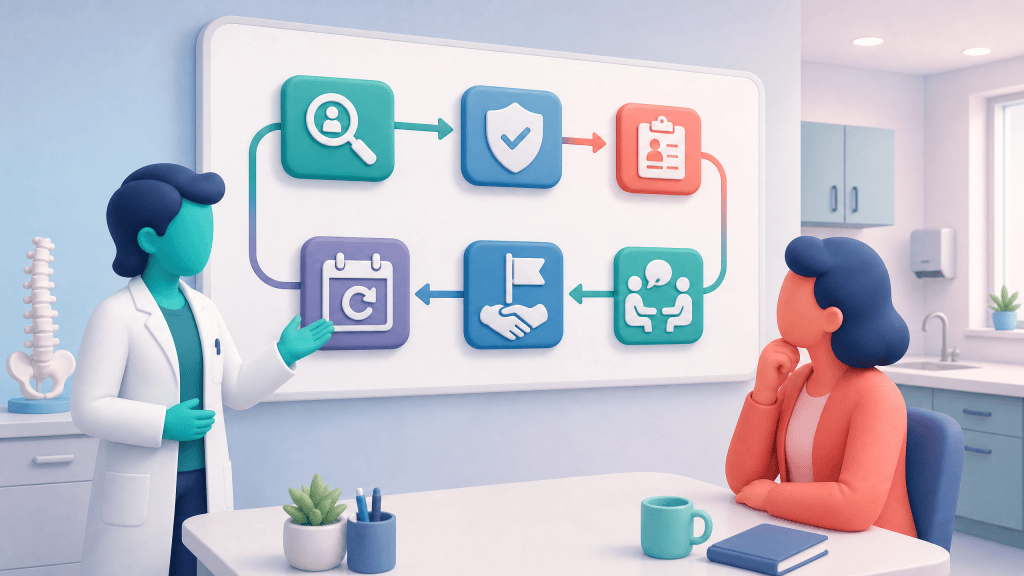
What should PCN pharmacist pain management include?
The pathway should integrate with the clinical pharmacist support service and provide a consistent route across practices. Use six steps: identify, validate, prepare, review, agree and close the loop.
This means using local searches to find potential risk; clinically validating indication, benefit, harms and exclusions; reviewing the complete record; agreeing goals with the person; documenting clinical decisions and escalation; then assigning a named owner and follow-up date. This creates a practical extension of structured medication reviews, rather than a separate service.
Expert insight from Adeem Azhar, qualified Clinical Pharmacist and CEO
When medicines ownership is explicit, performance stabilises. PCNs that define scope, supervision, and reporting move from reactive firefighting to predictable system delivery.
Adeem Azhar, MPharm, IPres
Co-Founder and Chief Executive Officer – Core Prescribing Solutions
Qualified Clinical Pharmacist

Who should be prioritised for a chronic pain medication review?
NHSBSA opioid prescribing comparators can help PCNs understand local use, identify variation and measure impact. Because the data contain no diagnosis, all cohorts need clinical validation before contact.
Useful priority signals include opioid use beyond three months for non-cancer pain; higher oral morphine equivalent doses; opioids combined with benzodiazepines, gabapentinoids or other sedatives; limited benefit, escalation or early requests; falls, frailty, respiratory disease or cognitive impairment; unclear plans after discharge; and previous reduction attempts that need more support.

These signals do not mandate withdrawal. Acute, cancer, palliative and end-of-life pain need separate clinical pathways and should not be folded into a chronic-pain search.
What does care beyond opioids look like?
Chronic pain management in primary care links treatment decisions to function, self-management and local multidisciplinary support. It can include supervised exercise or sustained activity, functional goal-setting, ACT or CBT for pain where appropriate, FCP/MSK care, social prescribing, wellbeing support and referral to specialist pain, mental-health or substance-misuse services, in line with NICE chronic pain guidance.
| Pain presentation | Concise clinical focus |
| Chronic primary pain | Person-centred care plan, activity and psychological support. NICE advises against initiating opioids or gabapentinoidsfor this indication. |
| Osteoarthritis | Therapeutic exercise is core treatment. Medicines should support non-pharmacological care, not replace it. |
| Low-back pain or sciatica | Support self-management and activity. NICE does not recommend opioids for chronic low-back pain or chronic sciatica; gabapentinoids are not recommended for sciatica. |
| Neuropathic pain | Use the condition-specific pathway. Gabapentinoids can be an initial option for neuropathic pain, except trigeminal neuralgia, but not for sciatica. |
Within PCN pharmacist pain management, the aim is not to substitute one medicine for another. It is to apply medicines optimisation and safety to the person’s pain presentation, goals and wider support needs.

How can PCNs support opioid reduction without rigid targets?
Opioid tapering in primary care should follow NICE guidance: agree changes collaboratively and avoid abrupt withdrawal except in exceptional medical circumstances. A chronic pain medication review should also explore whether treatment still helps the person achieve their goals, alongside harms, concerns and preferences.
The UK I-WOTCH trial supports collaborative opioid reduction: opioid discontinuation at 12 months occurred in 29% of participants receiving a supported intervention, compared with 7% receiving usual care, without a significant between-group difference in pain interference. Its intervention included education and self-management support, not forced tapering.
How should a PCN measure improvement?
Measurement within PCN pharmacist pain management should support learning, not reward rapid dose reduction. Track validated cohorts reviewed, documented goals and follow-up plans, patient-reported function and treatment benefit, plus unplanned contacts, withdrawal concerns and escalation. Review access and outcomes by member practice and deprivation group where local data permit.

FAQs
Looking for support with a PCN chronic-pain pathway?
Core Prescribing Solutions can strengthen PCN pharmacist pain management through clear clinical ownership, escalation routes and reliable follow-up. Contact Core Prescribing Solutions to discuss a model that fits your local population and governance arrangements.