 Skip to main content


 01274 442076



International Pharmacist Registration UK: What It Means for Clinical Pharmacist Recruitment
|
Getting your Trinity Audio player ready...
|
- What are the proposed changes to international pharmacist registration?
- Why does this matter for primary care workforce planning?
- How will this affect patient safety and clinical pharmacy services?
Latest Update: In April 2026, the General Pharmaceutical Council (GPhC) launched a consultation on proposals to streamline the registration process for internationally qualified pharmacists, with the consultation closing on 21 July 2026.
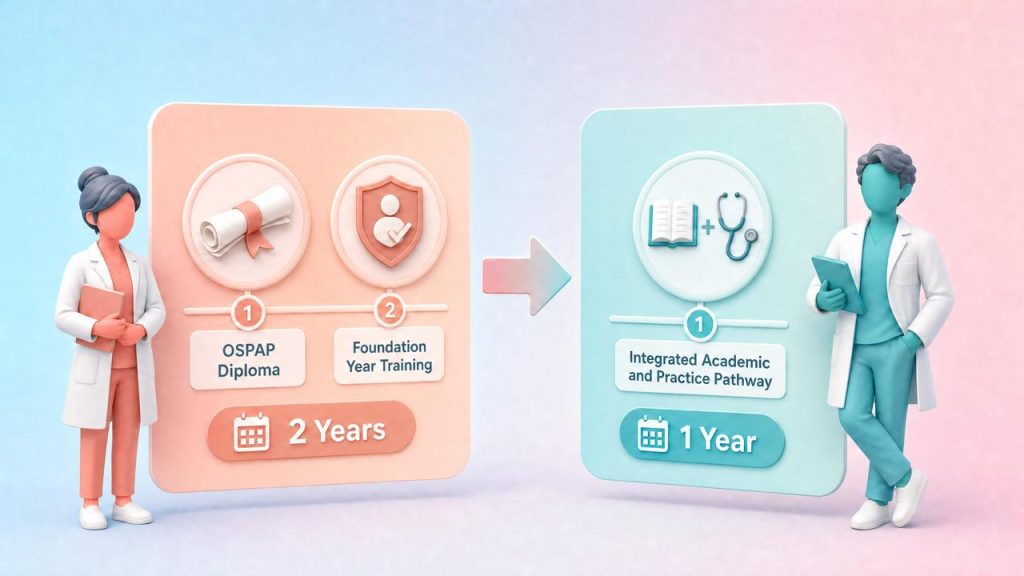
International pharmacist registration in the UK could be about to change significantly. The GPhC consultation is proposing to replace the current two-year route with a single integrated one-year programme – a shift that could meaningfully improve clinical pharmacist recruitment UK and workforce capacity across primary care.
Key Takeaways
- Streamlined Pathway: The current two-year OSPAP plus foundation training route could be replaced with a one-year integrated programme.
- Independent Prescribing Included: International pharmacists may join the register as independent prescribers from day one.
- Patient Safety Maintained: All applicants must still pass the Common Registration Assessment.
- Primary Care Impact: Faster registration supports clinical pharmacist recruitment UK and reduces workforce gaps in PCNs and GP practices.
What are the proposed changes to international pharmacist registration?
The GPhC consultation is proposing to replace the current two-year route – which includes a postgraduate diploma (OSPAP) and a foundation training year – with a streamlined, integrated one-year programme combining academic learning and learning in practice. The aim is to reduce unnecessary duplication and recognise that internationally qualified pharmacists are already experienced professionals, not trainees starting from scratch.
All applicants would still need to pass the Common Registration Assessment, ensuring standards remain consistent with pharmacists qualifying in Great Britain and Northern Ireland. The proposals also include embedding independent prescribing into the programme, meaning clinical pharmacists could join the register ready to deliver advanced services from the outset.

Why does this matter for primary care workforce planning?
A faster registration pathway for international pharmacists could directly address one of primary care’s most persistent challenges: clinical pharmacist recruitment UK. PCNs and GP practices continue to face significant workforce pressures, and a more accessible route to registration could help:
- Increase clinical pharmacy workforce capacity within PCNs and GP practices.
- Reduce reliance on short-term locum cover.
- Support delivery of Structured Medication Reviews (SMRs) and long-term condition management.
- Build a more scalable, sustainable workforce pipeline.
These proposals align with the broader ambitions of the NHS Long Term Workforce Plan, which identifies pharmacy as a key lever for expanding primary care capacity.

How will this affect patient safety and clinical pharmacy services?
The GPhC has been clear that patient safety remains the primary consideration. By focusing training on applying existing skills safely within Great Britain’s healthcare systems – rather than repeating learning internationally qualified pharmacists have already completed – the proposals aim to be proportionate without compromising standards.
Embedding independent prescribing from the point of registration means clinical pharmacists could contribute fully to multidisciplinary teams from day one, improving both patient outcomes and service capacity.

These proposed changes are a positive step towards recognising the value of internationally trained pharmacists while maintaining high standards of patient care. For the NHS, it opens the door to more efficient workforce expansion at a time when demand continues to grow which will support the NHS workforce strategy in the future.
Adeem Azhar, Co-Founder and Chief Executive Officer – Core Prescribing Solutions

Looking for support with your primary care pharmacy workforce?
If your PCN or practice needs support with clinical pharmacist recruitment UK, workforce planning, or delivering clinical pharmacy services, we can help.
FAQs


