Skip to main content


 01274 442076


Medication Non-Adherence: Causes, Costs and Primary Care Solutions
|
Getting your Trinity Audio player ready...
|

- What is medication non-adherence?
- Intentional and unintentional non-adherence
- Why medication non-adherence matters in primary care
- Cost of medication nonadherence
- Common causes of medication non-adherence
- How medication non-adherence affects long-term conditions
- How primary care teams can improve medication adherence
- The role of medication reviews and medicines optimization
- How we support medication adherence in primary care
Medication non-adherence happens when patients do not take medicines as agreed with their healthcare professional. In primary care, this can affect long-term condition control, increase avoidable workload and create safety risks when problems are not identified early.
Key takeaways
- Medication non-adherence can be intentional or unintentional, and the reason matters when choosing the right support.
- Poor adherence can lead to worse outcomes, avoidable appointments, medicine waste and increased NHS costs.
- Clinical pharmacists and pharmacy technicians can help improve adherence through medication reviews, patient support and medicines optimisation.
What is medication non-adherence?
Medication non-adherence means a patient is not taking a medicine in the way agreed with their prescriber or healthcare professional. This may include missed doses, stopping treatment early, taking the wrong dose, using the medicine incorrectly or not collecting the medicine at all.
In practice, terms such as medication non adherence and non adherence to medication refer to the same issue. The important point is not to blame the patient, but to understand why the medicine is not being taken as intended.
NICE guidance separates non-adherence into two broad types: intentional and unintentional. This distinction is important because each requires a different response.
Intentional and unintentional non-adherence
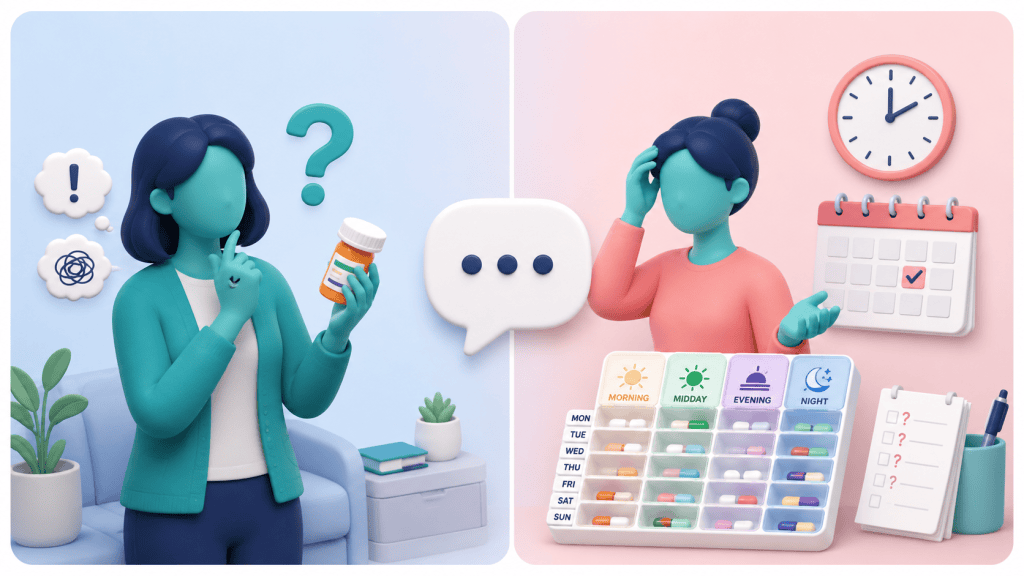
Unintentional non-adherence happens when a patient wants to follow the agreed treatment plan but cannot do so because of practical barriers. This may include forgetting doses, misunderstanding instructions, struggling with packaging, side effects, supply issues or difficulty managing a complex regimen.
Intentional non-adherence happens when a patient decides not to take a medicine as recommended. This may be linked to concerns about side effects, doubts about the need for treatment, previous experiences, cultural beliefs, stigma or a preference to avoid medication.
Both types can overlap. A patient may forget doses and also feel unsure about whether the medicine is needed. That is why adherence support works best when it starts with a conversation, not an assumption.
Why medication non-adherence matters in primary care
NHS England highlights that between 30% and 50% of medicines prescribed for long-term conditions are not taken as intended. This makes adherence a major issue for primary care, especially for patients with diabetes, hypertension, asthma, cardiovascular disease, mental health conditions and complex polypharmacy.
Poor adherence can lead to:
- Worse long-term condition control
- Increased risk of complications
- More GP appointments and follow-up queries
- Avoidable urgent care or hospital use
- Medicine waste
- Reduced patient confidence in treatment
- Higher pressure on prescribing and review workflows
For GP practices and PCNs, medication non-adherence is often hidden inside everyday workload. It may appear as uncontrolled readings, repeated symptoms, missed monitoring, unused medicines or frequent medication queries.
Need more clinical pharmacy capacity to tackle medication non-adherence?
Discuss medication adherence supportCost of medication nonadherence

The Cost of medication nonadherence is difficult to measure precisely because it varies by condition, medicine, patient group and healthcare setting. However, the impact is clear. Non-adherence can increase costs through medicine waste, avoidable complications, extra appointments, urgent care, hospital admissions and reduced productivity.
UK-focused research has estimated that non-adherence across five long-term condition areas could cost NHS England more than £930 million, with potential annual savings of around £500 million if adherence improved. These figures should be treated as estimates, but they show why adherence is not just a patient behaviour issue. It is a clinical, operational and financial issue for the health system.
For primary care, the practical cost is often seen in workload: repeat consultations, medication queries, treatment changes, monitoring problems and additional reviews that may have been avoidable with earlier adherence support.
Common causes of medication non-adherence

Medication non-adherence is rarely caused by one single factor. It usually reflects a mix of patient, treatment and system issues.
Common causes include:
- Forgetting to take medicines
- Unclear instructions
- Side effects or fear of side effects
- Doubts about whether the medicine is needed
- Complex medication regimens
- Polypharmacy
- Difficulty opening packaging or using devices
- Mental health or cognitive difficulties
- Stigma linked to certain medicines or conditions
- Poor communication after prescribing
- Supply problems or repeat prescription delays
- Limited follow-up after treatment changes
Understanding the cause matters because the wrong intervention can fail. A reminder may help someone who forgets, but it will not solve concerns about side effects or doubts about the medicine.
How medication non-adherence affects long-term conditions

Medication non-adherence has the greatest impact where treatment needs to be taken consistently over time. This is why it is especially important in long-term condition management.
In hypertension, missed medicines can contribute to poor blood pressure control and increased cardiovascular risk. In diabetes, non-adherence can affect glycaemic control and increase the risk of complications. In asthma, poor adherence to preventer therapy can increase the risk of symptoms, exacerbations and urgent care use.
For mental health conditions, stopping medication without support can lead to relapse, withdrawal effects or deterioration. For patients with multiple conditions, the risks can be greater because medicines, monitoring and follow-up are more complex.
Need more clinical pharmacy capacity to tackle medication non-adherence?
Discuss medication adherence supportHow primary care teams can improve medication adherence
Improving adherence starts with understanding the patient’s experience. Patients should be involved in decisions about medicines and given space to discuss concerns, practical barriers and preferences.
Primary care teams can support adherence by:
- Asking open questions about how medicines are being taken
- Checking whether the patient understands the purpose of each medicine
- Discussing side effects and concerns early
- Simplifying regimens where clinically appropriate
- Reviewing medicines regularly
- Supporting patients after new medicines are started
- Using reminders or digital tools where they fit the patient
- Checking repeat prescription patterns
- Involving carers where appropriate and consented
- Escalating clinical concerns when adherence issues create risk
The aim is not to pressure patients into taking medicines. The aim is to support informed, safe and realistic use of medicines.
The role of medication reviews and medicines optimisation

Medication reviews are central to improving adherence because they create time to check whether treatment is still suitable, understood and manageable.
Clinical pharmacists can use reviews to assess:
- Whether each medicine is still needed
- Whether the patient is taking it as intended
- Whether side effects are affecting adherence
- Whether the regimen can be simplified
- Whether monitoring is up to date
- Whether the patient understands the treatment plan
- Whether deprescribing may be appropriate
Structured Medication Reviews can be especially useful for patients with polypharmacy, frailty, high-risk medicines or long-term conditions. When done well, they support safer prescribing and better shared decision-making.
Core Prescribing Solutions Insight: What we see in primary care
In primary care, medication non-adherence is often discovered indirectly through uncontrolled conditions, repeated prescription queries, missed monitoring or unused medicines. The strongest approach is to combine structured medication reviews, pharmacist-led conversations and pharmacy technician support so practices can identify adherence problems earlier and respond in a way that fits the patient’s real barriers.
Expert comment from our CEO and qualified clinical pharmacist:
Medication non-adherence should not be treated as a simple compliance issue. In primary care, the most important step is understanding why the patient is not taking the medicine as intended. Pharmacist-led reviews, clear communication and practical medicines optimisation can help identify barriers earlier and support safer, more realistic treatment plans.
Adeem Azhar, Co-Founder and CEO, MPharm, IPres, Core Prescribing Solutions
How we support medication adherence in primary care
Medication adherence improves when practices understand why a patient is struggling, whether that is side effects, confusion, missed repeats, complex regimens or concerns about the medicine itself.
Our clinical pharmacy team supports GP practices and PCNs by:
- Carrying out pharmacist-led medication reviews and Structured Medication Reviews
- Identifying practical or clinical barriers to taking medicines as intended
- Supporting repeat prescribing checks, follow-up and patient recalls through pharmacy technician input
- Reviewing adherence concerns linked to long-term conditions, polypharmacy or high-risk medicines
- Escalating issues where non-adherence creates clinical risk or needs wider review
This helps practices move from reacting to missed medicines towards earlier, safer and more patient-centred medicines support.
FAQs
What is the difference between intentional and unintentional non-adherence?
Intentional non-adherence happens when a patient chooses not to follow treatment recommendations. Unintentional non-adherence happens when a patient wants to follow the plan but is prevented by barriers such as forgetting, confusion, side effects, supply issues or difficulty using the medicine.
What causes non adherence to medication?
Common causes include side effects, complex regimens, poor understanding, doubts about treatment, forgetfulness, medicine supply problems, stigma, mental health difficulties and limited follow-up after prescribing.
Why does medication non-adherence cost the NHS money?
Medication non-adherence can increase NHS costs through medicine waste, avoidable complications, extra GP appointments, urgent care, hospital admissions and additional prescribing or review workload.
Reduce the clinical and operational cost of medication non-adherence
Core Prescribing Solutions can support GP practices and PCNs with Clinical Pharmacist-led medication reviews, Structured Medication Reviews, medicines optimisation and patient-centred follow-up. We can help identify adherence barriers, simplify complex regimens, strengthen medicines safety and provide additional pharmacy capacity to support more consistent long-term treatment.
Discuss your medication adherence priorities