Skip to main content


 01274 442076



Patient Access in the NHS: Improving Access in Primary Care
|
Getting your Trinity Audio player ready...
|
Article Updated: August 2026
- What is patient access?
- Why patient access matters in primary care
- Patient access NHS changes in 2026
- Problems with patient access today
- The role of digital tools in patient access
- What good patient access looks like
- How pharmacy teams support patient access
- How to improve patient access in primary care
- How we support patient access in primary care
Patient access means how easily patients can contact, navigate and use NHS services when they need care. In primary care, this includes getting through to a GP practice, submitting online requests, booking appointments, requesting repeat prescriptions, accessing medical records and being directed to the right clinician or service.
Key takeaways
- Patient access NHS improvements now focus on phone, online and in-person routes working together.
- The main problems with patient access today include demand, workforce pressure, digital exclusion and poor workflow design.
- Better access depends on care navigation, digital systems, workforce capacity and safe clinical oversight.
What is patient access?
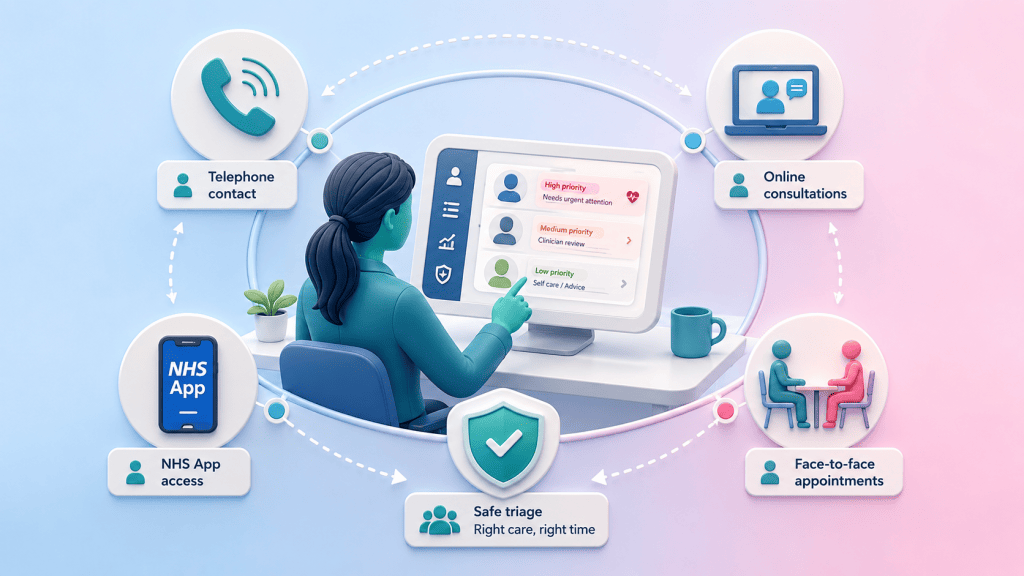
Patient access is the ability for patients to get the right healthcare support at the right time, through a route they can use safely. This may include telephone contact, online consultation tools, the NHS App, face-to-face appointments, repeat prescription requests and access to GP health records.
In the NHS, patient access is not only about booking an appointment. It is about how quickly and safely a patient request is received, assessed, prioritised and directed to the most appropriate person or service.
Why patient access matters in primary care
Patient access matters because general practice is often the first point of contact for healthcare. If patients cannot reach their practice or are not directed properly, problems can worsen, workload can build and pressure shifts across the wider NHS.
Good access supports:
- Earlier assessment of patient needs
- Safer triage and care navigation
- Better use of GP, pharmacist, nurse and wider team capacity
- Timely support for medication queries and repeat prescriptions
- Better management of long-term conditions
- Reduced avoidable pressure on urgent and emergency care
For GP practices and PCNs, improving access is not simply about opening more routes. It is about making sure those routes are safe, manageable and properly connected to clinical workflows.
Patient access NHS changes in 2026
The direction of travel in patient access NHS policy is clear. Patients should be able to contact their GP practice through different routes, including phone, online and in person, and receive a clear response on how their request will be managed.
From October 2025, GP practices in England are required to keep online consultation tools open during core hours for non-urgent appointment requests, medication queries and administrative requests.
This is designed to reduce the pressure of the traditional “8am rush” and improve consistency across access routes. However, digital access only works when practices have enough capacity, clear care navigation and safe processes behind the front door.
Problems with patient access today

The problems with patient access today are not caused by one issue. They usually come from a combination of demand, workforce pressure, system design and digital exclusion.
Common challenges include:
- High demand for appointments and clinical advice
- Patients struggling to get through by phone
- Online forms creating extra workload if not triaged properly
- Digital exclusion for patients who cannot use online routes confidently
- Repeat prescription and medication queries adding pressure to reception and clinical teams
- Poorly designed workflows that move work around rather than reducing it
- Lack of clarity over who should handle different types of patient requests
- Safety risks when urgent symptoms are submitted through the wrong route
This is why access improvement should not be treated as a digital project alone. It needs workforce planning, clinical governance and clear operational processes.
The role of digital tools in patient access
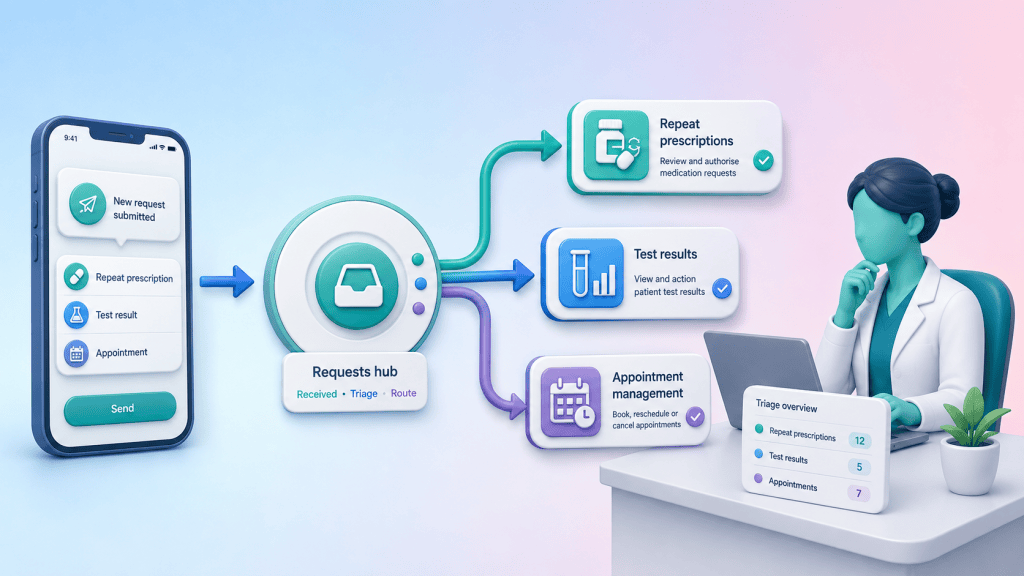
Digital tools can improve patient access when they are used properly. They can help patients submit requests, view records, order repeat prescriptions, receive messages and access services without needing to phone the practice every time.
Examples include:
- NHS App access for repeat prescriptions, messages, test results and appointment management
- Online consultation forms for non-urgent requests
- Digital messaging for administrative updates
- Telephony systems that support call handling and routing
- Care navigation workflows that direct patients to the right service
The risk is assuming that digital access automatically means better access. If online tools create more demand than the team can safely manage, or if patients are forced into routes they cannot use, access can become worse rather than better.
What good patient access looks like
Good patient access should give patients clear routes into care while helping practices manage demand safely.
A strong access model should include:
- Phone, online and in-person routes
- Clear care navigation at first contact
- Safe triage for clinical requests
- Separate pathways for admin, medication and urgent clinical queries
- Support for patients who cannot use digital tools
- Proper use of wider primary care roles
- Clear documentation and escalation processes
- Regular review of demand, response times and patient feedback
The best models do not simply add more contact routes. They make sure each route has a clear purpose and a safe workflow behind it.
How pharmacy teams support patient access
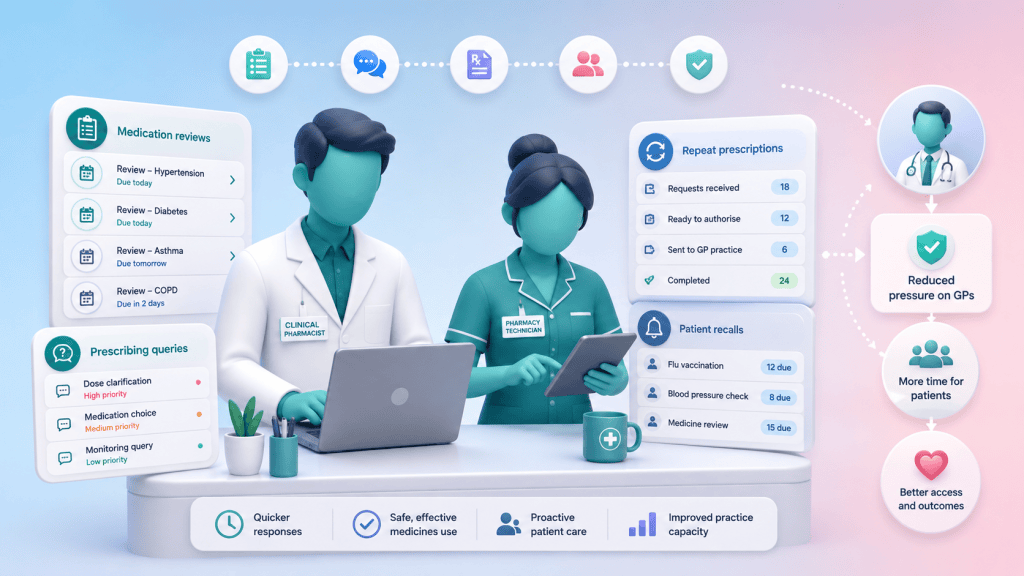
Clinical pharmacists and pharmacy technicians can play an important role in improving access across GP practices and PCNs. Many patient requests relate to medicines, repeat prescriptions, medication reviews, side effects, long-term conditions or prescribing queries.
Clinical pharmacists can support:
- Medication reviews and Structured Medication Reviews
- Long-term condition medicines support
- Prescribing queries
- Medicines optimisation
- Side effect and adherence discussions
- High-risk medicine monitoring
- Clinical escalation where needed
Pharmacy technicians can support:
- Repeat prescribing workflows
- Medicines reconciliation
- Prescription query coordination
- Patient recalls
- Administrative medicines safety tasks
- Documentation and follow-up processes
When these roles are integrated properly, they help reduce pressure on GPs while giving patients faster access to the right medicines support.
How to improve patient access in primary care
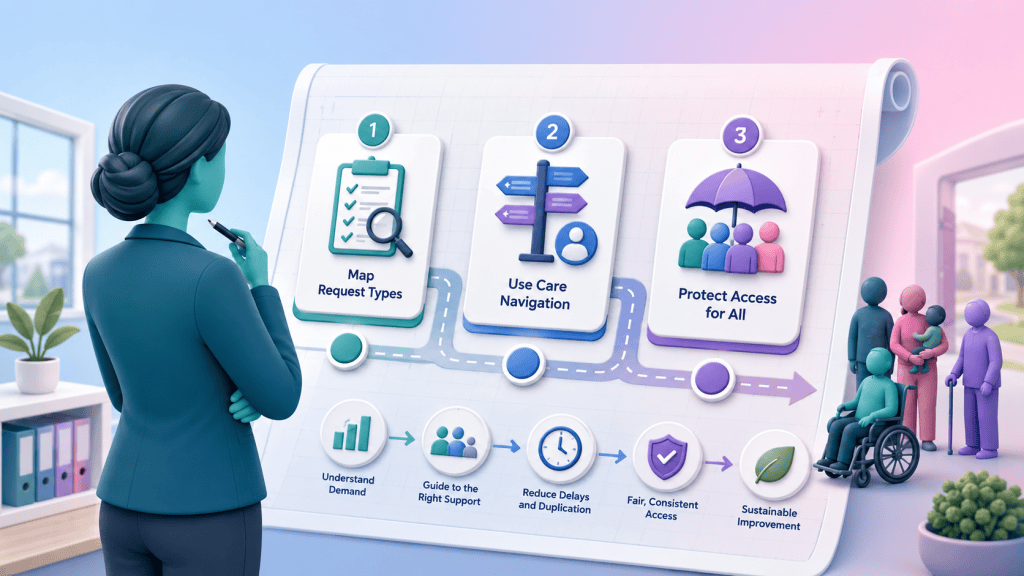
Improving patient access means building a model that is safe, realistic and sustainable for the practice team.
Primary care teams should focus on:
- Mapping the most common patient request types
- Separating urgent, routine, medication and administrative queries
- Using care navigation to direct patients first time
- Making online tools safe and manageable
- Protecting access for digitally excluded patients
- Using clinical pharmacists and pharmacy technicians effectively
- Reviewing demand data and bottlenecks regularly
- Building escalation routes for risk or uncertainty
The aim should be better access and safer workload management, not simply more demand entering the system.
Need a practical way to improve patient access without adding pressure to your core team?
Discuss patient access supportCore Prescribing Solutions Insight: What we see in primary care
In primary care, patient access problems often sit behind everyday workload pressures, especially medication queries, repeat prescriptions, long-term condition reviews and follow-up tasks. Digital tools can help, but only when they are supported by the right workforce model. Clear triage, pharmacist input, pharmacy technician support and safe escalation routes can turn access demand into a more structured and manageable workflow.
Expert comment from our CEO and qualified clinical pharmacist:
“Improving patient access is not just about opening more digital routes. In primary care, access only improves when requests are managed safely, directed to the right professional and supported by enough clinical capacity. Pharmacists and pharmacy technicians can play a key role where access pressure is linked to medicines, prescribing and long-term condition support.”
Adeem Azhar, Co-Founder and CEO, MPharm, IPres, Core Prescribing Solutions
How we support patient access in primary care
Patient access often breaks down when medication queries, repeat prescriptions and review requests build up without a clear workflow. Our clinical pharmacy team helps GP practices and PCNs manage this demand more safely, so patients are directed to the right support sooner.
We can support with:
- Clinical pharmacist input for medication reviews, prescribing queries and long-term condition medicines support
- Pharmacy technician support for repeat prescribing, recalls and medicines-related admin workflows
- Remote and hybrid support where practices need extra clinical pharmacy capacity
- Clear documentation and escalation when a patient needs GP input or further review
This helps practices reduce avoidable pressure on GPs while improving access to the right medicines support.
FAQs
Expand patient access with scalable primary care capacity
Core Prescribing Solutions can support GP practices and PCNs with Enhanced Access, remote consultations, workforce capacity and managed service delivery. We can help create practical access models that extend appointment availability, reduce pressure on existing teams and provide patients with more flexible routes into primary care.
Discuss your patient access priorities